
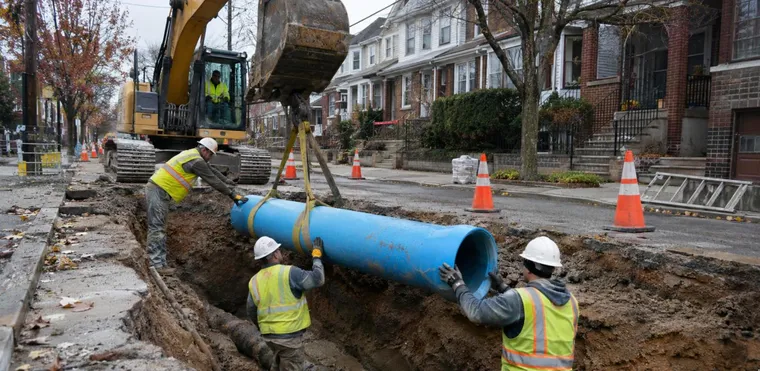
America's water and sewer pipes are aging, and replacing them takes money, skilled crews and, often, a long line of permits. A sweeping federal permitting bill now moving through Congress could shorten part of that line for certain projects. The Bipartisan American Affordability and Jobs Act of 2026, introduced in the Senate on September 30 by Senators Shelley Moore Capito, Mike Lee, Sheldon Whitehouse and Martin Heinrich, advanced in the Senate in November with a 73-25 vote, according to news reports. On November 23, the Plastics Pipe Institute urged the House to give it final approval, PHCP Pros reported. Among many provisions, the bill would allow certain repairs and replacements of existing water and sewer infrastructure to avoid federal environmental review if they stay near the existing system, keep the same purpose and increase capacity by no more than 20 percent. The bill has strong supporters and determined opponents, and it is far broader than water pipes.
At Best Plumbers, our focus is on what policy changes mean for the plumbing that serves homes and communities. We do not take sides on legislation. Our goal here is to explain the water and sewer provisions, describe why industry groups support the bill and summarize the concerns raised by critics, so readers can follow the debate for themselves.
The Water and Sewer Provisions
According to PHCP Pros' summary of the bill as supported by PPI, provisions relevant to water and pipe infrastructure include:
- Repairs and replacements of existing water and sewer infrastructure could avoid federal environmental review if they stay near the existing system, keep the same purpose and increase capacity by no more than 20 percent.
- Certain Clean Water Act general permits would be extended from five years to 10.
- Nationwide permits would remain available for qualifying utility line and stormwater projects.
- Federal environmental reviews under the National Environmental Policy Act would be streamlined, and court challenges to federal permitting decisions would move faster.
The bill also covers broadband, transportation projects and especially electricity transmission and energy projects, which have drawn most of the national attention.
Why Supporters Back It
The Plastics Pipe Institute, the major North American trade association for the plastic pipe industry representing more than 200 member companies, supports the bill. PPI president David M. Fink said America's infrastructure is aging and communities need solutions that last, and that the changes will help communities move forward with infrastructure improvements. According to PHCP Pros, a coalition of more than 400 organizations led by the U.S. Chamber of Commerce urged the House to pass the bill. The National Association of Counties has also praised provisions it says give local governments more certainty when delivering energy, water and transportation projects.
Supporters argue that replacing an old water main or sewer line along the same route, for the same purpose, should not require the same level of federal review as building something entirely new. They say faster approvals mean lower costs, quicker repairs and fewer service disruptions for residents.
Why Critics Oppose It
The bill has also drawn significant opposition. According to news coverage, many environmental organizations, including the Natural Resources Defense Council and the Sierra Club, as well as a number of tribal nations, oppose the bill as written. More than 200 environmental and conservation groups signed a letter raising concerns about changes affecting the Endangered Species Act. Critics argue that the bill would weaken environmental protections, shorten review timelines too much and limit the public's ability to challenge projects in court, and that it could speed up fossil fuel projects along with clean energy. NRDC has described the bill as combining important transmission and grid reforms with significant and concerning changes to federal environmental laws. In response to criticism, the bill's negotiators released a manager's amendment that altered some sections.
Most of the debate centers on energy, transmission and endangered species provisions rather than on routine water main replacement. But the outcome will shape the rules for water infrastructure projects too.
Where Things Stand
As of late November 2026, the bill had passed the Senate and awaited action in the House, where the path is uncertain. PPI also urged the President to sign it promptly if it reaches his desk. Readers should watch for House action and any changes to the bill's text, which could affect the water provisions described here.
Why Water and Sewer Pipe Replacement Matters
Whatever happens to the bill, the underlying need is not in dispute. Many water and sewer systems were built decades ago, and some pipes in older cities have been in the ground for more than a century. As they age, they corrode, crack and leak. Water main breaks interrupt service, damage roads and property and can trigger boil water advisories. Aging sewers can leak, collapse or overflow during storms. We have covered the consequences in stories like what to do during a boil water advisory and Seoul's massive water main overhaul, and explained the scale of the challenge in the age of drinking water pipes and the hidden grid beneath your street.
Replacing this infrastructure is one of the great public works challenges of our time. It requires funding, planning, materials, equipment and, above all, skilled workers: pipe layers, plumbers, operators, engineers and inspectors. Any change that affects how quickly projects can move forward matters to the people who build and depend on them.
How Federal Review Works Today, in Plain Terms
When a water or sewer project uses federal money, crosses federal land, affects waters regulated under the Clean Water Act or needs other federal approvals, it may trigger a review under the National Environmental Policy Act. Depending on the project, that can range from a quick categorical exclusion to a detailed environmental assessment or a full environmental impact statement. Projects that disturb wetlands or streams may also need Clean Water Act permits, and projects that could affect endangered species may require consultation with wildlife agencies. Historic preservation reviews may apply in older neighborhoods.
For a simple replacement of an old pipe in the same street, many projects already qualify for streamlined treatment. Supporters of the bill say making that explicit in law, with clear conditions, would reduce uncertainty and delays. Critics worry that broad exemptions and shorter timelines could let some projects with real environmental impacts move forward without adequate scrutiny. Both sides agree that the details of the final law will determine its real-world effect.
How Other Countries Approach It
The tension between speed and scrutiny is not unique to the United States. In the United Kingdom, water companies face pressure to accelerate pipe renewal and reduce sewage spills while meeting environmental rules. Australia and New Zealand are pursuing their own water reforms, including New Zealand's Local Water Done Well program. Japan passed new rules after a major sinkhole linked to a corroded sewer pipe. Seoul is overhauling thousands of kilometers of mains. Each country is searching for the right balance between moving quickly on aging infrastructure and protecting the environment and communities. Best Plumbers will keep reporting on those efforts for our readers around the world.
The Pipe Materials Question
PPI's support reflects its view that plastic pipe is well suited to modernizing water, sewer, stormwater, broadband and energy systems. Fink described plastic pipe as durable, corrosion-resistant and cost-effective. Other pipe industries, such as ductile iron and concrete, make their own cases for their materials. In practice, utilities choose materials based on soil conditions, pressure, diameter, cost, local experience and engineering standards. Plastics such as PVC and HDPE are widely used for water and sewer mains, and HDPE's fused joints are popular for trenchless installation. For homeowners, similar choices arise when replacing a water service or sewer lateral, as we explain in our guides to water line replacement and sewer line replacement.
Trenchless Technology: Fewer Holes, Faster Repairs
Regardless of federal permitting, many communities are already speeding up pipe renewal with trenchless technologies. Pipe bursting pulls a new pipe through the old one while breaking the old pipe apart. Cured-in-place lining inserts a resin-saturated liner that hardens into a new pipe inside the old one. Horizontal directional drilling installs new pipe under roads, rivers and yards without open trenches. These methods reduce disruption to streets, landscaping and traffic, and they often shorten project timelines. Homeowners can use the same technologies for their own sewer laterals and water lines; learn more in our guides to trenchless sewer repair and trenchless sewer repair explained.
The Workforce Behind Infrastructure Renewal
Permits are only one bottleneck. Even with faster approvals, utilities and contractors need people to do the work: equipment operators, pipe layers, plumbers, welders, inspectors and engineers. Across the United States and many other countries, those skilled workers are in short supply. Faster permitting could increase demand for these trades even further, which makes training and recruitment even more important. Programs that bring young people into the trades, such as the ones we covered in Bring Back the Trades' 10th anniversary and Be Pro Be Proud's partnership with Milwaukee Tool, are part of the infrastructure solution too. Without skilled hands, no amount of policy reform will replace a single pipe.
Local Permits Still Matter
It is worth emphasizing that most of the permitting that affects everyday plumbing happens at the local level. Cities and counties issue permits for water and sewer connections, street openings, building plumbing and inspections. Those processes have their own bottlenecks, which we explored in why your plumbing permit is stuck, including research showing that only a small share of applications are complete at first review in some jurisdictions. Federal reform will not change those local rules, but better local processes, clear checklists and digital tools can make a big difference for homeowners and contractors alike.
What It Means for Homeowners
Federal permitting rules mostly affect public infrastructure, not the plumbing inside your home or the permits your local building department requires for your own projects. Replacing your sewer lateral, water service or water heater will still require local permits where applicable. But public infrastructure affects you every day. Faster replacement of aging mains can mean fewer breaks, fewer boil water advisories and more reliable service. On the other hand, the debate over environmental review reflects real concerns about protecting rivers, wetlands, wildlife and communities. Both perspectives deserve a hearing, and the final shape of any law will matter.
What homeowners can control is their side of the property line. Know where your main water shutoff is, consider a pressure reducing valve if your pressure runs high, have older sewer laterals inspected by camera and address leaks promptly. Our plumbing maintenance checklist is a good starting point.
What to Watch Next
Three questions will determine how much this debate matters for water and sewer work. First, will the House pass the bill, and in what form? Second, if it becomes law, how will federal agencies interpret the conditions for water and sewer repair exemptions, such as staying near the existing system and limiting capacity increases to 20 percent? Third, will funding keep pace, since faster approvals do little without money and workers to build projects? We will update readers as answers emerge. In the meantime, utilities, contractors and homeowners can keep doing what works: plan ahead, maintain what exists and fix problems before they become emergencies.
Our Take
America's water and sewer infrastructure needs sustained investment and skilled people to renew it. The Senate-passed permitting bill would change how some of that work is reviewed, and it has sparked a genuine debate between those who want faster infrastructure and those who worry about weakened environmental safeguards. We will continue to follow it and report on how any final law affects the plumbing world.
For the pipes you are responsible for, Best Plumbers can help you find trusted plumbers near you for sewer line, water line and trenchless repairs.
Frequently Asked Questions About Permitting Reform and Water Infrastructure
1. What is the Bipartisan American Affordability and Jobs Act?
A 2026 federal permitting reform bill covering energy, transmission, water, broadband and other infrastructure.
2. Who introduced the bill?
Senators Shelley Moore Capito, Mike Lee, Sheldon Whitehouse and Martin Heinrich on September 30, 2026.
3. Has the bill passed?
It passed the Senate and, as of late November 2026, awaited House action.
4. What does it mean for water and sewer pipes?
Certain repairs and replacements of existing systems could avoid federal environmental review under specific conditions.
5. What are the conditions for skipping review?
Projects must stay near the existing system, keep the same purpose and increase capacity by no more than 20 percent.
6. What happens to Clean Water Act general permits?
Certain general permits would be extended from five to 10 years.
7. Who supports the bill?
Groups including the Plastics Pipe Institute, the U.S. Chamber-led coalition and the National Association of Counties.
8. Who opposes the bill?
Many environmental groups, including NRDC and the Sierra Club, and a number of tribal nations.
9. Why do critics oppose it?
They say it weakens environmental protections, shortens reviews and limits legal challenges.
10. What is NEPA?
The National Environmental Policy Act, which requires federal environmental review of many projects.
11. What is the Plastics Pipe Institute?
The major North American trade association for the plastic pipe industry.
12. Does Best Plumbers take a position on the bill?
No. We explain what it could mean for plumbing and infrastructure and summarize both sides.
13. Will this make my water bill cheaper?
Supporters say faster approvals can lower costs, but effects on individual bills are uncertain.
14. Does federal permitting affect my home's plumbing?
Generally not directly; it affects public infrastructure projects like mains and sewers.
15. Do homeowners need permits for sewer line replacement?
Usually yes, from local building or public works departments, regardless of federal law.
16. Why do water mains break?
Age, corrosion, ground movement, freezing temperatures and pressure changes.
17. How old are US water pipes?
Many systems include pipes that are decades old, some over a century.
18. What pipe materials are used for water mains?
Ductile iron, PVC, HDPE, concrete and others, depending on the system.
19. What is trenchless pipe replacement?
Methods that replace or rehabilitate pipes with minimal digging.
20. Does this bill address lead pipes?
Lead service line replacement is driven by separate rules and funding programs.
21. How can homeowners protect against main breaks?
Know your shutoff, follow boil water advisories and consider a pressure reducing valve.
22. Is the bill only about energy?
No, though energy and transmission provisions have drawn the most attention.
23. What did the manager's amendment change?
It altered key sections in response to criticism, according to reports.
24. Where can I follow the bill?
Congress.gov and major news outlets track its status.
25. How do I find a plumber for sewer or water line work?
Use Best Plumbers to find licensed plumbers near you.
Sources
- PHCP Pros: PPI Urges Final Approval of Infrastructure Permitting Legislation
- Planetizen: Bill to overhaul energy permitting clears Senate
- Sierra Club: Is This Bill the Future of Energy Permitting?
- NRDC: NRDC Assessment of BAAJA
- Holland and Knight: Bipartisan Senate Committee Leaders Release Permitting Reform Text

