
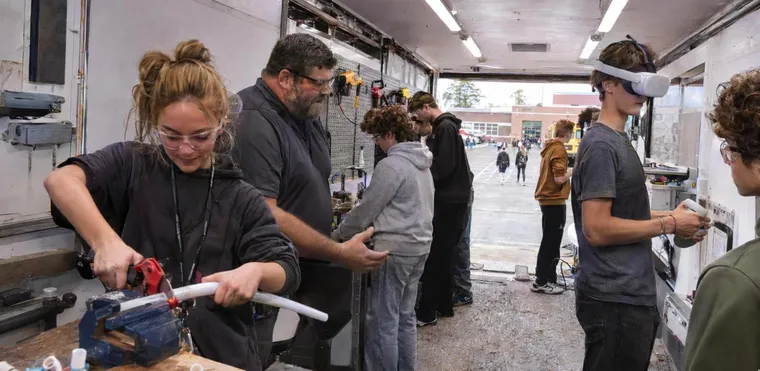
Put a real tool in a teenager's hand and something changes. That is the idea behind one of the most encouraging workforce stories of the year. Be Pro Be Proud, the Little Rock, Arkansas based nonprofit that takes the skilled trades directly to students in high-tech mobile workshops, has named Milwaukee Tool its exclusive National Tool Partner, CONTRACTOR magazine reported on November 10, 2026. The organization says it has reached more than 600,000 students since 2016, and the new partnership will put professional-grade tools into its mobile workshops and virtual reality modules, support its Signing and Draft Days and help launch a National Mobile Workshop in 2027. Plumbing is one of the trades students get to try. At Best Plumbers, we think this is exactly how the next generation of plumbers will be found: one curious kid, one real tool and one good mentor at a time.
We have been cheering for the men and women of the plumbing trade for more than two decades. Nothing excites us more than seeing young people discover that a career with their hands can be skilled, respected and genuinely well paid. This partnership is a big step in that direction.
What Is Be Pro Be Proud?
Be Pro Be Proud was created to change how young people see the skilled trades. Instead of asking students to imagine a career from a brochure or a career fair table, it brings the work to them. Its mobile workshops are tractor-trailers fitted with hands-on stations and simulators that pull up at schools and community events. Students step inside and try tasks connected to real careers.
According to CONTRACTOR, the program covers a range of skilled professions including carpentry, electrical, HVAC, plumbing, water technology and diesel technology. Executive Director Andrew Parker leads the organization. Its model has spread beyond Arkansas to several other states, and the 2027 National Mobile Workshop is intended to take the experience across the country.
Signing and Draft Days
One of Be Pro Be Proud's signature ideas is borrowed from college sports. On Signing Days, students who commit to a trade career, apprenticeship or technical training program are celebrated publicly, just like athletes signing with a university. Draft Days connect students with employers. It sounds simple, but it sends a powerful message: choosing a trade is an achievement worth celebrating, not a fallback.
What the Milwaukee Tool Partnership Includes
CONTRACTOR reported that the partnership will:
- Equip Be Pro Be Proud's mobile workshops with Milwaukee Tool products, so students use the same professional tools tradespeople use on job sites.
- Integrate Milwaukee Tool products into six virtual reality modules, letting students practice tasks in a simulated environment.
- Support Signing and Draft Days that celebrate students committing to trade careers.
- Back the launch of a National Mobile Workshop in 2027.
Milwaukee Tool's Scott Teson spoke about inspiring the next generation of tradespeople, and the report noted that the company plans to invest $200 million in skilled-trades workforce development by 2030. That is a serious, long-term commitment from one of the most recognized tool brands in plumbing.
Why Real Tools Matter
Ask almost any experienced plumber how they got started, and you will hear some version of the same story. A parent, uncle, neighbor or shop teacher handed them a tool and let them try. The moment of turning a fitting, cutting pipe or making something work is when interest turns into confidence.
Using real professional tools matters for a few reasons:
- Authenticity: Students know the difference between a toy and the real thing. Professional tools show them the trade is serious.
- Confidence: Successfully using a tool that professionals use builds a sense that "I could do this."
- Safety habits: Learning on proper tools under supervision builds good habits from the start.
- Connection to modern work: Today's plumbing tools include battery-powered press tools, inspection cameras, cordless drain machines and smart diagnostic equipment. Students see that the trade is modern and technical.
Virtual Reality as a Gateway
The six VR modules are a smart addition. Virtual reality lets students try tasks that would be impractical, unsafe or expensive in a school setting, such as working in a crawlspace, on a roof or around live systems. It also appeals to a generation that grew up with gaming. VR does not replace hands-on training, and no one becomes a plumber in a headset, but as a first taste of the work it can spark interest that leads to the real thing.
What Students Should Know About Plumbing Careers
If a student walks out of a mobile workshop curious about plumbing, here is what we would tell them.
You can earn while you learn
Most plumbers train through apprenticeships, where they work under licensed professionals and get paid while learning, usually alongside classroom instruction. Many finish without the student debt that comes with a four-year degree. Our feature on the plumbing apprentice shortage explains how apprenticeships work.
The work is varied
Plumbers work on homes, hospitals, schools, factories, high-rise towers and infrastructure. Specialties include service and repair, new construction, gas fitting, backflow testing, medical gas, water treatment, drain cleaning and camera inspection. Some plumbers love the puzzle of diagnosing leaks; others love building systems from scratch.
Demand is strong
The plumbing workforce is aging, and many experienced plumbers are approaching retirement. That creates opportunity for young people entering the trade. We explored why more young people are joining in the toolbelt generation.
The trade is for everyone
Plumbing needs people of every background. Women are still a small share of the trade but are making a growing impact, as we wrote in women in plumbing. Programs like Be Pro Be Proud help every student see themselves in the work.
You can build your own business
Many plumbers eventually start their own companies. The path from apprentice to journeyman to master to business owner is one of the clearest routes to entrepreneurship anywhere in the economy.
Browse openings on our plumbing jobs board to see what is out there.
A Trade With a Proud History
Part of what Be Pro Be Proud does is restore pride in work that built civilization. Plumbing is one of the oldest professions on earth. Ancient cities in the Indus Valley, Babylonia, Egypt and Rome built drains, sewers and water supply systems thousands of years ago, as we describe in our history of plumbing and our look at plumbing in Babylonia. The modern flush toilet, clean tap water and safe sewage removal are among the greatest public health achievements in human history.
That is not an exaggeration. Clean water and sanitation have prevented more disease than almost any medical breakthrough, a point we made in plumbers have saved more lives than doctors. When students understand that plumbers protect the health of entire communities, the job looks very different from the stereotypes they may have absorbed.
Changing the Perception Problem
For decades, many schools steered nearly every student toward a four-year college degree. Shop classes were cut, career and technical education was underfunded and the trades were sometimes presented as the option for students who could not do anything else. That messaging did real damage, and the skilled labor shortage we face today is partly the result.
The tide is turning. Parents and students are increasingly aware of college costs and student debt. Employers are raising wages and offering better benefits to attract talent. Public figures have spoken up for the trades too; we once wrote about Michael Bloomberg's advice to become a plumber. Organizations like Be Pro Be Proud speed up that shift by letting students experience the work directly instead of hearing about it secondhand.
What students see inside a mobile workshop
Picture a high school sophomore who has never held a pipe wrench. She climbs into a mobile workshop between classes, puts on safety glasses and works through a station where she cuts, fits and connects pipe. Next to her, a classmate tries an electrical simulator, and another uses a virtual reality headset to practice a task in a simulated job site. For many students, it is the first time they have built something real with their own hands in a school setting. Some will shrug and move on. Others will feel a spark that changes the direction of their lives. Programs like this exist for the second group.
The Tools Students Will Use on the Job
One of the most eye-opening things for students is how modern plumbing tools have become. A plumber starting out today may use:
- Cordless press tools that join copper, stainless and PEX fittings in seconds without a flame.
- PEX expansion tools for flexible water lines in new homes and repipes.
- Sewer inspection cameras that show the inside of a drain line on a screen and locate problems underground. Our guide to video pipe inspection explains how they work.
- Cordless drain cleaning machines that clear clogs quickly and safely.
- Electronic leak detection equipment, including acoustic and thermal tools, to find hidden leaks without tearing out walls.
- Digital gauges and combustion analyzers for gas appliances and water heaters.
For a generation that grew up with technology, seeing this equipment can be a revelation. Plumbing is hands-on, but it is also increasingly digital, diagnostic and high-tech. That combination is exactly what many young people are looking for in a career: something practical, problem-solving and modern, where every day is different and the results are visible.
What Plumbing Companies Can Do
The Milwaukee Tool partnership is a great example of industry investment, but every plumbing company can play a role in building the pipeline. Here are practical steps:
- Visit local schools. Offer to speak at career days or demonstrate tools in shop classes.
- Offer job shadowing. Let interested students ride along for a day, with proper safety precautions and parental permission.
- Support pre-apprenticeship programs. Many communities have programs that prepare young people for registered apprenticeships.
- Attend signing days. Show up for students who commit to the trades and offer them a path to employment.
- Mentor well. The first year of an apprenticeship determines whether a young person stays. Patient, respectful mentorship pays off for decades.
- Tell your story online. Students research careers on their phones. Show what your team does and why they love it.
Plumbing companies that invest in young talent also tend to stand out with customers. Homeowners notice when a company is professional, well trained and proud of its people. If you run a plumbing business and want more visibility, you can join Best Plumbers and learn how we evaluate companies on our how we rank page.
Why Homeowners Should Care
It may seem like workforce programs are an industry concern, but they affect every household. When there are not enough plumbers, wait times grow, emergency calls cost more and unlicensed operators fill the gap. A healthy pipeline of trained, licensed young plumbers means faster service, fair pricing and safer work for decades to come. Every student who chooses plumbing today is a future professional who may one day fix your water heater, clear your sewer line or protect your family's drinking water. Supporting programs that bring young people into the trade is, in a very real way, an investment in your own home.
A Worldwide Challenge
The skilled trades shortage is not unique to the United States. Australia, the United Kingdom, Ireland, Canada, New Zealand and South Africa all face similar pressures as experienced tradespeople retire faster than young people replace them. We recently reported on why Victoria, Australia needs 10,000 new plumbers and on a new training centre in Tyneside, England. Different countries use different models, from group training organizations to school partnerships to mobile workshops, but the goal is the same everywhere: show young people that the trades offer a great life.
Our Take
We love this story. A nonprofit putting real tools in students' hands, a major manufacturer investing in the future workforce and a celebration culture that treats trade careers with the respect they deserve. That is a recipe for a stronger plumbing industry and safer, healthier communities.
To every student who tries plumbing in a mobile workshop this year: the trade needs you, and it will reward you. And to every homeowner who needs a skilled plumber today, Best Plumbers can help you find trusted plumbers near you, from Milwaukee to London and beyond.
Frequently Asked Questions About Be Pro Be Proud, Milwaukee Tool and Plumbing Careers
1. What is Be Pro Be Proud?
A nonprofit based in Little Rock, Arkansas, that introduces students to skilled trades through high-tech mobile workshops.
2. What did Be Pro Be Proud announce with Milwaukee Tool?
Milwaukee Tool became its exclusive National Tool Partner.
3. How many students has Be Pro Be Proud reached?
More than 600,000 since 2016, according to CONTRACTOR magazine.
4. What trades does Be Pro Be Proud showcase?
Carpentry, electrical, HVAC, plumbing, water technology and diesel technology, among others.
5. What is a Be Pro Be Proud mobile workshop?
A tractor-trailer fitted with hands-on stations and simulators that visits schools and events.
6. How will Milwaukee Tool products be used?
In mobile workshops, six virtual reality modules and student Signing and Draft Days.
7. What is the National Mobile Workshop?
A planned 2027 workshop intended to bring the experience to students nationwide.
8. What are Signing Days?
Events that celebrate students committing to trade careers, apprenticeships or technical training.
9. What are Draft Days?
Events connecting students with employers in the skilled trades.
10. Who leads Be Pro Be Proud?
Executive Director Andrew Parker.
11. How much is Milwaukee Tool investing in workforce development?
The company plans to invest $200 million in skilled-trades workforce development by 2030.
12. Why do real tools matter for students?
They make the experience authentic, build confidence and teach good safety habits.
13. Can VR teach plumbing?
VR is a useful introduction, but real plumbing skills require hands-on training and supervised experience.
14. How do most plumbers train?
Through paid apprenticeships combining on-the-job work and classroom instruction.
15. Do plumbers need college degrees?
No. Most train through apprenticeships and licensing rather than four-year degrees.
16. Is plumbing in demand?
Yes. An aging workforce and steady demand create strong opportunities for new plumbers.
17. What specialties exist in plumbing?
Service, new construction, gas fitting, backflow testing, medical gas, water treatment, drain cleaning and camera inspection.
18. Can women become plumbers?
Absolutely. Women are a growing part of the trade and the industry needs more of them.
19. Can plumbers start their own businesses?
Yes. Many progress from apprentice to journeyman to master and then open their own companies.
20. How old do you need to be to start an apprenticeship?
Requirements vary by program and location, but many accept applicants from about 16 to 18 and up.
21. What school subjects help future plumbers?
Math, physics, technical drawing, and hands-on shop or construction classes.
22. How can parents support a student interested in plumbing?
Encourage hands-on projects, visit trade programs, and connect them with local plumbers for job shadowing.
23. How can plumbing companies help recruit students?
Partner with schools, attend signing days, offer job shadowing and support pre-apprenticeship programs.
24. Where can I find plumbing jobs?
Check the Best Plumbers plumbing jobs board and local apprenticeship programs.
25. How can I find a trusted plumber?
Use Best Plumbers to find licensed, well-reviewed plumbers near you.

