
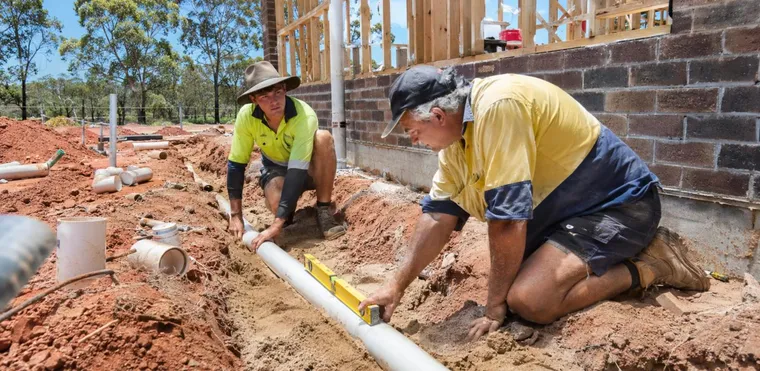
For years, a newly qualified plumber in Queensland finished an apprenticeship, earned a Certificate III in Plumbing and then spent another twelve months on a provisional licence, working under supervision before being trusted to work on their own. That extra year is now gone for eligible graduates. Since 2 November 2026, under the Queensland Building and Construction Commission (Plumbing and Drainage Occupational Licensees) Amendment Regulation 2026, eligible apprenticeship graduates can apply straight for a full occupational plumber licence. What has not changed is just as important: anyone who wants to contract directly with the public still needs a year of post-apprenticeship experience first. Here is our full breakdown of what changed, why it matters and what it means for the people who rely on Queensland's plumbers.
Best Plumbers serves homeowners and plumbers across Australia as well as North America, the UK, Ireland, New Zealand and South Africa. Licensing rules differ in every one of those places, but the goal is the same everywhere: make sure the person working on your water, drainage and gas knows what they are doing. Queensland's change is a thoughtful attempt to speed up the pipeline of new tradespeople without lowering that bar for consumers.
What Exactly Changed on 2 November 2026
According to the Queensland Building and Construction Commission (QBCC), the government introduced licensing changes to modernise the plumbing licensing framework. The key points are:
- Straight to an occupational licence. Eligible Australian apprentices can now obtain an occupational plumber licence on completing their apprenticeship and Certificate III in Plumbing, including the required Appendix A units, without first holding a provisional licence.
- Provisional licensees can upgrade. Current provisional licensees who meet the eligibility criteria can request an upgrade to an occupational licence.
- Returning tradespeople. Former occupational licence holders returning to the trade no longer need to demonstrate recent experience, unless their licence was cancelled through disciplinary action. Conditions on a former licence carry over.
- The contractor gate stays. To protect consumers, applicants must show 12 months of post-apprenticeship experience before they can apply for a contractor licence and deal directly with the public.
The regulation was notified on 2 October 2026 and its main provisions commenced on 2 November. The QBCC has published a pathway tool that helps plumbers work out which route applies to them.
Occupational versus contractor licences, explained
If you are not from Queensland, the terminology can be confusing, so let us translate. An occupational licence lets a person physically carry out plumbing or drainage work, typically as an employee of a business that holds a contractor licence. A contractor licence lets a person or business contract directly with customers, quote jobs, take payment and take responsibility for the work. The new rules make it faster to earn the first while keeping a safeguard in front of the second.
A provisional licence, under the old system, was issued for twelve months and required the holder to work only under the supervision of someone holding an occupational licence. For many graduates that meant a year of doing essentially the same work they did in the final stage of their apprenticeship, with a different card in their wallet.
Why Queensland Made the Change
The simplest explanation is that Australia needs more qualified tradespeople, fast. We covered the scale of the shortage in Australia is 83,000 tradies short. Housing targets, infrastructure projects and an ageing workforce all point the same way. Every month that a qualified plumber spends in regulatory limbo is a month that plumber is not fully productive.
There is also a fairness argument. A Queensland apprentice completes years of structured training on the tools, plus formal study, before earning a Certificate III. Requiring an additional supervised year on top of that put Queensland graduates a step behind, with little evidence that the extra year made them meaningfully safer. The new framework treats a completed apprenticeship as what it is: proof of competence to work.
Finally, the change helps people who left the trade come back. Plumbers who stepped away to raise families, recover from injuries or try other careers can return without jumping through hoops to prove experience they already have. In a tight labour market, that is a smart way to bring skilled hands back to work.
The Safeguard We Like: The Contractor Gate
We are cheerleaders for apprentices and young plumbers, and we love seeing barriers removed. But Best Plumbers is also an advocate for homeowners, and we want to call out the part of this reform that protects them. The requirement for 12 months of post-apprenticeship experience before applying for a contractor licence is a sensible line.
Doing the work and running the business are different skills. A newly licensed plumber may be technically excellent and still have a lot to learn about estimating, scheduling, warranties, managing subcontractors, dealing with difficult sites and handling customer money responsibly. A year of working for an established business, with real customers and real problems, teaches those lessons in a way no classroom can. Keeping that gate in place means new plumbers get to work sooner, while customers still deal directly with people who have some business experience under their belts.
What It Means for Apprentices
If you are a plumbing apprentice in Queensland, this is good news. Once you complete your apprenticeship and your Certificate III, including the Appendix A units, you can apply for your full occupational licence. That means:
- More responsibility sooner. You can work without the supervision restrictions of a provisional licence.
- Potentially better pay sooner. Many employers pay licensed plumbers more than provisional licensees, though pay depends on your employer and agreement.
- A clearer path to running your own business. After 12 months of post-apprenticeship experience, you can apply for a contractor licence.
Our advice is to use that first year wisely. Ask to work on different kinds of jobs. Learn how your employer prices work, handles callbacks and talks to customers. Ask to sit in on estimates. If you plan to run your own business one day, the lessons of that year will be worth far more than the licence itself.
If you are just starting to think about the trade, our feature on the plumbing apprentice shortage explains why plumbing is one of the most secure career choices there is, and our plumbing jobs board lists opportunities. Even Michael Bloomberg once told young people they might be better off becoming plumbers, as we noted in his advice to become a plumber.
Then and now: a graduate's first year
To make the change concrete, picture two Queensland apprentices who finished their training a year apart.
The first finished in 2025. She completed her apprenticeship and Certificate III, received a provisional licence and spent the next twelve months working under the supervision of an occupational licensee. On a busy day, if her supervisor was tied up on another site, there were jobs she could not take on alone, even though she had been doing that exact work for the final year of her apprenticeship. After twelve months, she applied for her occupational licence and then needed further experience before she could think about contracting.
The second finished in late 2026. He completed the same apprenticeship and Certificate III, including the Appendix A units, and applied straight for an occupational licence. From day one as a licensed plumber, he can carry out work without the provisional supervision restrictions, as an employee of a business that holds a contractor licence. If he wants to start his own business, he still needs twelve months of post-apprenticeship experience before applying for a contractor licence.
Same training, same standard of competence, one fewer year of red tape. That is the essence of the reform.
Questions apprentices are asking
Do I need to do anything if I finish my apprenticeship now? You need to apply to the QBCC for the licence. It is not automatic. Use the QBCC pathway tool to confirm which route applies to you and what documents you need.
What if I am already on a provisional licence? If you meet the eligibility criteria, you can request an upgrade to an occupational licence rather than waiting out the full twelve months.
Does the twelve months toward a contractor licence start from the end of my apprenticeship? The requirement is twelve months of post-apprenticeship experience, so keep good records of your work history from the day you finish.
Will I earn more straight away? That depends on your employer and your industrial arrangements. A full occupational licence often brings better pay, but ask your employer directly.
What It Means for Employers
For Queensland plumbing businesses, the change offers more flexibility in how they deploy newly qualified staff. A graduate who holds an occupational licence can be sent to jobs without the same supervision arrangements a provisional licensee required. That can ease scheduling, especially for smaller businesses where a supervising plumber is not always available.
But flexibility brings responsibility. A business that holds the contractor licence remains accountable for the work its people do. Smart employers will still pair new plumbers with experienced mentors, run quality checks and invest in ongoing training. The licence says a graduate is competent to work. Good culture makes them excellent.
Employers should also review their internal policies. If your business previously tied pay rates, vehicle allocation or job types to provisional status, those rules may need updating. The QBCC's pathway tool and guidance pages are the place to confirm how the new rules apply to your team.
What It Means for Queensland Homeowners
For homeowners, the practical effect should be positive: more licensed plumbers available to work, potentially shorter wait times and a healthier trade overall. The person who turns up at your door from an established business may be newer to the trade than before, but they will hold a full occupational licence and work for a business that holds a contractor licence and stands behind the job.
The checks you should make have not changed:
- Check the business's contractor licence on the QBCC's online licence search before you hire.
- Make sure the licence class matches the job. Plumbing, drainage, gasfitting and specialised work such as backflow or on-site sewerage can require different classes or endorsements.
- Get a written quote that describes the work, the price and any warranty.
- Ask about compliance paperwork. Notifiable plumbing work in Queensland generally needs to be lodged with the relevant authority, and a reputable business handles this as a matter of course.
- Read reviews and ask friends and neighbours for recommendations.
Our general guide to the importance of hiring a licensed plumber explains why these checks matter wherever you live.
Watch out for unlicensed operators
Here is the serious part. Whenever licensing rules change, a few unlicensed operators try to exploit the confusion, telling customers that "the rules have relaxed" or that "you do not need a licensed plumber anymore." That is not what happened. Plumbing and drainage work in Queensland still requires the right licence, and contracting with the public still requires a contractor licence. If anyone tells you otherwise, walk away.
How Queensland Fits Into the National Picture
Plumbing regulation in Australia is largely handled state by state, under the umbrella of the Plumbing Code of Australia. Each state and territory has its own licensing body and rules. Queensland's reform sits alongside other national changes reshaping the trade, including the transition to lead-free plumbing products, which we covered in Australia goes lead-free, and recent material cost pressures described in Australian plumbers weather a PVC price shock.
Other states are watching. Industry groups across Australia have been pushing to reduce the cost and time it takes to train and license plumbers, from apprenticeship fees to licensing steps. Queensland's approach, removing an extra supervised year while keeping the contractor safeguard, offers one model others may consider.
For readers curious about how Australia compares globally, our BP News feature asking is plumbing the same around the world looks at licensing and practice across countries.
Finding a Licensed Plumber in Australia
Best Plumbers lists plumbing businesses internationally, including across Australia, and highlights established, well-reviewed companies through a ranking process explained on our page about how we rank plumbers. You can explore our picks for the best plumbers in Sydney, the best plumbers in Melbourne and Western Australia via our Osborne Park page, or simply search for plumbers near you.
Our Take
We think Queensland got this one right. The reform respects the training apprentices complete, gets qualified people working sooner, welcomes experienced plumbers back to the trade and keeps a reasonable safeguard before anyone deals directly with the public. It is optimistic without being reckless.
To every Queensland apprentice finishing up this year: congratulations. You have chosen a trade that protects public health every single day. Wear the licence with pride, keep learning and look after your customers. The industry needs you.
Frequently Asked Questions About Queensland's Plumbing Licence Changes
1. What changed in Queensland plumbing licensing on 2 November 2026?
Eligible apprenticeship graduates can now apply directly for a full occupational plumber licence without first holding a provisional licence.
2. Who is eligible to skip the provisional licence?
Graduates who completed an Australian plumbing and drainage apprenticeship and a Certificate III in Plumbing, including the required Appendix A units.
3. Is the provisional licence completely gone?
For eligible graduates the provisional year is no longer required. Current provisional licensees who meet the criteria can request an upgrade.
4. Do new plumbers still need experience to become contractors?
Yes. Applicants must show 12 months of post-apprenticeship experience before applying for a contractor licence.
5. What is an occupational plumber licence in Queensland?
It allows a person to carry out plumbing or drainage work, typically as an employee of a business holding a contractor licence.
6. What is a contractor licence?
It allows a person or business to contract directly with customers, quote, take payment and take responsibility for plumbing work.
7. What was the old provisional licence?
A 12-month licence that required the holder to work under supervision of an occupational licensee.
8. What regulation made the change?
The Queensland Building and Construction Commission (Plumbing and Drainage Occupational Licensees) Amendment Regulation 2026.
9. When was the regulation notified?
It was notified on 2 October 2026, with its main provisions commencing on 2 November 2026.
10. Can plumbers returning to the trade get licensed faster?
Yes. Former occupational licence holders returning to the trade no longer need to demonstrate experience, unless the licence was cancelled through disciplinary action.
11. Who regulates plumbing licences in Queensland?
The Queensland Building and Construction Commission, known as the QBCC.
12. How can I check a Queensland plumber's licence?
Use the QBCC's online licence search to confirm the business holds the right contractor licence for the work.
13. Does this mean unlicensed people can do plumbing in Queensland?
No. Plumbing and drainage work still requires the appropriate licence, and contracting with the public requires a contractor licence.
14. Why did Queensland make this change?
To modernise licensing, get qualified graduates working sooner, help returning plumbers and address skills shortages.
15. Will homeowners notice a difference?
Homeowners may see more licensed plumbers available, while still dealing with businesses that hold contractor licences.
16. What should apprentices do in their first licensed year?
Gain broad experience, learn how the business prices and manages jobs and prepare for a contractor licence after 12 months.
17. Do employers still need to supervise new plumbers?
Licensing supervision rules have changed, but good employers still mentor new plumbers and check quality, because the contractor remains accountable.
18. Is there a tool to check which pathway applies?
Yes. The QBCC provides a plumbing pathway tool to help applicants find their route to an occupational licence.
19. Does the change affect drainage licences?
The reform relates to plumbing and drainage occupational licences, so applicants should check the QBCC pathway tool for their specific licence class.
20. Is Australia short of plumbers?
Yes. Industry reports have highlighted a significant national shortage of tradespeople, including plumbers.
21. What is the Plumbing Code of Australia?
It is the national code that sets performance requirements for plumbing and drainage, adopted and administered by each state and territory.
22. Do other Australian states have the same rules?
No. Plumbing licensing is handled by each state and territory, so rules differ across Australia.
23. What should a homeowner ask before hiring a Queensland plumber?
Ask for the contractor licence number, confirm the licence class, get a written quote and ask about compliance paperwork.
24. Is plumbing a good career in Queensland?
Yes. Demand is strong, training is paid through apprenticeship and the new rules shorten the path to full licensing.
25. Where can I find a trusted plumber in Australia?
Use Best Plumbers to find established, well-reviewed plumbing businesses and verify their licences before hiring.
Sources
- Queensland Building and Construction Commission: Plumbing licensing changes
- Queensland Legislation: QBCC (Plumbing and Drainage Occupational Licensees) Amendment Regulation 2026
- The Good Builder: Queensland scraps the provisional year for new plumbers
- Plumbing Connection: Queensland changes plumbing licensing requirements for apprentices

