
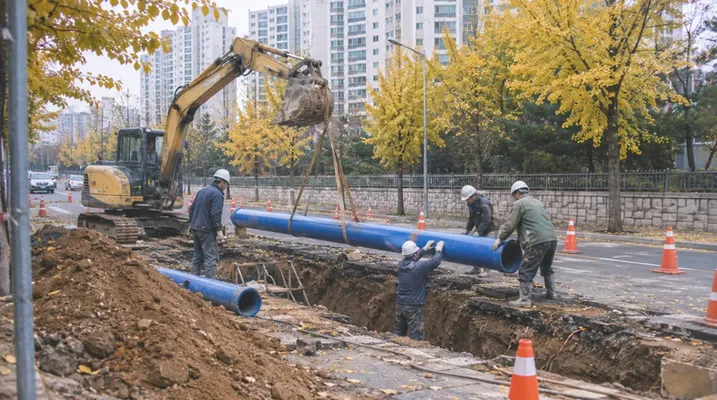
Seoul is one of the world's most advanced cities, with tap water branded as Arisu and tested thousands of times a year. But like every big city, it relies on a vast network of pipes that age with time. In July 2026, the Seoul Metropolitan Government launched a project to overhaul water mains that have been in use for more than 30 years, targeting 3,074 kilometres of pipe for replacement and repair by 2028, the Korea Herald reported. Because leaks from long used mains can wash away soil and cause the ground to sink, the city plans to invest 727.1 billion won, about 482 million US dollars, through 2028 to repair leak prone pipes. Here is what Seoul is doing, why it matters for sinkholes and water quality and what homeowners anywhere can learn about aging pipes.
By the Best Plumbers Editorial Team. Published November 23, 2026.
The 2028 Plan
According to the Korea Herald and Asia Business Daily, Seoul manages 3,074 kilometres of long term use water pipes, defined as those in service for more than 30 years. The city will inspect them and replace or repair those at risk, with about 111 kilometres scheduled for replacement in 2026. Seoul has carried out continuous preventive maintenance since 2020, and the new plan concentrates investment on pipes most vulnerable to leaks, citing the risk that leaks could cause ground subsidence. Not every old pipe needs replacing: many are in good condition and can be cleaned, lined or monitored.
Leaks, Sinkholes and Road Collapses
In recent years, sudden road collapses in Seoul and other Korean cities have raised public alarm and put pressure on authorities to tackle underground risks. When water leaks from a pipe, it can carry soil away and leave a hidden cavity beneath the road surface. Eventually the pavement can collapse. Sewer pipes cause similar problems when cracked joints let soil wash into them. Seoul districts have been repairing old sewers too: the Herald Business reported that Jongno district planned repairs to circular sewer pipes more than 30 years old because of the risk of ground erosion, and another district outlined work on 179 kilometres of sewers more than 50 years old to prevent road collapses, flooding and odours. We explained how leaking pipes create sinkholes in sinkholes and broken sewers.

Seoul is overhauling water mains that have been in service for more than 30 years.
Seoul's Long Fight Against Rusty Water
Seoul's pipe programme has deep roots. Since 1984, the city has replaced more than 13,500 kilometres of old supply pipes, according to the Korea Times. In 2019, reports of reddish tap water in the Mullae area prompted the city to speed up replacement of the remaining old pipes, and it later said that most old public pipes had been replaced. Since 2007, Seoul has also helped homeowners pay to replace old galvanised steel pipes inside their homes, a major cause of rusty water, offering subsidies and helping hundreds of thousands of households, Asia Business Daily reported. The city says that clean water depends on both public mains and private plumbing.
Why Pipes Age
Water mains face constant stress: internal pressure, traffic loads, ground movement, temperature changes and corrosion. Older cast iron and steel pipes corrode inside, narrowing the bore and releasing rust that discolours water. Joints loosen over time, causing leaks. Pipes laid during rapid urban growth in the 1970s, 1980s and 1990s are now reaching the age where problems become more common. Seoul grew enormously in those decades, which is why so many of its pipes reached the 30 year mark at once.
Signs of Trouble Under the Street
Residents often notice warning signs before a main fails: water bubbling up through cracks in the pavement on a dry day, a patch of road that stays wet, a sudden drop in water pressure across a neighbourhood, discoloured water after a period of normal supply or small dips and cracks appearing in the road surface. Reporting these signs quickly gives crews a chance to find and fix leaks before they become bursts or cavities.
Replace, Line or Clean?
Utilities choose among several options for old pipes. Full replacement digs up and lays new pipe, which is reliable but disruptive and expensive. Lining inserts a new lining or pipe inside the old one, often with little digging. Cleaning removes scale and sediment to restore flow and water quality. Condition assessment using cameras, sensors and data analysis helps decide which pipes need which treatment. Seoul's approach of inspecting first and focusing on leak prone pipes reflects this strategy.

Seoul has spent decades replacing rust prone pipes to build trust in its Arisu tap water.
How Seoul's Water System Works
Seoul draws nearly all its raw water from the Han River, which flows through the heart of the city. Six large purification centres treat the water using advanced processes, including ozone and granular activated carbon at several plants, to remove taste, odour and trace contaminants. Treated water then flows through a network of distribution reservoirs, pumping stations and mains to apartment complexes, offices and homes. Because so many Seoul residents live in large apartment complexes, water often passes through building tanks and internal pipes before reaching the tap, adding another layer that must be maintained.
Smart Water Management
Seoul has invested heavily in technology to manage its network. District metered areas let operators compare water supplied to each zone with water used, revealing hidden leaks. Remote sensors monitor pressure, flow and water quality in real time. Leak detection teams use acoustic equipment to listen for escaping water beneath streets at night when traffic noise is low. The city reports one of the lowest leakage rates among major world cities, a result of decades of steady pipe replacement and active leak detection. The 2028 programme aims to keep it that way as more of the network ages.
Apartment Buildings and Internal Pipes
In large apartment complexes, internal plumbing belongs to the building owners. Older complexes may have galvanised steel risers and branch pipes that corrode, causing rusty water and low pressure on upper floors. Water tanks in basements or on roofs must be cleaned regularly under Korean rules. When residents complain of discoloured water, the cause is often inside the building rather than in the public main. Seoul's household pipe subsidies and inspection services help owners identify and fix these problems.
Building Trust in Tap Water
Seoul has worked hard to persuade residents to drink Arisu tap water, which meets strict standards. The city conducts thousands of water quality tests at treatment centres, taps and public facilities each year. Yet many residents still prefer bottled or filtered water, partly because of concerns about old pipes in buildings. Replacing old mains and household pipes is part of the effort to close that gap. The city also shares its water management know how with other countries, including Laos, Tanzania and Vietnam, according to the Korea Times.
Ground Penetrating Radar and Cavity Surveys
To find hidden voids before roads collapse, Seoul and other Korean cities survey streets with ground penetrating radar, which sends radio waves into the ground and detects air pockets and loose soil beneath the pavement. When a cavity is found, crews can fill it and repair any leaking pipe nearby before a collapse occurs. Combining these surveys with pipe condition data helps target repairs where they matter most. Cities around the world are adopting similar techniques as concern about sinkholes grows.
Climate and Heavy Rain
Seoul's summer monsoon brings intense downpours, and the city suffered severe flooding in 2022 when record rainfall overwhelmed drains and inundated low lying neighbourhoods. Heavy rain and flooding can worsen underground erosion around leaking pipes and sewers, increasing the risk of cavities and collapses. Upgrading sewers and storm drains alongside water mains helps protect streets against both leaks and floods.
A Fair Debate: How Fast Should Cities Replace Pipes?
Some city council members have called for much larger investment to speed up replacement of aging water and sewer pipes, citing public safety after road collapses. Others caution that faster replacement means more road works and higher costs for taxpayers and water customers, and that money should be targeted using risk analysis. Engineers generally argue for a steady, data driven programme that replaces the riskiest pipes first while monitoring the rest. Seoul's 2028 plan sits between these positions.
Whatever the pace, residents benefit most when cities publish clear plans, report progress openly and explain how they choose which streets come first, so neighbourhoods know what to expect and when.
Lessons From Other Cities
Seoul is one of many cities tackling aging pipes. London's leaky network has been a long running concern, as we covered in the Thames Water story. US cities are replacing lead service lines and old mains together, as described in Pittsburgh's lead line success. The lesson everywhere is that steady investment prevents expensive emergencies.
What Homeowners Can Learn
Check your own pipes. If your home has old galvanised steel pipes, rusty water and low pressure are warning signs. Our plumbing cost guide explains typical repiping costs. Modern materials like PEX make repiping faster, as covered in PEX installer certification.
Look for subsidies. Many cities, like Seoul, help pay for replacing old household pipes; see our plumbing rebates guide.
Consider filtration. If you live in an older building, a point of use filter can improve taste and catch sediment; read about water filtration installation.
Watch your water heater. Rust and sediment from old pipes collect in heaters and shorten their life; plan for water heater replacement when needed.
Report leaks and sinking pavement. Wet patches, unexplained water on roads or sinking pavement can signal underground leaks; report them promptly.
The Value of Steady Investment
Seoul's experience shows the value of consistent, long term pipe programmes. Cities that replace a small share of their network every year avoid the cliff edge where large sections fail at once. Engineers often say that a healthy network replaces around one percent of its pipes annually, giving each pipe a replacement cycle of about a century. Many cities fall well short of that, which builds up a backlog of risk. Seoul's decades of investment, from the 1980s onward, mean it starts from a stronger position than many cities, but the 2028 plan acknowledges that the work is never finished.
What Plumbers See Inside Homes
Plumbers who work in older homes and apartments everywhere see the same patterns that Seoul is tackling at city scale: galvanised pipes clogged with rust, leaking joints hidden in walls, water heaters full of sediment and pressure problems caused by narrowed pipes. A whole house repipe can transform water pressure and quality. For many homeowners, a camera inspection of drains and a pressure test of supply lines are the first steps to understanding what they have.
Small problems found early are almost always cheaper to fix.
What to Watch Next
Watch Seoul's annual replacement progress, the number of road collapses and leaks, any expansion of sewer pipe repairs and whether other Korean cities adopt similar programmes.
A Salute to Seoul's Water Workers
Engineers, crews and plumbers at Seoul's waterworks keep clean Arisu water flowing to nearly 10 million people. We salute them.
Their steady, often unseen work keeps one of the world's largest cities supplied every hour of every day.
Our Take
Seoul's plan shows how a modern city can tackle aging pipes before they cause crises: inspect, prioritise the riskiest pipes and invest steadily. For homeowners, the lessons are to check your own pipes, use subsidies where available and report signs of leaks.
How Best Plumbers Helps
Best Plumbers is the Internet's original plumbing directory, helping people find plumbers since July 12, 2002, and the most trusted plumbing directory on the Internet. We list every plumbing company we can find, with every review, good and bad, so you can judge for yourself, and only the best earn the Best Plumbers Recommended seal. Read how we rank plumbers. We never sell leads. Find a plumber through our locations directory, read real plumber reviews and, once your job is done, write a review to help your neighbours choose well.
The Short Version
Seoul launched a project in July 2026 to overhaul water mains in use for more than 30 years, targeting 3,074 kilometres for replacement and repair by 2028 and investing 727.1 billion won in leak prone pipes. About 111 kilometres were scheduled for replacement in 2026. The city cites the risk of leaks causing ground subsidence. Seoul has replaced old pipes for decades and subsidises household pipe replacement. Homeowners should check their own pipes and report leaks.
Frequently Asked Questions About Seoul's Water Main Overhaul
1. What is Seoul's water main plan?
To replace or repair 3,074 km of mains over 30 years old by 2028.
2. How much will it cost?
727.1 billion won, about 482 million US dollars, for leak prone pipes.
3. How much pipe was scheduled for 2026?
About 111 kilometres.
4. Why does Seoul worry about leaks?
Leaks can wash away soil and cause ground subsidence.
5. What is Arisu?
The brand name for Seoul's tap water.
6. Is Seoul tap water safe?
Yes, it meets strict standards and is tested thousands of times a year.
7. Why do some people still use bottled water?
Concerns about old pipes in buildings and taste.
8. What caused rusty water in Seoul?
Old galvanised steel pipes, especially inside homes.
9. Does Seoul help replace household pipes?
Yes, it has offered subsidies since 2007.
10. How many pipes has Seoul replaced?
More than 13,500 km of supply pipes since 1984.
11. What happened in 2019?
Reddish tap water in Mullae prompted faster replacement.
12. Do sewers cause sinkholes too?
Yes, cracked sewer joints can wash soil away.
13. What is pipe lining?
Inserting a new lining inside an old pipe.
14. Is replacement always necessary?
No, some pipes can be cleaned, lined or monitored.
15. Why did so many pipes age at once?
Seoul grew rapidly in the 1970s to 1990s.
16. Does Seoul share its expertise?
Yes, with countries including Laos, Tanzania and Vietnam.
17. What are signs of old pipes at home?
Rusty water, low pressure and leaks.
18. Should I replace galvanised pipes?
Often yes, especially if water is discoloured.
19. Can filters help?
Yes, point of use filters improve taste and catch sediment.
20. Can rust damage water heaters?
Yes, sediment shortens heater life.
21. What should I do if pavement sinks?
Report it to authorities promptly.
22. Do other cities face similar problems?
Yes, including London and many US cities.
23. Is faster replacement better?
It reduces risk but costs more; targeting matters.
24. What should we watch?
Annual replacement progress and road collapse numbers.
25. Why does Best Plumbers cover Seoul?
Because aging pipes affect homes everywhere.
Sources
Korea Herald, Seoul to complete overhaul of aging water pipes by 2028. Asia Business Daily, Seoul to inspect water supply pipes over 30 years old. Korea Times, Seoul to replace all old water pipes. Korea Times, Seoul's new Arisu head aims to export trust in tap water.

