
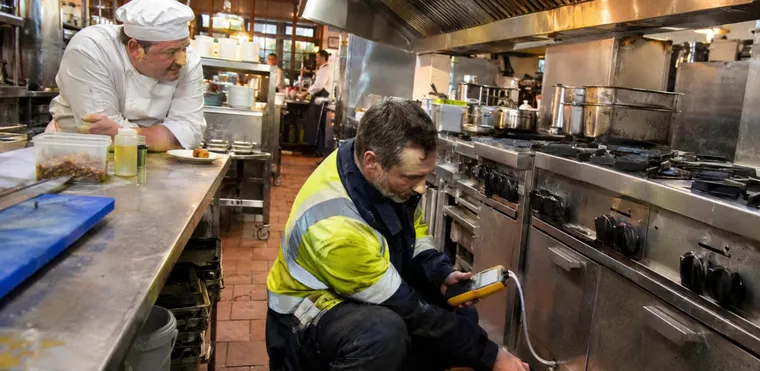
For years, homeowners in the Republic of Ireland have been told to use a Registered Gas Installer for any gas work in their homes. Now the same protection extends to restaurants, hotels, schools, offices, shops and other non-domestic buildings. Since 1 September 2026, regulated non-domestic gas works in the Republic of Ireland must be carried out by a Registered Gas Installer, or RGI, who is registered for the relevant category of work, according to Ireland's Plumbing and Heating magazine. The change is implemented through S.I. No. 106/2026, the Electricity Regulation Act 1999 (Gas Works) Regulations 2026, which expanded the definition of gas works. It follows a public consultation by the Commission for Regulation of Utilities in 2024 and a CRU Decision Paper published in December 2025. Regulated non-domestic gas works now fall within the scope of I.S. 820, the Irish standard for non-domestic gas installations.
At Best Plumbers, we have a strong and loyal readership across Ireland, Northern Ireland and the rest of the island, and gas safety is a subject we take very seriously. This change is a significant step forward. Commercial gas installations, from busy restaurant kitchens to boiler rooms in schools, often involve larger appliances, higher gas loads and more people at risk if something goes wrong. Bringing them under the RGI scheme closes an important gap.
What Exactly Changed?
According to the report:
- From 1 September 2026, regulated non-domestic gas works must be carried out by an RGI registered for the relevant non-domestic category.
- S.I. No. 106/2026 came into operation the same day, expanding the legal definition of gas works.
- I.S. 820, Non-Domestic Gas Installations, now applies to regulated non-domestic gas works, alongside the existing regulation of domestic work.
- Certification: Non-domestic work requires the appropriate Declaration of Conformance, Certificate A, B, C or D depending on the work, issued through the Electronic Certification System.
- Categories: RGIs who only do domestic work need take no action, as their record defaults to the Domestic category. RGIs planning non-domestic work must notify the RGI Scheme first so the relevant non-domestic category is added to their record, and must notify each applicable category if they work across several.
- Recognition of Prior Learning: Applicants approved through RPL must complete the relevant core modules of the Non-Domestic Gas Safety Award within six months of joining the RGI Scheme.
The RGI Scheme runs a Non-Domestic Gas Works Information Hub with guidance for installers and businesses.
Why the Change Matters
The stated purposes of the new framework are to strengthen gas safety through greater oversight of non-domestic gas works, allow proactive inspection of registered installers, enable investigation of illegal gas works and ensure regulated work is carried out by appropriately registered individuals.
That is a big deal. Before this change, commercial gas work did not fall under the same registration and certification framework as domestic work. Now there is a clear legal requirement, a registration system, defined categories, certificates and the ability to inspect and investigate. For business owners, it means more confidence that the person working on their gas system is qualified. For the public, it means safer restaurants, schools, hotels and workplaces.
What Is Not Covered
The report notes several exclusions, including certain work in industrial premises, work covered by I.S. EN 15001-1 and/or I.S. EN 15001-2, the design of gas works and other activities specified in the Regulations. Businesses and installers should check the official guidance carefully to understand exactly where their work falls.
What Business Owners Should Do Now
If you own or manage a restaurant, café, hotel, school, nursing home, office building, gym, shop or any other non-domestic premises with gas appliances, here is a simple checklist:
- Know your gas appliances. Make a list of cookers, fryers, ovens, boilers, water heaters, space heaters and any other gas equipment on site.
- Check your installer's registration. Ask for their RGI number and confirm they are registered for the relevant non-domestic category.
- Ask for certification. After any regulated work, you should receive the appropriate Declaration of Conformance certificate.
- Keep records. Store certificates, service reports and inspection records in one place.
- Schedule regular servicing. Commercial appliances work hard and need professional maintenance.
- Install carbon monoxide alarms near fuel-burning appliances and in areas where staff or guests may be exposed.
- Train staff to recognise gas smells and carbon monoxide symptoms and to know where the emergency shutoff is.
What Installers Should Do
For gas installers and heating engineers working in Ireland:
- If you only do domestic work, no action is required.
- If you do or plan to do non-domestic work, notify the RGI Scheme to add the relevant category before starting.
- Make sure you understand I.S. 820 requirements and the certificate types for different work.
- If you joined through Recognition of Prior Learning, complete the required Non-Domestic Gas Safety Award modules within six months.
- Use the Non-Domestic Gas Works Information Hub for guidance, and keep training current.
For qualified professionals, the change is also an opportunity. Businesses now have a clear legal reason to hire registered installers, and the RGI scheme gives them a straightforward way to identify qualified people. Registered professionals who invest in non-domestic categories should see strong demand.
Why Commercial Kitchens Need Special Attention
Commercial kitchens are among the most demanding gas environments. Multiple high-output appliances run for long hours in tight spaces, often with heavy ventilation and extraction systems. Common hazards include gas leaks from damaged flexible hoses, faulty flame supervision devices, poor ventilation that leads to carbon monoxide buildup, grease fires and appliances moved for cleaning without proper reconnection. Many kitchens are required to have interlocks that cut gas supply if extraction fans fail. Regular inspection by a qualified installer is essential. Similar considerations apply to mobile catering, which is also getting attention in Australia and New Zealand's draft gas standard, as we reported in Australia and New Zealand are rewriting the gas rulebook.
Commercial Boilers and Water Heating
Beyond kitchens, many non-domestic buildings rely on gas boilers and water heaters for heating and hot water. Schools, hotels, nursing homes and apartment blocks may have large plant rooms with multiple boilers, cascading systems and complex controls. These installations require careful flueing, combustion air, gas pressure regulation and safety controls. Annual servicing by a qualified engineer, along with regular checks of flues and ventilation, keeps them safe and efficient. If you are planning upgrades, consider efficiency improvements such as modern condensing boilers, better controls or, where appropriate, heat pumps. Our guides on professional water heater maintenance and gas water heaters cover many of the basics, and our article on residential plumbing explains how domestic systems compare.
Planning for the future of heating
Ireland, like much of Europe, is moving toward lower-carbon heating, with growing interest in heat pumps, district heating and renewable gases such as biomethane. Gas will remain part of the energy mix for years, especially in commercial settings, so safe installation and maintenance remain essential. Installers who build skills across gas, heat pumps and hybrid systems will be well positioned for the decades ahead. We explored how heating engineers in Britain are preparing for that transition in our coverage of Baxi's 2026 installer survey.
North and South: How the Island Compares
The island of Ireland has two different gas safety systems. In the Republic, the RGI Scheme governs who may do gas work, overseen by the Commission for Regulation of Utilities. In Northern Ireland, as in Great Britain, gas engineers must be on the Gas Safe Register. Both systems share the same core principle: only registered, competent people may work on gas. Northern Ireland's gas industry reinforced that message during Gas Safety Week 2026, according to the same magazine. Wherever you are on the island, always check registration before allowing anyone to work on gas appliances.
A Worldwide Trend Toward Stronger Gas Oversight
Ireland is not alone in tightening gas safety rules. In the United Kingdom, authorities regularly prosecute people carrying out illegal gas work. In Australia and New Zealand, the AS/NZS 5601 standard is being updated with expanded commissioning and testing. In the United States, licensing and permitting for gas work vary by state and city, but carbon monoxide safety has drawn growing attention, including product recalls we covered in carbon monoxide recalls to check before winter. The direction everywhere is clear: more oversight, better training and stronger accountability for gas work.
We also believe in licensing more broadly, a theme we explored with PHCC's new CEO in ask one question first: is your contractor licensed? The principle applies equally to gas work in Ireland: ask about registration first.
What Customers and Staff Should Know
You do not need to be a gas expert to help keep a building safe. If you work in or visit commercial premises, a few simple habits make a difference. Report any smell of gas immediately to the person in charge. Do not ignore appliances with yellow, lazy or noisy flames, sooty marks or excessive condensation nearby. Never block ventilation grilles or extraction systems. If you or colleagues experience headaches, dizziness or nausea that ease when you leave the building, raise the possibility of carbon monoxide and get the appliances checked. Managers should make sure everyone knows where the emergency gas shutoff valve is and how to use it. Simple awareness, backed by regular professional servicing, prevents most incidents.
Carbon Monoxide: The Silent Danger
Carbon monoxide is produced when gas and other fuels burn incompletely. It is colourless and odourless, and it can cause headaches, dizziness, nausea, breathlessness, collapse and death. In commercial premises, large numbers of people can be affected at once. Properly installed, maintained and ventilated appliances, along with working CO alarms, are the best defence. Our article on carbon monoxide and your gas water heater covers warning signs that apply in any building, and our guide to why gas leaks must be repaired by professionals explains the risks of DIY repairs.
How We Got Here
Ireland's RGI scheme was originally built around domestic gas work, reflecting the fact that most people's exposure to gas risk happens at home. Over time, regulators recognised that commercial premises carry their own significant risks: larger appliances, more people, longer operating hours and, in some cases, less consistent oversight. The CRU's 2024 public consultation gave installers, businesses and other stakeholders a chance to comment on extending regulation, and its December 2025 Decision Paper set out how the new framework would work. S.I. No. 106/2026 then gave it legal force from 1 September 2026. That steady, consultative process is a good example of how safety regulation should evolve: identify a gap, consult the people affected, decide clearly and implement with guidance and training routes such as Recognition of Prior Learning.
For experienced commercial installers who were already doing excellent work, the change mainly formalises what they did anyway. For anyone who was cutting corners, it is a clear signal that those days are over. And for customers, it provides a simple question to ask: are you registered for this category of work?
A Word for Commercial Landlords
If you lease premises with gas appliances to tenants such as restaurants or cafés, make sure your lease clearly sets out who is responsible for gas installation, servicing and certification, and ask to see certificates for regulated work. Clear responsibilities protect everyone and reduce the risk of dangerous gaps in maintenance.
Our Take
We welcome Ireland's extension of the RGI scheme to non-domestic gas works. It is a sensible, overdue step that protects workers, customers and the public, and it gives proper recognition to the qualified professionals who keep commercial gas systems safe. Business owners should check their installers' registration, and installers should make sure their categories are up to date.
Looking for qualified plumbing and heating professionals in Ireland? Best Plumbers can help you find established companies with honest reviews, including in Dublin and Belfast. You can also search for plumbers near you anywhere we serve.
Frequently Asked Questions About Ireland's Non-Domestic Gas Works Regulation
1. What changed in Ireland on 1 September 2026?
Regulated non-domestic gas works must now be carried out by a Registered Gas Installer registered for the relevant category.
2. What is an RGI?
A Registered Gas Installer, registered under Ireland's RGI Scheme to carry out gas work legally.
3. What legislation made the change?
S.I. No. 106/2026, the Electricity Regulation Act 1999 (Gas Works) Regulations 2026.
4. What standard applies to non-domestic gas installations?
I.S. 820, Non-Domestic Gas Installations.
5. Who oversaw the policy?
The Commission for Regulation of Utilities, which consulted in 2024 and published a Decision Paper in December 2025.
6. What counts as non-domestic gas work?
Gas work in commercial and similar premises such as restaurants, hotels, schools, offices and shops, subject to exclusions.
7. What work is excluded?
Certain industrial premises work, work under I.S. EN 15001-1 and 15001-2, gas design and other specified activities.
8. Do domestic-only RGIs need to do anything?
No. Their record defaults to the Domestic category.
9. What must RGIs do before non-domestic work?
Notify the RGI Scheme so the relevant non-domestic category is added to their record.
10. What certificates are required?
The appropriate Declaration of Conformance, Certificate A, B, C or D, issued through the Electronic Certification System.
11. What is Recognition of Prior Learning?
A route that recognises existing experience, requiring completion of core Non-Domestic Gas Safety Award modules within six months.
12. Why regulate non-domestic gas work?
To improve oversight, allow inspections, investigate illegal work and ensure competent installers.
13. How can businesses check an installer?
Ask for their RGI registration and confirm they hold the relevant non-domestic category.
14. Does this apply in Northern Ireland?
No. Northern Ireland uses the Gas Safe Register system.
15. What is Gas Safe Register?
The official register of gas engineers in Great Britain, Northern Ireland, the Isle of Man and Guernsey.
16. Who is responsible for gas safety in a commercial building?
Owners, operators and employers each have duties, including using competent registered installers.
17. How often should commercial gas appliances be serviced?
Follow manufacturer instructions and your installer's advice, typically at least annually.
18. What are signs of a gas problem in a commercial kitchen?
Gas smells, yellow or unstable flames, soot, headaches or nausea among staff.
19. What should I do if I smell gas?
Turn off appliances if safe, avoid sparks, ventilate, evacuate and call the gas emergency service.
20. Are carbon monoxide alarms needed in businesses?
They are strongly recommended near fuel-burning appliances and may be required in some settings.
21. Does this affect landlords?
Landlords of commercial premises should ensure gas work is done by appropriately registered RGIs.
22. Can unregistered installers still do commercial gas work?
Not for regulated non-domestic gas works since 1 September 2026.
23. Where can installers find guidance?
The RGI Scheme's Non-Domestic Gas Works Information Hub.
24. Is this change good for the industry?
Yes. It raises standards, protects the public and recognises qualified professionals.
25. How do I find a qualified plumber or gas installer in Ireland?
Use Best Plumbers to find established, well-reviewed professionals and verify RGI registration.
Sources
- Ireland's Plumbing and Heating: Non-Domestic Gas Works requirements, Issue 132

