
Forever chemicals have become a household phrase in Australia. In June 2025, the National Health and Medical Research Council finished a two year review and published tougher health based guideline values for PFAS in the Australian Drinking Water Guidelines, including a sharply lower value for PFOS. Since then, utilities from Sydney to small regional towns have been testing their supplies, publishing results and, in a few places, investing to bring PFAS levels down. In New South Wales, the government reports that Sydney Water, Hunter Water and all 83 regional local water utilities now meet the updated guidelines, while a detailed investigation of PFAS in the Upper Blue Mountains drinking water catchment continues. Here is what Australian households need to know, why the guidelines changed, how safe the tap is and when a home filter makes sense.
By the Best Plumbers Editorial Team. Published November 23, 2026.
PFAS are a global story. We recently explained the very different debate in the United States in the PFAS rollback explained. Australia has taken its own, science led path, and Best Plumbers has many readers there who deserve a clear, calm explanation.
What PFAS Are
Per and polyfluoroalkyl substances, known as PFAS, are a family of thousands of synthetic chemicals prized for resisting heat, water and grease. They have been used in firefighting foams, non stick cookware, waterproof clothing, food packaging and many industrial processes. Their carbon fluorine bonds are among the strongest in chemistry, which is why they persist for a very long time in the environment and in the human body. In Australia, much of the community concern has centred on sites where firefighting foams were used heavily over decades, including defence bases and airports.
What Changed in the Guidelines
From 2023 to 2025, the NHMRC reviewed the evidence on PFAS in drinking water, drawing on national and international scientific reviews and evidence reports prepared by consultants. Draft values were released for public consultation in October 2024, and final values were published in June 2025. The updated guidelines set health based values for four PFAS compounds: PFOS at 8 nanograms per litre, PFHxS at 30 nanograms per litre, PFOA at 200 nanograms per litre and PFBS at 1,000 nanograms per litre. The PFOS value in particular was far lower than the previous combined value for PFOS and PFHxS.
The NHMRC says it uses conservative assumptions in setting these values, including the assumption that drinking water accounts for only 10 percent of a person’s PFAS exposure, leaving room for food and other sources. The NHMRC has also stated that drinking water is only one of many sources of possible exposure and that the current risk from drinking water for the general population is low. Notably, Australia did not simply copy the much lower values adopted in the United States; the NHMRC says it does not automatically adopt other countries’ guidelines and bases its values on its own assessment of the evidence.
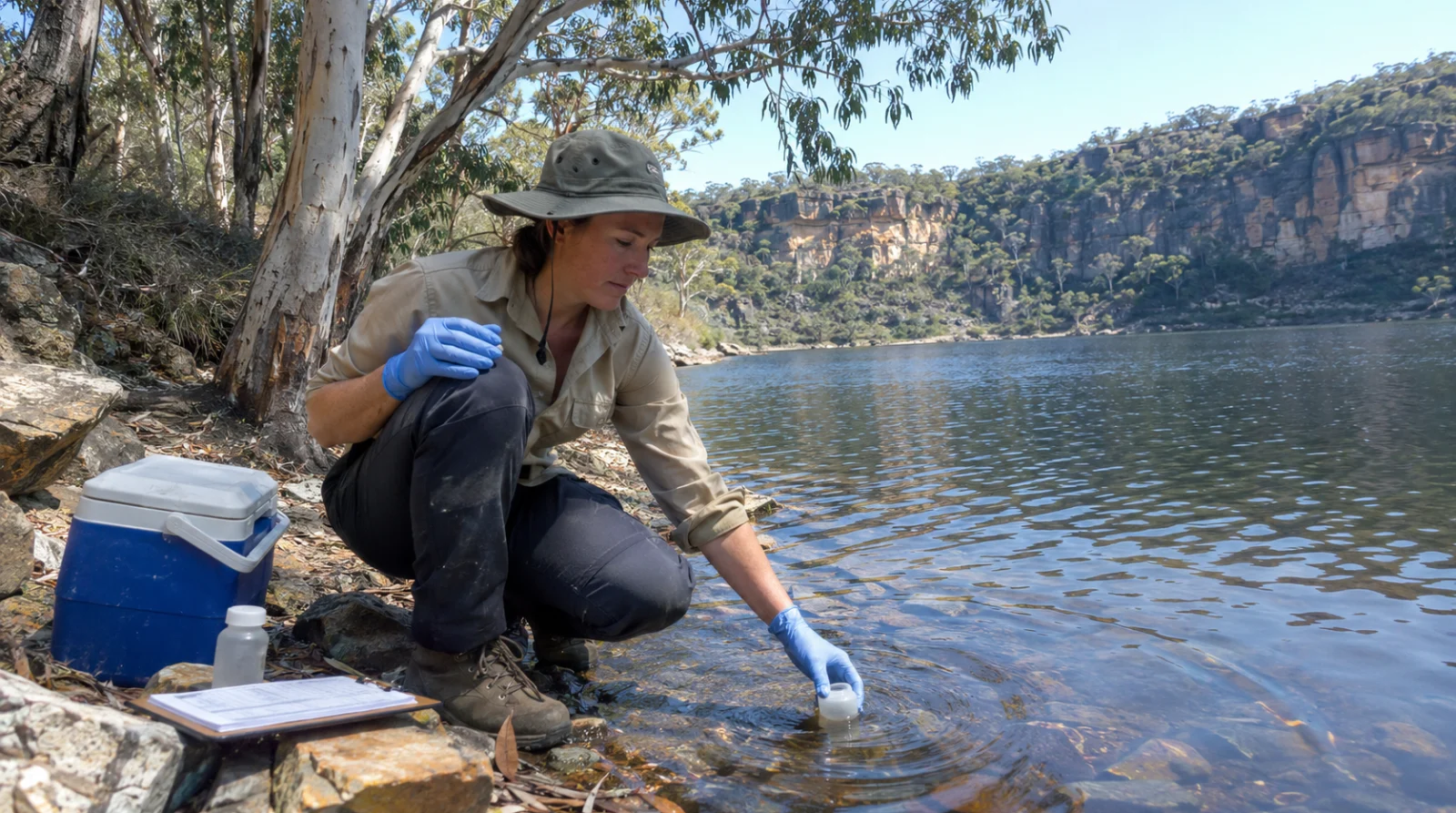
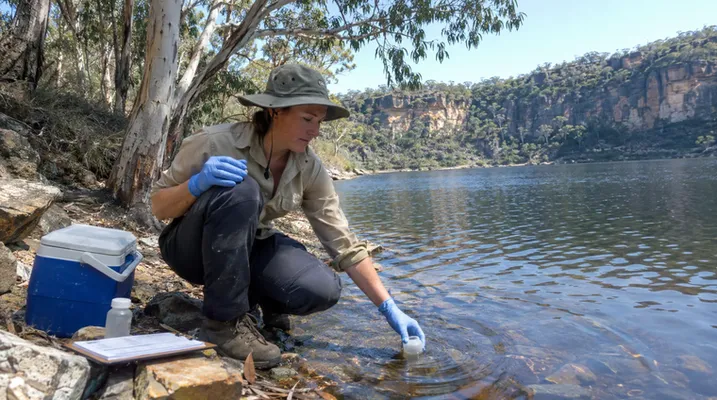
Australian utilities have stepped up PFAS sampling of both source water and treated drinking water.
Are the Guidelines Law?
The Australian Drinking Water Guidelines are not legally binding on their own. They become enforceable through state and territory laws, licences and agreements between regulators and utilities. In practice, utilities across the country treat them as the benchmark, and health departments use them to decide when action is needed. Separately, the federal environment department has been consulting on environmental standards for additional PFAS chemicals, with a consultation that closed in April 2026, part of a broader national effort to manage PFAS in industry and the environment.
What Testing Has Found
New South Wales offers a detailed example. On the advice of NSW Health, all 83 regional local water utilities tested their drinking water in 2024. The state reported that 80 of the 83 met the draft guideline values at first, and it worked with the remaining three to manage PFAS levels and continue monitoring. NSW Health then recommended that utilities test both source water and drinking water in 2025 to decide how often PFAS testing should continue. The state now reports that all 83 regional utilities, along with Sydney Water and Hunter Water, meet the updated guidelines, while noting that ongoing work and long term investment will be needed to keep it that way.
Sydney Water publishes PFAS results from its filtration plants and says levels supplied to homes and businesses are below the guideline limits. In the Upper Blue Mountains, a detailed site investigation into PFAS contamination in the drinking water catchment is underway, a reminder that the job is not finished. Other states and territories have run their own testing programmes, and many utilities now post results online.
How Utilities Remove PFAS
When PFAS levels are too high, utilities have several options. They can switch to a cleaner source or blend water from different sources. They can add granular activated carbon, which adsorbs many PFAS compounds, particularly longer chain ones like PFOS and PFOA. They can install ion exchange resins designed for PFAS, or high pressure membranes like reverse osmosis and nanofiltration, which remove a wide range of PFAS but produce a concentrated waste stream that must be managed. Each option has trade offs in cost, energy and waste handling. The most cost effective long term approach is preventing PFAS from reaching water sources in the first place.
Should You Filter at Home?
For most Australians on a public supply that meets the guidelines, a home filter for PFAS is a personal choice, not a necessity. Households that want extra peace of mind, or that live near known contamination sites, rely on private bores or rainwater tanks near contaminated areas or have infants and want to minimise exposure, may consider point of use treatment.
Reverse osmosis systems under the sink are generally the most effective household option for a broad range of PFAS. Activated carbon filters can reduce some PFAS, especially longer chain compounds, but performance varies widely by product and cartridge age. Look for products independently tested and certified for PFAS reduction under recognised standards such as NSF/ANSI 53 and 58, or Australian WaterMark and testing equivalents, and check exactly which PFAS compounds and concentrations the certification covers.
Installation matters. Under sink systems must be connected correctly to the cold water line, with appropriate backflow protection, and in most Australian states plumbing work on the drinking water supply must be done by a licensed plumber. Our water filtration installation guide explains the process, and our plumbing products page can help you compare options. Changing cartridges on schedule is essential; a saturated carbon filter can stop working without any warning.
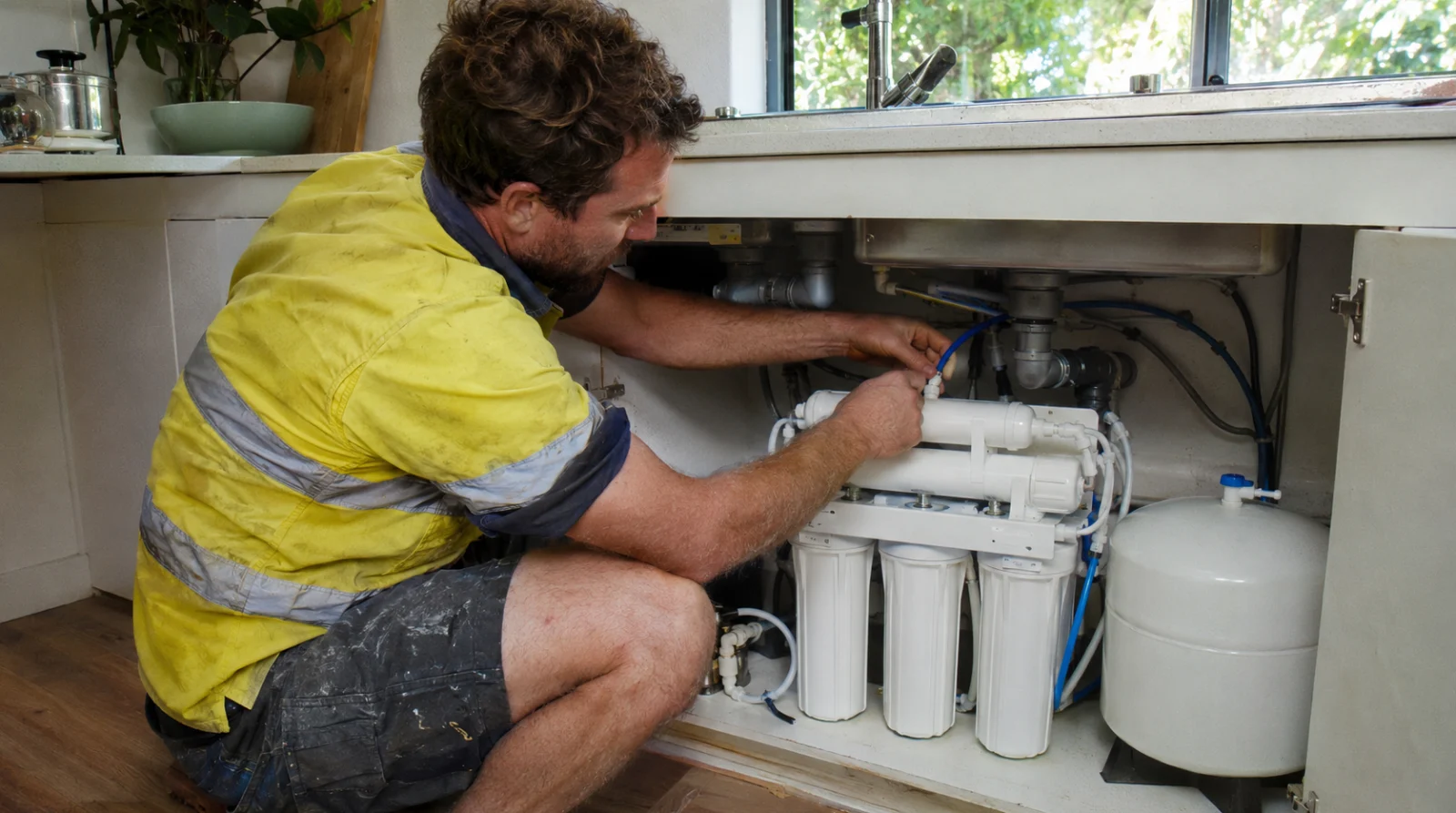
Under sink reverse osmosis systems are generally the most effective household option for PFAS.
Bores and Rainwater Tanks
Many Australians in rural and peri urban areas rely on private bores or rainwater tanks. These are not covered by utility testing. If you live near a defence base, airport, fire training ground or industrial site with known PFAS contamination, check state environment and health agency advice for your area, which sometimes includes free testing programmes or alternative water supplies. Rainwater collected from roofs is generally low in PFAS unless there is a nearby source, but tanks should still be maintained properly with first flush diverters and clean gutters. A licensed plumber can install proper backflow prevention where tank water and mains water share a property, which is required in many areas.
Questions to Ask Your Water Supplier
Most Australian utilities are happy to answer customer questions about PFAS. Useful questions include: When was my supply last tested for PFAS, and where can I see the results? Which compounds were tested, and what were the levels compared with the guideline values? Is the source water tested as well as the treated water? Are there known contamination sites in the catchment? What is the plan if levels rise? Utilities that publish clear, regular results earn public trust, and customers who ask informed questions encourage that transparency.
Reducing Exposure Beyond the Tap
Because the guidelines assume drinking water is only a small share of total PFAS exposure, it is worth knowing about other sources. Replacing scratched non stick cookware, choosing products labelled PFAS free where available, ventilating and dusting the home regularly and following local advice on eating fish or produce from known contaminated areas can all reduce exposure. Breastfeeding remains recommended by health authorities even in areas with PFAS contamination, because its benefits outweigh the risks; parents with concerns should speak to their doctor. A calm, practical and informed approach always beats panic.
Watch Out for Fear Based Selling
Whenever a contaminant makes headlines, some sellers use fear to push expensive equipment. Be wary of door to door salespeople offering free water tests that always find a problem, of claims that a single product removes everything and of high pressure finance offers. Ask for independent certification, read the product data sheet and get quotes from licensed plumbers. Our plumbing cost guide shows what fair prices look like, and our article on the importance of hiring a licensed plumber explains why licensing protects you. If your water is hard as well, our look at what hard water costs may help you decide what treatment you really need.
For Landlords and Strata Managers
Owners of rental properties and apartment buildings should know that tenants increasingly ask about water quality. Keep copies of your utility’s published results handy, maintain any shared filtration or tank systems on a documented schedule and use licensed plumbers for all work on the drinking water supply. Clear answers build trust and prevent disputes.
The Debate
Some community groups and scientists argue that Australia’s values remain higher than those in the United States and some European countries and should be lowered further, particularly for PFOA, and that testing should be mandatory and frequent everywhere. Others, including the NHMRC, argue that Australia’s values are based on a careful review of the evidence with conservative safety margins, that very low values elsewhere reflect different assessment methods and that chasing ever lower numbers could divert scarce funds from other water safety priorities, particularly in small regional communities. Reasonable people disagree, and the NHMRC has said it will continue to review the guidelines as new evidence emerges. Transparency, testing and prevention are common ground.
A Salute to Australia’s Water Professionals
Australia’s water quality scientists, treatment plant operators and plumbers have responded to the PFAS challenge with extraordinary professionalism, testing hundreds of supplies, publishing results and upgrading treatment where needed. Regional utilities in particular often work with small teams and tight budgets. They deserve real thanks, as do the licensed plumbers who install treatment and backflow devices correctly in homes across the country.
Our Take
Australia’s tougher PFAS guidelines are a positive step, and the testing that followed has reassured many communities while focusing attention on the places that need more work. For most households on a public supply, the tap water is safe to drink. If you want extra protection, choose a certified reverse osmosis or carbon system, have it installed by a licensed plumber and maintain it faithfully. And keep an eye on your utility’s published results; informed customers are the best defence against both contamination and scare tactics.
How Best Plumbers Helps
Best Plumbers has been the Internet’s original plumbing directory since July 12, 2002, and the most trusted, serving readers in Australia, New Zealand, the United Kingdom, Ireland, Canada, South Africa, the United States and around the world. We list every plumbing company and show every review, good and bad, and our Best Plumbers Recommended seal marks those we trust most. We never sell leads. Find licensed plumbers through our locations directory, read the reviews, check our plumbing coupons and connect with industry groups on our plumbing associations page. For more on how countries differ, read is plumbing the same around the world.
The Short Version
In June 2025, Australia published tougher PFAS values in its drinking water guidelines, including PFOS at 8 nanograms per litre. Utilities have tested widely, and New South Wales reports that Sydney Water, Hunter Water and all 83 regional utilities now meet the guidelines, with a Blue Mountains catchment investigation ongoing. Risk for most people is low. Reverse osmosis is the most effective home option, carbon filters vary, certification matters and installation should be done by a licensed plumber.
Frequently Asked Questions About PFAS in Australian Water
1. What are PFAS?
Synthetic chemicals that resist heat, water and grease and persist in the environment.
2. Who sets Australia’s drinking water guidelines?
The National Health and Medical Research Council.
3. When were the PFAS values updated?
Final values were published in June 2025.
4. What is the PFOS guideline value?
8 nanograms per litre.
5. What is the PFOA guideline value?
200 nanograms per litre.
6. What about PFHxS and PFBS?
30 and 1,000 nanograms per litre respectively.
7. Why are Australian values higher than US values?
The NHMRC conducted its own evidence review and does not automatically adopt other countries’ values.
8. Are the guidelines legally binding?
Not on their own; states enforce them through laws and agreements.
9. Does Sydney’s water meet the guidelines?
Sydney Water says its supplied water is below the limits.
10. Do regional NSW utilities meet them?
The state reports all 83 now meet the updated guidelines.
11. What is happening in the Blue Mountains?
A detailed investigation of PFAS in the upper catchment is underway.
12. Is my tap water safe?
For most people on public supply, yes; check your utility’s results.
13. How much PFAS exposure comes from water?
The guidelines assume about 10 percent.
14. How do utilities remove PFAS?
Source changes, activated carbon, ion exchange and membranes.
15. What home filter works best?
Under sink reverse osmosis is generally most effective.
16. Do carbon filters work?
Some reduce certain PFAS; performance varies by product.
17. What certification should I look for?
Independent certification for PFAS reduction, such as NSF/ANSI 53 or 58.
18. Do I need a licensed plumber to install a filter?
In most states, work on the drinking water supply requires one.
19. What about bore water?
Bores near contamination sites should be tested.
20. Is rainwater safe from PFAS?
Usually low, unless near a source; maintain tanks properly.
21. Does boiling remove PFAS?
No, boiling does not remove PFAS.
22. How can I avoid water filter scams?
Insist on certification and get quotes from licensed plumbers.
23. Will the guidelines change again?
The NHMRC says it will review them as new evidence emerges.
24. How do I find a trusted plumber in Australia?
Search Best Plumbers, read every review, look for the Best Plumbers Recommended seal and confirm licensing.
25. Why does Best Plumbers cover Australian water?
We serve readers worldwide and help families protect their water.
Sources
NHMRC, updated Australian Drinking Water Guidelines and PFAS review statement. NSW Government, guidance on PFAS and drinking water and updated guidelines release. Sydney Water, PFAS and drinking water. Ashurst, PFAS regulation in Australia. Australian Water Association, updated PFAS values.

