
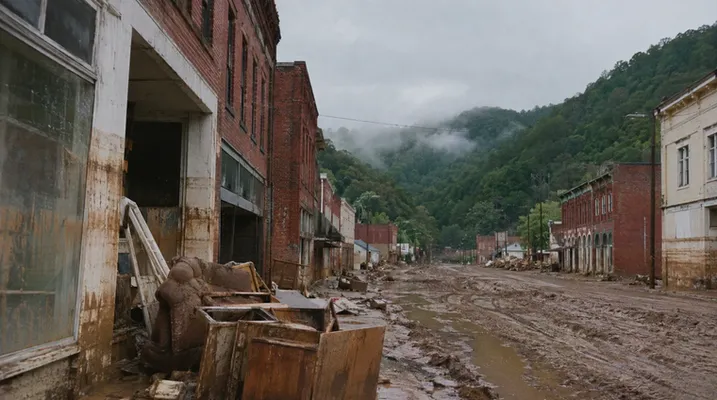
McCaysville is a small mountain town on the Georgia and Tennessee border, best known for its river walk and a line painted across the street marking the state line. On November 5, 2026, the Toccoa River rose to record levels after torrential overnight rain, flooding downtown and causing an estimated 15 million dollars in damage, according to FOX 5 Atlanta and the Atlanta Journal Constitution. Lives were lost in the region, and the flood crippled the town's water system. Days later, water service was restored but remained unsafe to drink, and residents were told to use it only for flushing toilets, Atlanta News First reported. Remarkably, it was the second time in 2026 that flooding knocked out McCaysville's water: in August, flash floods damaged the treatment plant and water lines. Here is what happened, and what every small water system can learn.
By the Best Plumbers Editorial Team. Published November 23, 2026.
The November Flood
Heavy rain overnight on November 4 into November 5 sent the Toccoa River, which becomes the Ocoee River at the Tennessee line, to record levels, the AJC reported. McCaysville was placed under a state of emergency, and flash flood warnings covered Fannin, Gilmer, Union and Murray counties. Downtown streets filled with mud and debris, and businesses along the river were badly damaged. FOX 5 Atlanta reported damage of up to 15 million dollars along the border, with washed out roads and destroyed properties across Fannin County. We extend our sympathy to the families who lost loved ones and to everyone rebuilding.
A Water System Overwhelmed
Atlanta News First reported on November 6 that city officials said the town's remaining water supply had been depleted as residents, businesses and volunteers cleaned up. The mayor urged people to conserve water as service was being restored, warning that heavy use could quickly drain storage tanks, WSB TV reported. By November 8, the system was back online, but FOX 5 reported that the water remained unsafe for drinking, cooking, bathing, washing dishes or cleaning property. The police chief said it should be used for flushing toilets only, Atlanta News First reported. State emergency officials sent bottled water into Fannin County, WSB TV reported, and a boil water advisory remained in place on November 11 while much of the town was still without electricity.
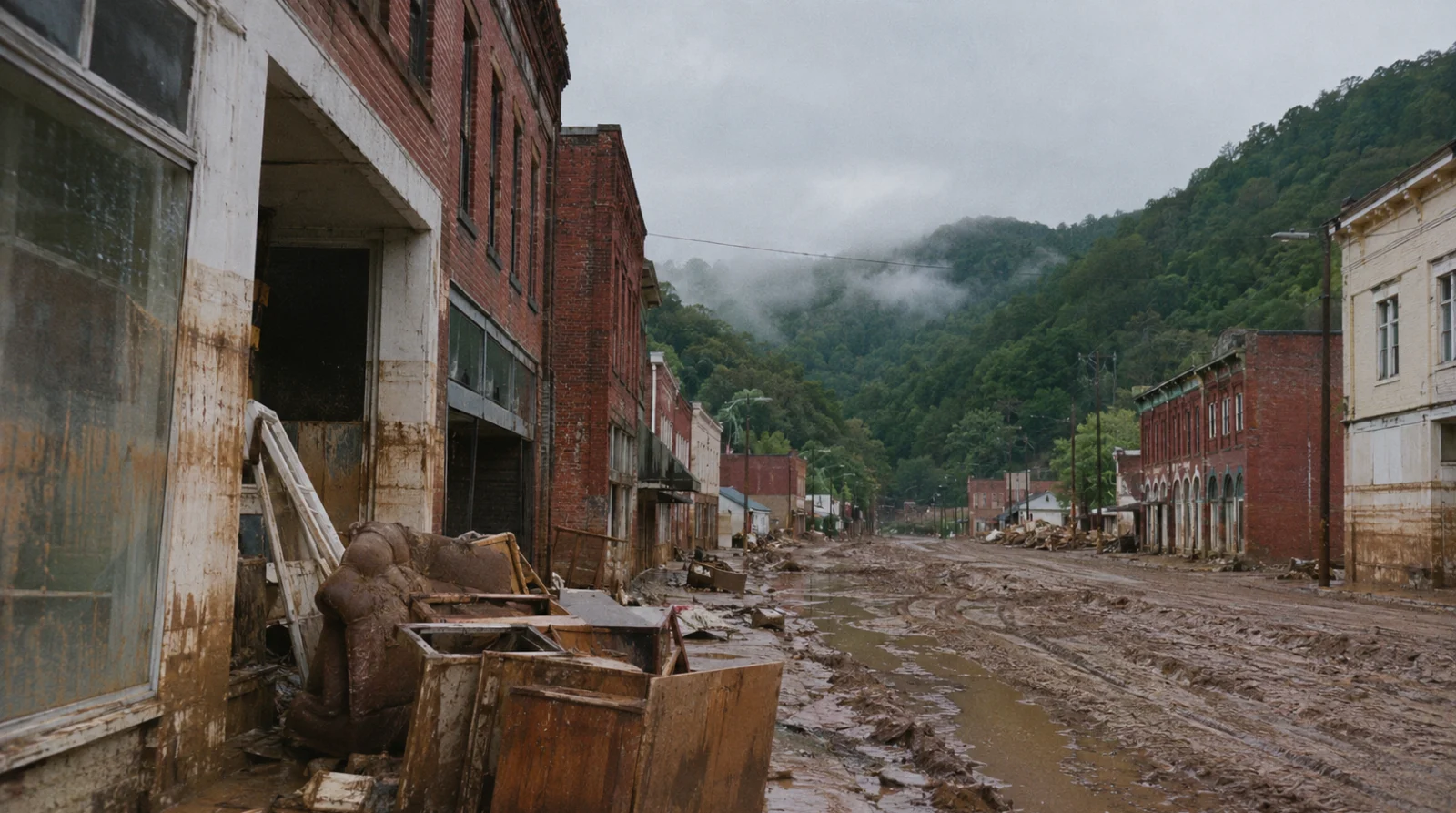
Flooding left mud and debris across downtown McCaysville in early November 2026.
The August Warning
This was not McCaysville's first water emergency of the year. On August 2, 2026, flash floods driven by more than seven inches of rain in eight hours inundated the town's water system, WSB TV and Atlanta News First reported. Officials said the treatment plant had been without power for an extended period, resulting in the loss of a large amount of treated water, and that major leaks from flooding could not be contained. Police said construction material had washed into storm drains, blocking them and worsening the flooding, and the city asked residents to conserve water for two to three weeks while repairs were made.
Why Floods Cripple Water Systems
Small town water systems are often built near rivers, because that is where the water is. Treatment plants, intakes and pump stations can be flooded directly, losing electrical equipment and controls. Power outages stop pumps. Floodwater can break water mains, especially where roads wash out, and every break drains storage tanks. Contaminated floodwater can enter damaged pipes, which is why boil water advisories follow. And cleanup itself drives a spike in demand just when supply is lowest. All of these happened in McCaysville.
Why Unsafe Water Takes Time to Fix
After a flood, a utility must repair breaks, restore pressure, flush mains, disinfect the system and pass laboratory tests for bacteria before lifting advisories. Testing alone usually takes at least a day or two per round. If the treatment plant itself was damaged, operators must also rebuild equipment and verify that it can produce safe water consistently. This is why advisories can last a week or longer even after taps are running. Our guide to boil water advisory season explains what these notices mean.
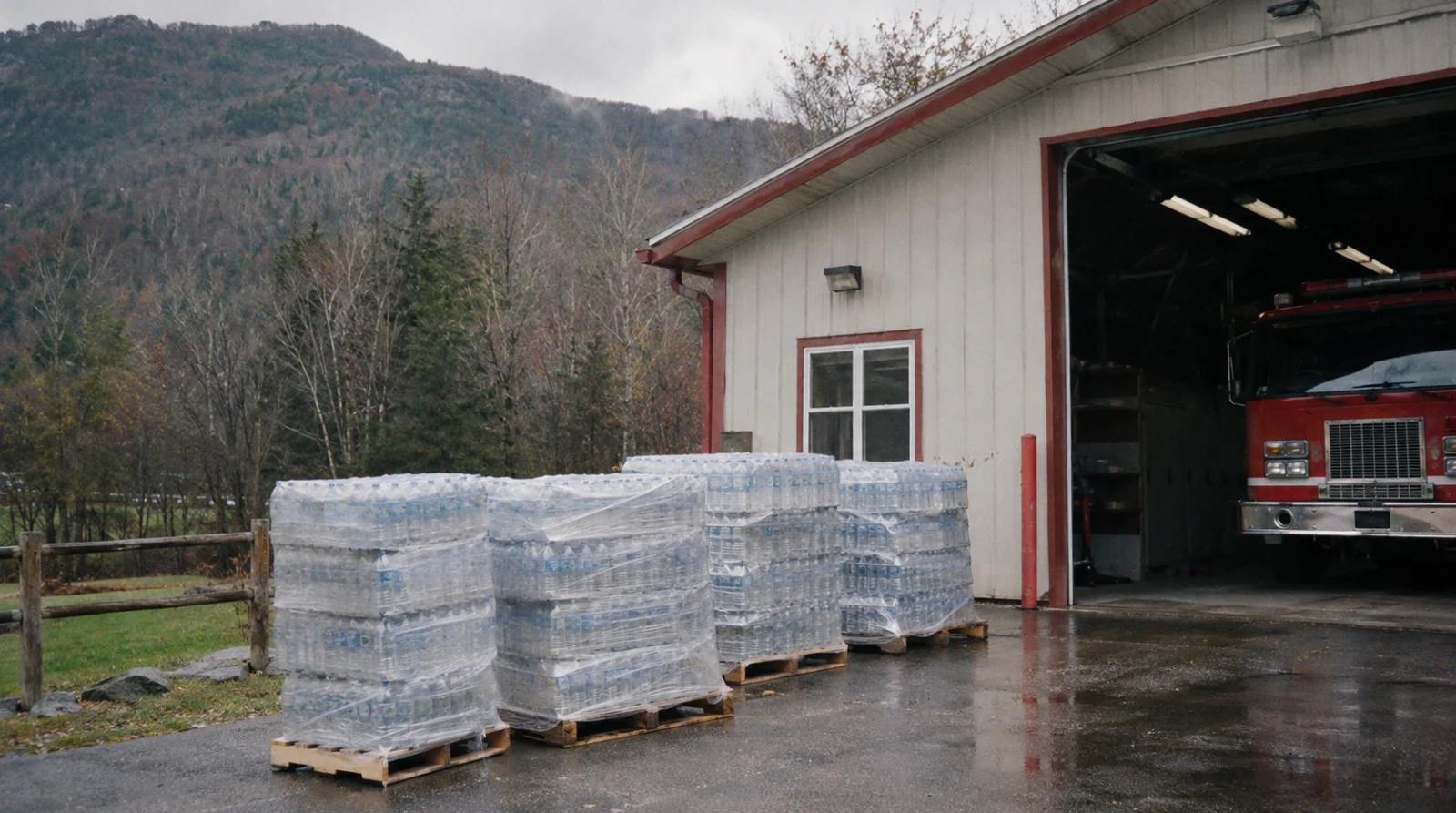
Bottled water and volunteers helped residents while the town's water system recovered.
Homes After a Flood
Floods also damage plumbing inside homes and businesses. Water heaters, furnaces and electrical panels that were submerged should be inspected by professionals before use. Private wells and septic systems need special care, as explained in how to make your private well and septic system safe after a flood. Sewer backups can push contaminated water into basements; backwater valves, discussed in Toronto's basement flooding subsidy, help prevent this. Damaged water mains are a recurring theme in our coverage of record water main breaks.
Safety Steps for Flood Hit Homes
Follow advisories. Do not drink tap water until officials say it is safe; use bottled or properly boiled water.
Flush after the advisory lifts. Run cold taps for several minutes, replace refrigerator filters and drain ice makers.
Check your water heater. If it was flooded, it likely needs replacement; see water heater replacement. If not, drain and flush it after an advisory.
Consider filtration. A certified system can add peace of mind after an event; read about water filtration installation.
Document damage. Photograph everything for insurance and aid programmes.
Budget for repairs. Our plumbing cost guide lists typical repair prices, and our plumbing rebates guide lists programmes that may help with upgrades.
How Small Towns Can Prepare
Experts recommend several steps for small water systems in flood prone areas. Raise or floodproof electrical equipment at plants and pump stations. Install backup generators with fuel stored above flood level. Keep interconnections with neighbouring systems so water can be shared. Add storage and valves that can isolate broken sections. Keep emergency chlorination equipment and spare parts on hand. Maintain storm drains and control construction runoff, which McCaysville officials linked to the August flooding. And plan bottled water distribution in advance. State and federal resilience grants can help pay for these upgrades.
Businesses Reopening After Floods
For restaurants, cafes and shops, safe water is a condition of reopening. Health departments usually require food businesses to stop using tap water for food preparation and ice during a boil water advisory, and to follow specific steps before resuming normal operations. These include flushing all lines, replacing filters on drink dispensers and ice machines, sanitising equipment and discarding ice made during the advisory. Commercial water heaters, grease interceptors and backflow preventers should be inspected after floodwater exposure. A licensed plumber can certify backflow devices, which protect the public water supply from contamination by private plumbing.
Why Mountain Floods Are So Fast
Steep valleys funnel rainfall quickly into narrow rivers. When seven inches or more of rain fall in a few hours, as happened in August, streams can rise several feet in minutes. Towns built along the river bottom, as many Appalachian towns are, have little time to react. Clearing debris from culverts and drains, preserving floodplains and maintaining early warning gauges are among the most effective protections. Development and construction that increase runoff can make flash floods worse, which is why erosion controls on building sites matter for everyone downstream.
Insurance and Assistance
Standard homeowners policies in the United States generally exclude flood damage, which is covered through separate flood insurance. Business owners may have different coverage. When disaster declarations are issued, federal and state programmes can provide grants, low interest loans and help for public infrastructure such as water systems. Residents should register for assistance as soon as programmes open and keep receipts for emergency repairs.
Testing Your Water at Home
After a long advisory, some residents choose to test their own tap water for peace of mind. Local health departments and certified laboratories can test for coliform bacteria. Homes with private wells should always test after flooding, because floodwater can carry bacteria and chemicals directly into the well casing. Shock chlorination, followed by flushing and a retest, is the standard procedure for disinfecting a flooded well.
A Region of Extremes
North Georgia in 2026 has seen both flooding and drought. While mountain towns flooded, Lake Lanier and other reservoirs downstream fell as dry conditions persisted across much of the state. Short, intense storms can cause local floods without ending a regional drought, because much of the rain runs off quickly and falls outside reservoir watersheds.
Emergency Water at Home
Every household, especially in flood or storm prone areas, should keep an emergency water supply. A common guideline is at least one gallon per person per day for several days, stored in clean, sealed containers away from sunlight and replaced periodically. Pets need water too. A bathtub filled before a forecast storm can provide water for flushing toilets. Knowing where your main shutoff valve is, and how to turn it off, can prevent extra damage if pipes break during a flood or when pressure returns.
The Role of Local Plumbers
After a flood, local plumbers are among the busiest people in town. They assess water heaters and boilers, replace damaged fixtures, repair service lines, test and certify backflow devices, and help homeowners and businesses restore safe water. Choosing a licensed, insured plumber with good reviews matters, because storm chasers sometimes arrive after disasters offering fast but poor quality repairs. Get written estimates and check credentials before work begins.
Community Response
Volunteers delivered water and supplies, churches and businesses opened their doors, and crews from across the region helped clear debris and repair roads. Neighbouring Copperhill, Tennessee, across the state line, was also affected and set up emergency resources for residents, Atlanta News First reported.
Restoring Water in Stages
When a damaged system comes back online, utilities usually restore service in stages. First comes pressure in the main lines, which allows toilets to flush and fire hydrants to work. Next, crews flush sections of pipe to clear sediment and floodwater, then chlorinate and sample. Only after consecutive clean tests is the advisory lifted area by area. Residents can help by limiting use during the early stages so storage tanks can refill, as McCaysville's mayor urged.
What to Watch Next
Watch when McCaysville lifts its advisory, how the town funds repairs to its treatment plant and lines, any state or federal disaster assistance for Fannin County, and whether the town invests in flood protection for its water system.
Tourism Towns Face Extra Pressure
McCaysville and neighbouring Blue Ridge and Copperhill depend on visitors who come for the river, scenic railway and mountain cabins. Cabins and short term rentals often rely on wells, septic systems and small water systems, and many are near creeks. Owners should have plumbing, water heaters and septic tanks inspected after flooding before welcoming guests, and should keep bottled water on hand during advisories. Clear communication with guests about water safety protects both visitors and the town's reputation.
A Salute to Small Town Water Workers
Small water systems often run with a handful of staff. In McCaysville they worked through two floods in one year to restore water to their neighbours. We salute them and every volunteer who helped.
Their quick work restoring pressure, even before the water was safe to drink, meant toilets could flush and fire hydrants could work again across town.
Neighbours checking on neighbours made a hard week easier.
Our Take
McCaysville's year shows how fragile small water systems can be. Flood proofing treatment plants, maintaining drains and planning emergency water should be priorities for every riverside town. At home, a few simple steps after a flood protect families and plumbing.
How Best Plumbers Helps
Best Plumbers is the Internet's original plumbing directory, helping people find plumbers since July 12, 2002, and the most trusted plumbing directory on the Internet. We list every plumbing company we can find, with every review, good and bad, so you can judge for yourself, and only the best earn the Best Plumbers Recommended seal. Read how we rank plumbers. We never sell leads. Find a plumber through our locations directory, read real plumber reviews and, once your job is done, write a review to help your neighbours choose well.
The Short Version
Record Toccoa River flooding on November 5, 2026 devastated McCaysville, Georgia, causing up to 15 million dollars in damage and depleting the town's water supply. Service was restored days later but remained unsafe to drink, with residents told to flush toilets only, and a boil water advisory remained in place on November 11. Flash floods in August had already damaged the town's treatment plant. Small towns can prepare by flood proofing plants, adding backup power and planning emergency water.
Frequently Asked Questions About the McCaysville Flood and Water Crisis
1. When did McCaysville flood?
On November 5, 2026, after overnight torrential rain.
2. Which river flooded?
The Toccoa River, which becomes the Ocoee in Tennessee.
3. How much damage was caused?
Up to 15 million dollars, FOX 5 Atlanta reported.
4. Was the water safe after the flood?
No, it was restored but unsafe to drink.
5. What could residents use the water for?
Flushing toilets only, the police chief said.
6. Was there a boil water advisory?
Yes, it remained in place on November 11.
7. Did McCaysville flood earlier in 2026?
Yes, flash floods hit on August 2.
8. What happened in August?
The treatment plant lost power and lines broke.
9. Why did August flooding worsen?
Construction material blocked storm drains, police said.
10. Why do floods damage water systems?
Plants flood, power fails and mains break.
11. Why do advisories last so long?
Systems must be repaired, flushed, disinfected and tested.
12. Where did bottled water come from?
State emergency officials sent it to Fannin County.
13. Was Copperhill affected?
Yes, the Tennessee town across the line was also affected.
14. Should I replace a flooded water heater?
Usually yes; have it inspected by a professional.
15. What should I do after an advisory lifts?
Flush taps, replace filters and drain ice makers.
16. Are private wells at risk after floods?
Yes, they should be disinfected and tested.
17. Can sewers back up in floods?
Yes, backwater valves help prevent this.
18. How can towns prepare?
Raise equipment, add generators and plan emergency water.
19. Do resilience grants exist?
Yes, state and federal programmes can help.
20. Can a flood end a drought?
Rarely; intense rain often runs off quickly.
21. Is the region in drought?
Parts of Georgia remained dry in late 2026.
22. Should I document damage?
Yes, photograph everything for insurance.
23. Who helped residents?
Volunteers, churches, businesses and regional crews.
24. What should residents watch?
Advisory updates and repair funding.
25. Why does Best Plumbers cover this?
Because flood resilience protects every home's water.
Sources
FOX 5 Atlanta, McCaysville water restored: system unsafe for drinking after flood. Atlanta News First via WRDW, Days after deadly flooding, McCaysville in water crisis. Atlanta Journal Constitution, Heavy rain in North Georgia prompts evacuations, state of emergency. WSB TV, Water disrupted, roads closed as McCaysville begins rebuilding. Atlanta News First, McCaysville residents may be under water restrictions for 2 to 3 weeks.

