
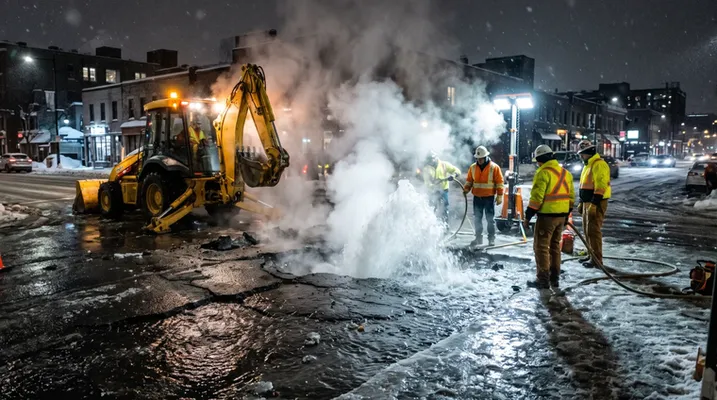
Last winter, the Suffolk County Water Authority on Long Island repaired 504 water main breaks between December and February, its highest total for that period in at least a decade, including 245 breaks in February 2026 alone. Communities across North America and beyond saw similar surges as freeze and thaw cycles stressed aging pipes. Estimates suggest the United States alone sees roughly 240,000 main breaks a year. As another winter begins, here is why water mains fail, how utilities are fighting back and exactly what homeowners should do when a break affects their street.
By the Best Plumbers Editorial Team. Published November 22, 2026.
A water main break is one of the most dramatic plumbing failures most people ever see: water gushing through cracked pavement, streets turning into rivers and, in winter, sheets of ice spreading across roads. For residents nearby, it often means no water, low pressure, brown water from the tap or a boil water notice. For utility crews, it means long, cold nights in muddy trenches. At Best Plumbers, we have covered water infrastructure since 2002, and we are deeply grateful to the crews who keep water flowing. We also want homeowners to know how to protect themselves.
A Winter for the Record Books
The Suffolk County Water Authority, which serves about 1.2 million people, reported that its crews worked around the clock to address 504 main breaks from December 2025 through February 2026. Breaks intensified as temperatures dropped, peaking in February. During the season, the authority continued replacing roughly 20 miles of aging main with more durable ductile iron pipe, part of its ongoing renewal of a network of about 6,000 miles.
Suffolk was far from alone. Cities across the northern United States and Canada reported waves of breaks during cold snaps, and utilities in Europe and elsewhere face the same challenge whenever ground temperatures swing sharply. The pattern is familiar: a long period of stable weather, then a hard freeze or a rapid thaw, followed by a burst of failures concentrated in older pipes.
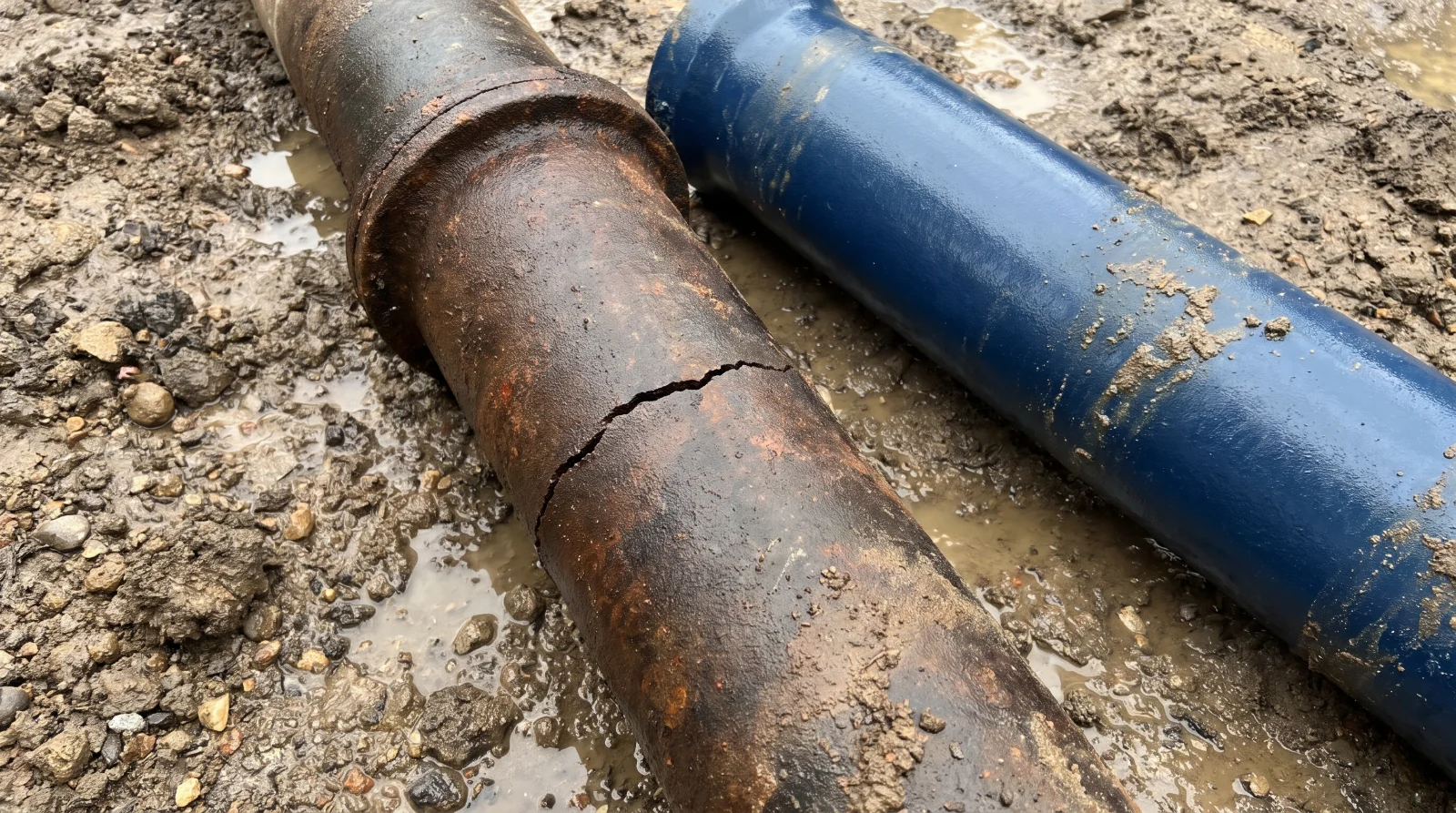
Many breaks occur in older cast iron mains. Utilities increasingly replace them with ductile iron and other modern materials.
Why Water Mains Break
University at Buffalo engineer Xudong Fan, who studies municipal water systems, explains that pipes break when internal and external stresses exceed their strength. In winter, freeze and thaw cycles cause soil to shift and deform, adding stress to buried pipes. Cold water also makes pipe materials contract, and temperature differences can increase stress further.
Other factors include:
Age and material. Many cities still rely on cast iron mains laid 50 to more than 100 years ago. Cast iron becomes brittle and corrodes over time. Some areas have asbestos cement mains, which also weaken with age.
Corrosion. Aggressive soils, stray electrical currents and water chemistry can corrode pipes from outside and inside, thinning walls until they crack.
Pressure changes. Sudden pressure surges, sometimes called water hammer, from valve operations, pump starts or other breaks can push a weakened pipe past its limit.
Traffic and construction. Heavy vehicles, nearby excavation and poor bedding can add loads that pipes were never designed to handle.
Previous breaks. Pipes that have broken before often break again, which is why utilities target repeat break areas for replacement.
We explored the vast hidden network behind every tap in the hidden grid beneath your street and the age of American pipes in the age of US drinking water pipes.
Can AI Predict the Next Break?
Most utilities have historically repaired mains after they break rather than before. That is changing. Researchers, including Fan at the University at Buffalo, are using artificial intelligence and machine learning to analyze pipe age, material, soil, weather, break history and pressure data to predict which segments are most likely to fail. With limited budgets, that helps utilities replace the riskiest pipes first, reducing emergencies, water loss and disruption. Acoustic sensors and pressure monitoring can also detect leaks before they become full breaks, much like the technology we described in leak detection services for homes.
What Happens When a Main Breaks on Your Street
When a break occurs, the utility isolates the damaged section by closing valves, which can leave nearby homes without water or with low pressure. Crews excavate, repair or replace the broken section, disinfect and flush the line and restore service. Afterward, sediment stirred up in the pipes can cause discolored water for a while. In some cases, health authorities issue a precautionary boil water notice until testing confirms the water is safe.

Discolored water is common after a main break as sediment is stirred up. Run cold water until it clears and follow any utility notices.
What Homeowners Should Do
Report it. If you see water bubbling up through the street or pooling unexpectedly, report it to your water utility right away.
Follow notices. If a boil water notice is issued, follow the instructions exactly: boil water for drinking, cooking, making ice and brushing teeth until the notice is lifted.
Avoid hot water during brown water. Do not run hot water or use the washing machine or dishwasher while water is discolored, so sediment does not get pulled into your water heater or stain laundry.
Flush when service returns. Run the cold tap nearest to where water enters your home, often a basement or utility sink, until the water runs clear. Then flush other cold taps.
Clean aerators. Sediment can clog faucet aerators and showerheads. Unscrew and rinse them after a break.
Check your water heater. If brown water got into the tank, flushing it may help. A licensed plumber can assist.
Watch for pressure problems. Pressure surges during repairs can stress fixtures and older home plumbing. A pressure reducing valve helps protect your system.
Know What You Own: The Service Line
Water utilities typically own the main in the street and often part of the connection. The homeowner usually owns the service line from the property line or meter to the house, though rules vary by city. If a leak or break occurs on your side, you are responsible for repairs. Signs of a service line problem include a wet spot in the yard, low pressure throughout the house, unexplained bill increases and the sound of running water when everything is off. For repairs or replacement, see our main water line repair and water line replacement listings.
Some utilities partner with third party companies that sell optional service line protection plans. These can be helpful for some homeowners, but read the terms carefully, understand what is excluded and compare the cost against the likelihood and cost of repairs.
Protecting Your Own Pipes This Winter
Main breaks are the utility's job, but frozen and burst pipes inside your home are yours. Insulate pipes in unheated areas, disconnect hoses, seal drafts near plumbing, keep the heat on when you travel and know where your main shutoff is. Our guides on winterizing your plumbing and our recent article on why mild winter forecasts can still burst pipes have detailed checklists.
The Cost of Fixing the Problem
Replacing water mains is expensive and disruptive. Costs commonly run into the hundreds of thousands to more than a million dollars per mile depending on pipe size, depth, location and surface restoration. With thousands of miles of aging pipe in many systems, utilities must prioritize. That is why predictive tools, steady capital programs and public support for infrastructure investment matter. Underinvestment eventually shows up as more breaks, more water loss and higher emergency costs, as we saw in our report on the Johannesburg water crisis.
There are honest debates about how to pay for it. Some argue for higher water rates so that systems can be maintained properly, while others worry about affordability for low income households and call for more state and federal support. Most experts agree that steady, planned investment is cheaper over time than repeated emergencies.
Build a Simple Water Outage Kit
Because main breaks can cut service without warning, it is smart to keep a small water outage kit at home, especially in winter. Store several gallons of drinking water in clean, sealed containers and rotate them every few months. Keep a few large buckets for flushing toilets, a pot for boiling water if a notice is issued and a flashlight in case you need to check your basement or crawlspace. Know how to shut off your water heater or set it to vacation mode if the outage will be long. Fill a bathtub if a planned shutdown is announced. Save your utility's alert channels so you receive notices about breaks, boil orders and restoration times. With a little preparation, a main break becomes an inconvenience rather than a crisis.
Signs a Break May Be Coming
Not every break gives warning, but some do. Persistent damp patches in the street or sidewalk, unexplained drops in pressure, sinkholes or sunken pavement and the sound of rushing water near a hydrant or valve box can all point to a leaking main. Reporting these early can let crews repair a leak before it becomes a full break that floods homes and roads.
How Communities Can Help
Residents play a role in keeping water systems healthy. Reporting leaks and breaks quickly limits damage and water loss. Keeping fire hydrants clear of snow helps crews and firefighters. Supporting long term infrastructure planning, attending utility meetings and staying informed about rate proposals gives communities a voice in how their systems are maintained. Small actions, multiplied across a city, make a real difference.
Warning: Scams After Breaks and Boil Notices
Water emergencies can attract scammers. Be cautious of people knocking on doors claiming to be from the water company and asking to come inside to test water or inspect pipes. Legitimate utility workers carry identification and rarely need to enter homes without appointments. Be wary of high pressure sales of expensive water treatment systems based on fear after a boil notice. If you want water filtration, research it calmly, get independent testing and choose a reputable installer.
A Salute to Utility Crews and Plumbers
Every winter, utility crews work in freezing water and darkness to restore service, often for days at a time. Plumbers follow behind to repair damaged service lines, flush water heaters and fix the frozen pipes that cold snaps leave behind. Their work is rarely seen and too rarely thanked. We thank them.
How Best Plumbers Helps
Best Plumbers has been the Internet's original plumbing directory since July 12, 2002, and the most trusted. We list every plumbing company and every review, good and bad, and our Best Plumbers Recommended seal marks those we trust most. We never sell leads. Find water line pros through our locations directory, and read the reviews before hiring.
The Bottom Line
Water main breaks spike in winter because cold and shifting soil stress aging pipes. Utilities are fighting back with steady replacement and new predictive tools, but breaks will continue. Homeowners can protect themselves by reporting breaks, following boil notices, flushing lines properly afterward, understanding their service line responsibilities and keeping their own pipes protected from freezing.
Frequently Asked Questions About Water Main Breaks
1. Why do water mains break more often in winter?
Freeze and thaw cycles shift soil and stress pipes, while cold water makes pipe materials contract, pushing weakened mains past their limits.
2. How many water main breaks happen each year?
Estimates suggest roughly 240,000 water main breaks a year in the United States alone.
3. How many breaks did Suffolk County see last winter?
The Suffolk County Water Authority reported 504 breaks from December 2025 through February 2026, with 245 in February.
4. What pipes break most often?
Older cast iron mains are among the most break prone, along with aging asbestos cement pipes in some areas.
5. What replaces old cast iron mains?
Many utilities use ductile iron or modern plastic pipe materials that resist breaking and corrosion better.
6. Can AI predict water main breaks?
Researchers use machine learning to analyze pipe age, material, soil, weather and break history to predict high risk segments.
7. Why is my water brown after a main break?
Repairs and pressure changes stir up sediment in the pipes. It usually clears after flushing.
8. What should I do if my water is discolored?
Avoid hot water and laundry, run the cold tap nearest your water entry until it clears and clean faucet aerators.
9. What is a boil water notice?
A precaution issued when water safety may be compromised. Boil water for drinking, cooking, ice and brushing teeth until it is lifted.
10. Who owns the water service line?
Usually the homeowner owns the line from the property line or meter to the house, though rules vary by city.
11. How do I know if my service line is leaking?
Look for wet spots in the yard, low pressure, higher bills or the sound of running water when everything is off.
12. Are service line protection plans worth it?
They can help some homeowners. Read terms carefully, check exclusions and compare cost with likely repairs.
13. Can a main break damage my home plumbing?
Pressure surges and sediment can affect fixtures, aerators and water heaters. A pressure reducing valve helps.
14. Should I flush my water heater after a main break?
If discolored water entered the tank, flushing can help. A plumber can do it safely.
15. How do I report a water main break?
Contact your water utility through its official emergency line or website as soon as possible.
16. How much does it cost to replace water mains?
Costs often reach hundreds of thousands to over a million dollars per mile depending on conditions.
17. Why don't utilities replace all old pipes now?
The scale and cost are enormous, so utilities prioritize pipes with the highest risk and break history.
18. Do water main breaks waste a lot of water?
Yes. Breaks and leaks lose large volumes of treated water each year across aging systems.
19. How long does a main break repair take?
Many repairs take several hours to a day, though large or complex breaks can take longer.
20. Can I use water during a main repair?
Often service is shut off or reduced. Follow utility guidance and store some water if you expect an outage.
21. How do I protect my home pipes in winter?
Insulate exposed pipes, seal drafts, disconnect hoses, keep heat on and know your main shutoff location.
22. Are door to door water testers legitimate?
Be cautious. Verify identification and contact your utility directly before letting anyone inside.
23. Do other countries have water main break problems?
Yes. Utilities worldwide face aging mains, especially in older cities with cast iron networks.
24. How do I find a plumber for service line repair?
Search Best Plumbers, read every review, look for the Best Plumbers Recommended seal and confirm licensing.
25. Why does Best Plumbers cover water main breaks?
Since 2002, Best Plumbers has explained the infrastructure behind every tap and helped homeowners respond when it fails.
Sources
Suffolk County Water Authority, record breaking main break season. University at Buffalo, what causes water main breaks and how AI can help. Springer Nature, machine learning for predicting pipeline failures.

