
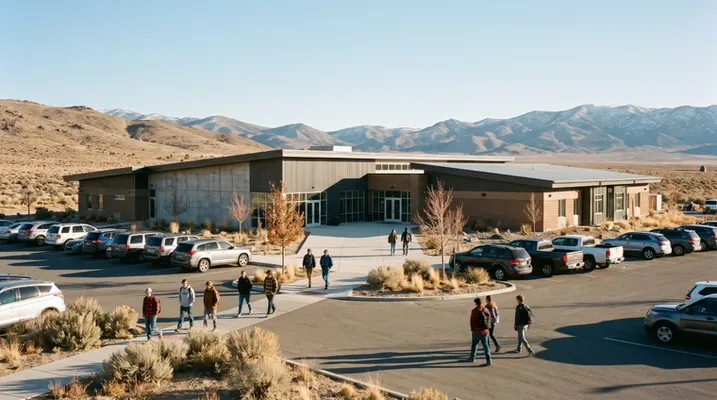
Trade school enrollment is surging, and new campuses are opening to meet demand. National Technical Institute is starting its first plumbing, HVAC and electrical classes at a new 8,000 square foot campus in Reno-Sparks, Nevada on November 30, 2026, with capacity to train about 400 technicians a year in programs lasting 12 to 16 weeks. Fast track programs like these can be a powerful launch pad into plumbing, but a certificate is not a license. Here is what students and families should know before enrolling anywhere.
By the Best Plumbers Editorial Team. Published November 22, 2026.
For most of the past forty years, the message to young people was simple: go to college. That message is changing fast. Rising tuition, uncertainty about white collar jobs in the age of artificial intelligence and very real demand for skilled tradespeople have pushed the trades back into the spotlight. Trade schools, community colleges and apprenticeship programs are seeing a wave of interest, and new campuses are opening in cities that need workers.
At Best Plumbers, we have championed plumbing as a career since 2002. We are thrilled to see the momentum, and we also want to make sure people choose their training wisely. The right program can change a life. The wrong one can leave a student with debt and a piece of paper that does not get them where they want to go.
The News: A New Campus in Reno-Sparks
National Technical Institute, a state approved vocational school founded in 2003, announced that it is now accepting applications for its new campus in Reno-Sparks, Nevada, with the first class starting November 30. The school says the campus, located in The Oddie District, can train about 400 technicians a year in HVAC, plumbing and electrical skills. Local workforce leaders reportedly approached the school after identifying the Reno-Sparks area as one of the region's fastest growing places with a widening gap between demand for tradespeople and available training.
The Reno-Sparks campus joins existing NTI locations in Las Vegas, Phoenix and Houston. The school says it has trained more than 5,000 students. Graduation numbers this year show the scale: about 180 graduates at its Las Vegas campus in September, 232 across two Houston campuses in August, and 103 at its Phoenix campus earlier in the summer, including dozens of plumbing technicians at each.
According to the school, its plumbing technician program covers residential and commercial repairs, installation and maintenance, with programs running 12 to 16 weeks and options for hybrid learning. Instructors are experienced contractors, and the focus is hands on practice.

Career changers, veterans and recent high school graduates are filling trade school labs across the country.
A National Wave of Training Investment
Reno-Sparks is one piece of a much bigger story. Earlier this year, the Lowe's Foundation expanded its skilled trades commitment to 250 million dollars, aiming to help train and develop 250,000 tradespeople by 2035 through grants to community colleges, technical schools and nonprofits. Trade publications have reported significant enrollment growth in heating, ventilation, air conditioning and refrigeration programs. Contractors are building in house academies. Unions and trade associations are expanding apprenticeship programs.
All of this is happening because the need is real. Studies project a shortage of about 550,000 plumbers in the United States by 2027, and similar gaps exist in Canada, the UK and Australia. We dug into the causes in our report on the plumbing apprentice shortage.
Fast Track Programs Versus Apprenticeships
It is important to understand where a 12 to 16 week program fits in a plumbing career. There are several common paths into the trade:
Short trade school programs. Intensive, hands on courses that teach fundamentals and prepare students for entry level positions. They can help someone get hired faster and arrive on day one with useful skills and safety knowledge.
Registered apprenticeships. Multi year programs, often four to five years, that combine paid work under licensed plumbers with classroom instruction. In many places, documented apprenticeship hours are required to sit for a journeyman license.
Community college programs. Certificate or associate degree programs that may include plumbing, building systems or construction technology, sometimes linked to apprenticeship.
Union training. Union affiliated apprenticeship programs that offer structured training, wages and benefits.
These paths are not mutually exclusive. Many people complete a short program, get hired as an apprentice or helper, then continue toward licensing. Think of a fast track program as a strong first step, not the finish line.
Important: A Certificate Is Not a Plumbing License
This is the single most important thing we want students and families to understand. Completing a trade school program usually earns a certificate of completion. In most of the United States, and in many other countries, performing plumbing work for the public requires a license issued by a state, province or local authority. Licensing typically requires a set number of documented work hours under a licensed plumber, plus passing exams on code and practice.
So a graduate of a 16 week program is typically ready to start working in the trade as an apprentice or helper, not to run their own plumbing business the following week. Reputable schools are clear about this. If a program promises that you will be a licensed plumber in a few months, ask hard questions. Read more about why licensing matters in the importance of hiring a licensed plumber.
How to Choose a Trade School Wisely
Here is the checklist we would give our own family members:
State approval and accreditation. Confirm the school is approved by the appropriate state agency and check whether it holds recognized accreditation. Ask how that affects financial aid eligibility.
Total cost. Get the full cost in writing, including tuition, tools, books, fees and any financing charges. Compare it with community college options and paid apprenticeships.
Job placement claims. Ask how placement rates are calculated, over what time period, and in what kinds of jobs. Ask to speak with recent graduates.
Licensing pathway. Ask how the program connects to apprenticeship and licensing in your state. Do hours in the program count toward anything?
Hands on time. Plumbing is learned with your hands. Ask how much of the program is spent in the lab versus the classroom, and what equipment students use.
Instructors. Ask about instructors' licenses and field experience.
Employer relationships. The best schools have strong relationships with local contractors who hire their graduates.
Refund policy. Understand what happens if you need to withdraw.
Reviews. Read reviews from former students, not just testimonials on the school's website.
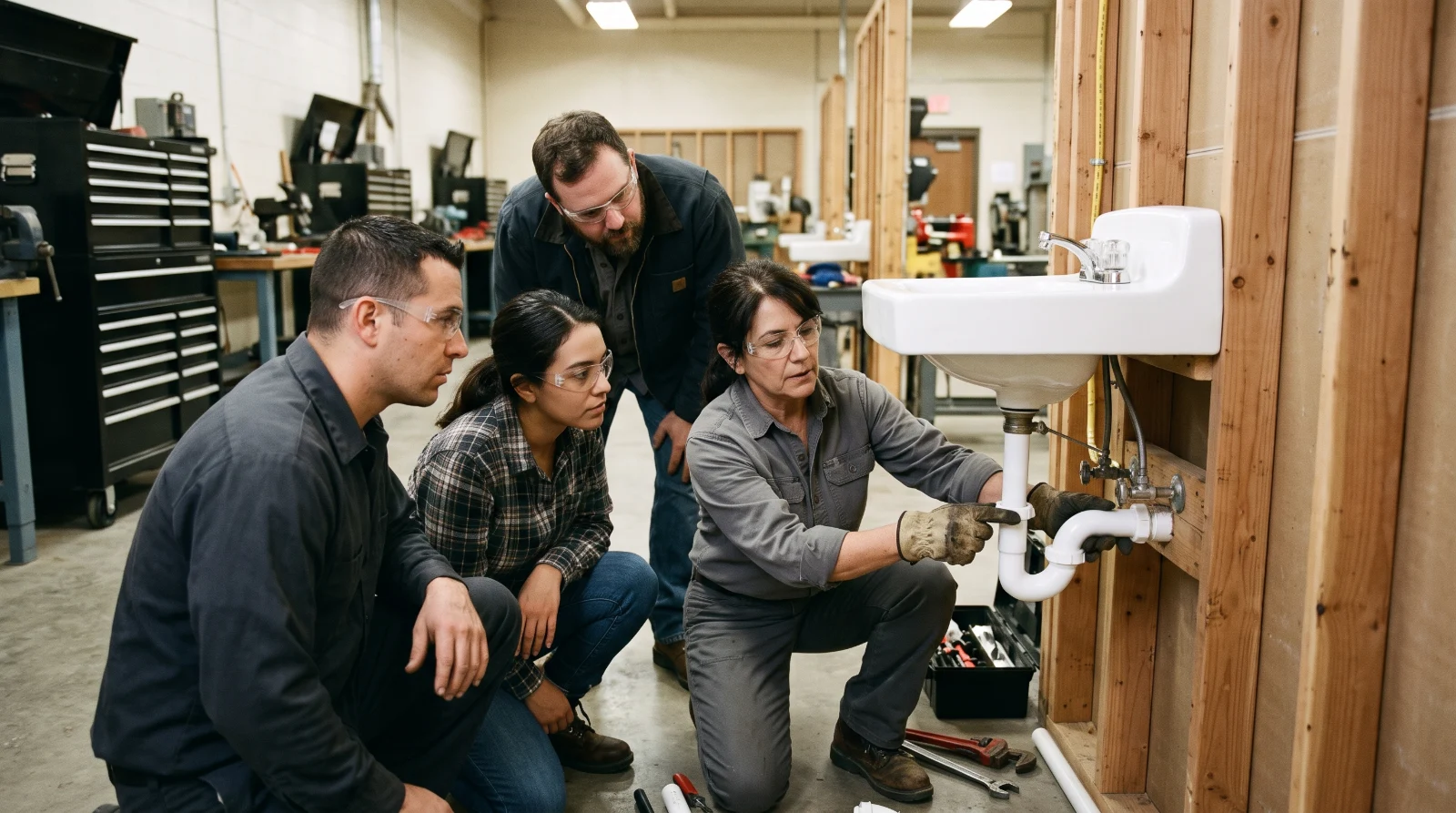
Hands on time with experienced instructors is the heart of any good plumbing program.
Warning Signs of a Bad Program
Most trade schools do honest, valuable work. But wherever there is strong demand and student money, there are also bad actors. Watch for high pressure enrollment tactics, promises of guaranteed jobs or guaranteed high salaries, vague answers about licensing, reluctance to put costs in writing, financing pushed before you have finished asking questions, and schools that will not let you tour the lab or talk to graduates. If something feels off, slow down. A good program will still be there next month.
What Plumbing Graduates Can Expect
Graduates of solid programs typically start as apprentices, helpers or entry level technicians. Early work might include assisting with water heater installs, drain cleaning, fixture replacements and new construction rough ins. Pay usually starts modestly and rises with skill, hours and licensing. The ceiling is high: experienced journeymen and master plumbers are in demand, and many eventually start their own companies.
The common entry level jobs map neatly onto the services homeowners need most. Think water heater installation, drain cleaning, toilet repair and faucet and fixture work. Mastering those fundamentals builds the foundation for everything else.
Where to Find Your First Job
Once you have some training, Best Plumbers can help you find your first opportunity. Browse our plumbing jobs board. Connect with trade organizations that run apprenticeship programs through our plumbing associations directory. And look at the companies with the strongest reputations in your area through plumbers near me. Companies with great reviews tend to be the ones that train and treat their people well. Many working plumbers also share career advice online; our list of plumbing influencers is a fun place to start.
For Homeowners: Why This Is Good News
More trained plumbers means faster service, fairer prices and fewer opportunities for unqualified operators. It also means the companies you call are more likely to have the staff to handle emergencies. As a homeowner, you can support this pipeline by hiring companies that invest in training, being patient with apprentices working under supervision and leaving honest reviews.
A Word for Parents and Counselors
If a young person in your life is good with their hands, enjoys solving puzzles and likes seeing tangible results from their work, plumbing deserves serious consideration. It is not a fallback. It is a skilled profession that protects public health, offers real earning potential and can lead to business ownership. Visit a training lab, talk to working plumbers and explore apprenticeships alongside college options. Many families are discovering that the best choice for their child is not the one they assumed.
One more tip for parents: ask local plumbing companies whether they would hire a graduate of the program you are considering. Contractors know which schools turn out graduates who show up prepared, and their answers can tell you more than any brochure. Many owners are happy to talk about it, because they are just as eager as you are to see good people enter the trade.
How Best Plumbers Supports New Plumbers
Best Plumbers has been the Internet's original plumbing directory since July 12, 2002. We are proud cheerleaders for the people entering this trade. We list every plumbing company and show every review, good and bad, and we award the Best Plumbers Recommended seal to companies that earn it. Learn how we rank plumbers. We never sell leads.
The Bottom Line
The opening of a new trade school campus in Reno-Sparks is one more sign that the skilled trades are back in a big way. Fast track programs can give new plumbers a running start, especially when paired with apprenticeship and a clear path to licensing. Choose carefully, ask tough questions, understand the difference between a certificate and a license, and you can build a career that is stable, meaningful and rewarding. The trade needs you, and it has never been a better time to join.
Frequently Asked Questions About Plumbing Trade Schools
1. When does the new Reno-Sparks trade school campus open?
National Technical Institute says its first HVAC, plumbing and electrical classes at the new Reno-Sparks campus start on November 30, 2026.
2. How many students can the Reno-Sparks campus train?
The school says the 8,000 square foot campus has capacity to train about 400 technicians annually.
3. How long are fast track plumbing programs?
NTI's certification programs run about 12 to 16 weeks. Other schools vary, and community college programs can be longer.
4. Does a trade school certificate make me a licensed plumber?
Usually not. Licensing typically requires documented work hours under a licensed plumber and passing exams. A certificate is a starting point.
5. What is the difference between a trade school and an apprenticeship?
Trade school programs teach fundamentals in a classroom and lab. Apprenticeships combine paid on the job training under licensed plumbers with instruction over several years.
6. Can I do both trade school and an apprenticeship?
Yes. Many people complete a short program first, then get hired as apprentices and continue toward licensing.
7. Where else does NTI have campuses?
The school reports campuses in Las Vegas, Phoenix and Houston, with Reno-Sparks as its newest location.
8. Is trade school enrollment really increasing?
Yes. Trade publications have reported notable enrollment growth in trades programs, and new campuses and funding commitments reflect rising demand.
9. What is the Lowe's Foundation trades commitment?
The Lowe's Foundation committed 250 million dollars to help train and develop 250,000 tradespeople by 2035 through grants to colleges and nonprofits.
10. How do I know if a trade school is legitimate?
Check state approval and accreditation, get full costs in writing, verify placement claims, tour the lab, talk to graduates and read independent reviews.
11. What are red flags when choosing a trade school?
High pressure sales, guaranteed job or salary promises, vague licensing answers, unclear costs and refusal to let you tour or speak with graduates.
12. Can I get financial aid for trade school?
Some programs qualify for financial aid depending on accreditation and eligibility. Ask the school and compare options carefully before borrowing.
13. What jobs can new plumbing graduates get?
Graduates often start as apprentices, helpers or entry level technicians assisting with installations, repairs, drain cleaning and new construction.
14. How much do new plumbers earn?
Starting pay varies by region and employer and typically rises with experience, licensing and specialization. Experienced plumbers can earn strong incomes.
15. Is plumbing a good career for career changers?
Yes. Many adults switch into plumbing from other fields, drawn by job security, meaningful work and the chance to build their own business.
16. Do I need to be good at math to be a plumber?
Basic math is important for measuring, calculating slopes and sizing pipes. Training programs teach the specific math plumbers use.
17. Are hybrid or online plumbing programs effective?
Theory can be learned online, but plumbing requires hands on practice. Look for programs with substantial lab time.
18. Why is there a plumber shortage?
Retirements, years of steering students toward four year degrees and limited training capacity have created a gap between demand and available plumbers.
19. Is the plumber shortage only in the United States?
No. Canada, the UK, Australia and other countries also report skilled trades shortages and are expanding training.
20. How do I find an apprenticeship after trade school?
Contact local plumbing contractors, union training centers and trade associations, and browse the Best Plumbers plumbing jobs board.
21. Should parents encourage kids to consider plumbing?
For young people who like hands on work and problem solving, plumbing offers a respected, well paying career with strong demand.
22. What should I bring to a trade school tour?
Bring questions about costs, placement data, licensing pathways, instructors, lab time and refund policies, and ask to speak with current students.
23. How does more training help homeowners?
More trained plumbers means better availability, fairer prices and fewer opportunities for unqualified operators to take advantage of customers.
24. How can I find companies that hire new plumbers?
Search Best Plumbers for well reviewed companies in your area. Companies with strong reputations often invest in training new team members.
25. Why does Best Plumbers cover plumbing education?
Since 2002, Best Plumbers has championed the plumbing trade. Helping new plumbers choose good training strengthens the industry and protects consumers.
Sources
PHCP Pros, NTI now accepting Reno-Sparks campus applications for skilled trades classes. Builder, National Technical Institute expands with new campus in Reno-Sparks. ACHR News, NTI Las Vegas graduates (September 26, 2026). Lowe's Foundation, expanded 250 million dollar trades commitment (April 2026).

