
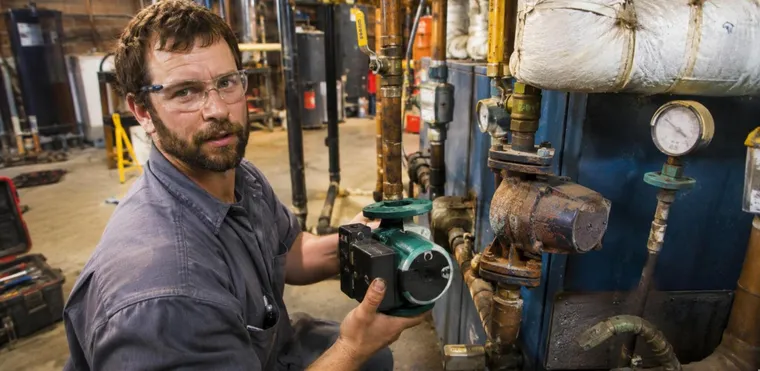
If your home is heated by a boiler, whether through radiators, baseboard or radiant floors, there is a small but hard-working pump somewhere in your basement or mechanical room that moves hot water through the system every heating season. It is called a circulator, and it is about to get a lot of attention. The U.S. Department of Energy has set new energy conservation standards for circulator pumps with a compliance date of May 22, 2028, as Plumbing & Mechanical reported in November 2026. The good news for homeowners: as the article put it, the standard does not require circulators already operating in buildings to be replaced in 2028. It applies to covered circulator pumps manufactured beginning on the compliance date. Here is what that means, why it matters and why a smarter circulator may be one of the best-value heating upgrades you can make, rule or no rule.
Best Plumbers covers hydronic heating because in much of North America, and across Europe and the UK, plumbers and heating professionals are the people who install and service these systems. As always, we want you to understand what is changing so you can make good decisions without being rushed by anyone.
What Is a Circulator Pump?
A hydronic heating system heats water in a boiler and sends it through pipes to radiators, baseboard convectors, fan coils or tubing embedded in floors. Unlike a forced-air furnace, which moves air, a hydronic system moves water. The circulator is the pump that keeps that water moving in a closed loop, from the boiler to the heat emitters and back again.
Circulators are also used in other applications:
- Hot water recirculation systems that keep hot water near fixtures so you do not wait at the tap.
- Indirect water heaters heated by a boiler.
- Radiant floor heating zones.
- Snow melt systems in driveways and walkways.
- Commercial heating and cooling loops in larger buildings.
Because a circulator may run for thousands of hours each year, its efficiency matters more than its size suggests.
What the Federal Standard Does
According to the Plumbing & Mechanical article, written by Chris Kerback, a product line manager for Xylem's Bell & Gossett brand, the Department of Energy's new energy conservation standards for circulator pumps have a compliance date of May 22, 2028. Key points:
- It applies to new products. The standard covers circulator pumps manufactured on or after the compliance date.
- It does not force replacements. Circulators already operating in buildings do not have to be replaced in 2028.
- Higher-efficiency, variable speed circulators are becoming more common, and contractors are being urged to become familiar with electronically commutated motor (ECM) and variable speed technology.
- The rule uses a metric called CEI, the circulator energy index, which installers and distributors are encouraged to learn, along with which circulators are covered.
The article did not spell out the exact efficiency thresholds, so we will not guess at them here. The practical message is clear: over the next few years, the circulators on supplier shelves will shift toward more efficient designs.
ECM and Variable Speed: Why They Matter
Many older circulators use simple induction motors that run at a single fixed speed whenever the system calls for heat. That means they often move more water than needed, especially in zoned systems where only part of the house is calling for heat.
Newer circulators often use ECM technology, a type of motor that uses electronics to control speed precisely. Variable speed circulators can adjust their output to match what the system actually needs at any moment. When one zone closes, the pump slows down. When demand rises, it speeds up. The benefits can include:
- Lower electricity use, because the pump is not running flat out all the time.
- Quieter operation, reducing the whooshing and velocity noise some systems make.
- Better comfort, with more even heat delivery when properly set up.
- Diagnostic features on some models that help technicians understand how the system is running.
Exact savings depend on the system, the old pump and how the new one is configured, so be cautious of anyone promising a specific dollar figure without looking at your setup.
Why "Just Swap It" Is Not Always the Right Answer
One of the most useful points in the Plumbing & Mechanical article is a warning against simple like-for-like replacement. Kerback advised contractors to:
- Understand the system's flow and head requirements, operating conditions and application before selecting a pump.
- Recognize that variable speed capability widens a pump's operating range but does not replace proper selection.
- Plan for retrofits by checking flange-to-flange dimensions, piping, electrical connections and space.
- Reassess the application, considering building changes since the original installation, original flow and head needs and the benefits of variable speed.
- Prepare customers for different controls, settings and operating behavior, and focus conversations on energy use, performance and lifecycle costs rather than first cost.
That is excellent advice, and it applies to homeowners too. Your house may have changed since the boiler was installed. New windows, added insulation, a finished basement, a converted attic or a new radiant zone all change how much heat each part of the system needs. A thoughtful technician will look at the whole picture before recommending a pump.
What Homeowners Should Do Now
The compliance date is still more than a year away, and nobody is required to replace a working circulator. Here is our practical advice:
If your circulator is working fine
Keep using it. Make sure your boiler and system get regular maintenance. Ask your heating professional during your next service visit whether an upgrade to a high-efficiency circulator makes sense for your system, so you have a plan for when the time comes.
If your circulator is failing or noisy
Signs of a failing circulator include unusual noise, rooms that do not heat properly, a pump that is hot to the touch or not running, leaks around the pump body or flanges and a boiler that short cycles. If you are replacing it anyway, ask about a high-efficiency, variable speed model. The upgrade cost may be modest compared with the long-term electricity savings and comfort benefits.
If you have a hot water recirculation pump
Recirculation systems can waste energy if the pump runs constantly. Timers, thermostatic controls or on-demand activation can reduce that waste. Ask your plumber whether your recirculation setup could be smarter.
What a good circulator upgrade visit looks like
If you decide to upgrade, here is what a thorough technician will typically do. They will ask about comfort problems: cold rooms, noisy pipes, slow warm-up. They will look at the boiler, the existing pump, the zoning setup, the pipe sizes and the controls. On some jobs they will estimate the heat load of the zones the pump serves. They will check whether the new pump will fit between the existing flanges or whether piping changes are needed, and whether the electrical supply and controls are compatible. After installation, they will set the pump's operating mode for your system, purge air, check pressures and explain how the new pump behaves, since a variable speed pump may sound and act differently from the old one.
A rushed swap that skips these steps can leave you with a pump that is technically efficient but poorly matched to your system. That is why the industry experts emphasize application over simple replacement.
Questions to ask your heating professional
- How old is my current circulator, and how is it performing?
- Would a variable speed model suit my system, and why?
- Will the new pump fit my existing piping and controls?
- What operating mode or settings will you use, and why?
- What energy savings are realistic for my home, and what assumptions are behind that estimate?
- Are there rebates available for this upgrade?
What Plumbing and Heating Contractors Should Do
The Plumbing & Mechanical article encouraged contractors and distributors to use the time before 2028 to:
- Learn how CEI works and which circulators are covered.
- Become familiar with ECM and variable speed technology.
- Review common retrofit applications in their market.
- Ask manufacturers about portfolio changes.
- Train staff, including counter staff at distributors, to ask application-focused questions.
- Incorporate compliant options into specifications and quotes.
For contractors, this is also a business opportunity. Homeowners who understand the benefits of high-efficiency circulators may welcome an upgrade, and commercial building owners may see real operating savings across many pumps. Companies that understand the technology and can explain it clearly will win that work.
Why We Love Hydronic Heating
Hydronic heating deserves a little cheerleading. It delivers some of the most comfortable heat available: quiet, even and without the drafts and dust of forced air. Radiant floors in particular are a luxury once experienced. Boilers can be extremely efficient, especially modern condensing models paired with good controls and efficient circulators. And hydronic systems can last for decades with proper care.
Hydronics also pairs well with newer technologies. Air-to-water heat pumps can feed hydronic systems, and combination systems can provide both space heating and domestic hot water. As heating evolves, skilled hydronic professionals will be in demand. We covered the shift in heating technology in Britain in Britain's heating engineers are ready for heat pumps, and many of the same trends are playing out in North America.
Winter Maintenance Checklist for Hydronic Systems
Whether or not you upgrade your circulator, a little attention before and during the heating season goes a long way:
- Schedule annual boiler service with a qualified professional.
- Check system pressure on the boiler gauge and know the normal range for your system.
- Bleed air from radiators or baseboard if you hear gurgling or rooms do not heat evenly.
- Look for leaks around the boiler, circulator, valves and expansion tank.
- Keep the area around the boiler clear for combustion air and safe access.
- Test carbon monoxide alarms if you have a gas or oil boiler.
- Protect against freezing in unheated areas where pipes run.
Our guides to winter plumbing tips and getting your water heater prepared for winter add more cold-weather advice, and NOAA's outlook for a strong El Nino winter, which we covered in a very strong El Nino winter is coming, is a reminder to prepare early.
Part of a Bigger Efficiency Push
The circulator standard is one of several federal efficiency rules affecting plumbing and heating equipment this decade. Water heaters face tighter standards later in the decade, as we explained in new water heater rules for 2026 to 2029, and commercial water heaters have their own timeline, covered in the commercial water heater rule gets a one-year reprieve. Each rule nudges the market toward equipment that uses less energy, which ultimately benefits homeowners through lower operating costs, even when the up-front price is higher. We explored how prices moved this year in a year of plumbing price increases.
The Serious Part: Do Not Get Upsold Unnecessarily
New rules sometimes bring overzealous sales pitches. Be wary if anyone tells you that you must replace a working circulator or boiler because of the 2028 standard. That is not what the rule requires. Get a second opinion before replacing working equipment, ask for clear explanations of expected savings and insist on proper sizing rather than a generic swap. Rebates or utility incentives may be available for high-efficiency equipment in some areas, so check our rebates page and your local utility before buying.
Our Take
The 2028 circulator standard is a sensible, gradual step toward more efficient heating systems. It will not force anyone to rip out working equipment, and it gives the industry time to prepare. For homeowners, the best move is simple: keep your system maintained, ask your heating professional about high-efficiency circulators at your next service and upgrade thoughtfully when replacement time comes.
Need a qualified professional for your boiler or hydronic system? Best Plumbers lists established plumbing contractors across North America and beyond. Explore our picks for the best plumbers in Chicago, the best plumbers in New York and the best plumbers in Minneapolis, or search for plumbers near you.
Frequently Asked Questions About the 2028 Circulator Pump Standard
1. What is a circulator pump?
A pump that moves heated water through a hydronic heating system, from the boiler to radiators, baseboard or radiant floors and back.
2. When does the DOE circulator pump standard take effect?
The compliance date is May 22, 2028.
3. Do I have to replace my circulator in 2028?
No. The standard does not require circulators already operating in buildings to be replaced.
4. Which circulators does the standard apply to?
Covered circulator pumps manufactured on or after the compliance date.
5. What is CEI?
The circulator energy index, the metric used in the federal circulator efficiency standard.
6. What is an ECM circulator?
A circulator with an electronically commutated motor, which uses electronics to control speed precisely and efficiently.
7. What is a variable speed circulator?
A pump that adjusts its output to match the system's real-time demand instead of running at one fixed speed.
8. Do variable speed circulators save energy?
They can reduce electricity use by slowing down when less flow is needed, though savings depend on the system.
9. Should I replace my circulator like for like?
Not necessarily. Experts advise reassessing flow, head and building changes before selecting a replacement.
10. What are signs my circulator is failing?
Unusual noise, uneven heating, a pump not running or very hot, leaks and boiler short cycling.
11. Who wrote the Plumbing & Mechanical article on circulators?
Chris Kerback, a product line manager for Xylem's Bell & Gossett brand.
12. Are circulators used for hot water recirculation?
Yes. Recirculation pumps keep hot water near fixtures, and smarter controls can reduce their energy use.
13. What is hydronic heating?
A heating method that uses water heated by a boiler or heat pump and circulated through radiators, baseboard or floors.
14. Is hydronic heating comfortable?
Yes. It provides quiet, even heat without drafts, and radiant floors are especially comfortable.
15. Can heat pumps work with hydronic systems?
Yes. Air-to-water heat pumps can supply hydronic heating systems.
16. How often should a boiler be serviced?
Annually, by a qualified professional.
17. Why do radiators gurgle?
Air trapped in the system can cause gurgling and uneven heating. Bleeding radiators can help.
18. What should contractors do before 2028?
Learn CEI and covered products, get familiar with ECM and variable speed technology, review retrofits and train staff.
19. Will new circulators fit my existing piping?
Not always. Flange-to-flange dimensions, piping, electrical connections and space should be checked.
20. Are there rebates for efficient circulators?
Some utilities and local programs may offer incentives. Check the Best Plumbers rebates page and your utility.
21. Is someone trying to upsell me if they say I must replace my circulator now?
The 2028 rule does not require replacing working equipment. Get a second opinion before replacing a working pump.
22. What other efficiency rules affect plumbing and heating?
Water heater standards later in the decade and rules for commercial water heaters, among others.
23. Can a circulator cause high electricity bills?
An inefficient pump running for long hours can add to electricity use, which is why efficient models are attractive.
24. Do snow melt systems use circulators?
Yes. Hydronic snow melt systems use circulators to move heated fluid through tubing.
25. How do I find a qualified hydronic heating professional?
Use Best Plumbers to find established plumbing and heating contractors near you.
Sources
- Plumbing & Mechanical: Moving Beyond Basic Circulator Replacement

