
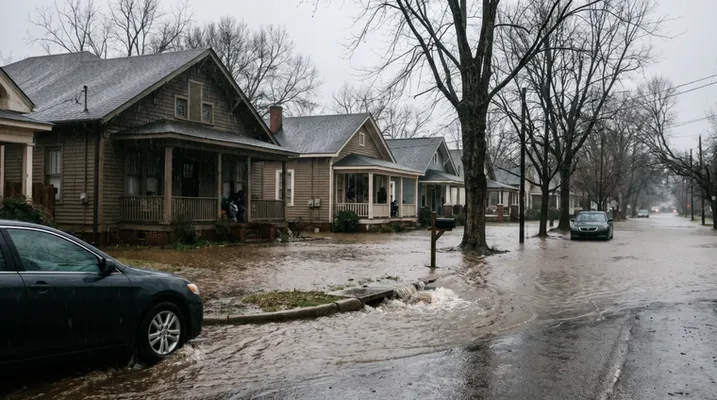
NOAA’s Climate Prediction Center released its 2026 to 2027 Winter Outlook on October 16, and the headline is a very strong El Niño. NOAA declared an El Niño advisory in July and later put the odds of a very strong event this fall and winter above 90 percent. For December through February, NOAA favors warmer than average temperatures across much of the northern United States, from the Pacific Northwest and northern Rockies through the Midwest, Mississippi Valley and much of the East, and wetter than average conditions across the Southwest, the South and the East Coast, with the jet stream shifting south and east to bring stormier weather to the southern tier. Drought could ease or end in parts of the Southwest, Southern Plains, Southeast and East Coast, but heavy rain on dry ground raises the risk of flash floods and mudslides. A warmer winter does not mean pipes are safe. Here is what this winter could mean for your plumbing, region by region, and how to prepare now.
By the Best Plumbers Editorial Team. Published November 22, 2026.
After last winter’s wave of burst pipes, which we examined in lessons from last winter’s burst pipe epidemic, many homeowners are wondering whether they can relax this year. The honest answer from forecasters and plumbers is: not quite. Seasonal outlooks shift the odds, but a single arctic blast or a week of heavy rain can still cause enormous damage.
What El Niño Is
El Niño is a periodic warming of surface waters in the central and eastern tropical Pacific Ocean. It changes where storms form and how the jet stream flows over North America and much of the world. In the United States, strong El Niño winters typically bring a more active southern storm track, with more rain to California, the Southwest, Texas, the Gulf Coast and Florida, and often milder, drier conditions across the northern tier and Great Lakes. Very strong El Niño winters, like 1997 to 1998 and 2015 to 2016, brought memorable flooding and storms to parts of the South and California. NOAA says this year’s event is shaping up to be very strong, and some forecasters have used the phrase super El Niño.
Lessons From Past Strong El Niño Winters
The two strongest El Niño events in recent memory offer clues. The winter of 1997 to 1998 brought repeated storms to California, flooding and landslides along the coast, heavy rain across the Gulf Coast and Florida and an unusually mild winter across much of the northern United States. The winter of 2015 to 2016 brought a record warm December to much of the East, then a historic January blizzard that buried the Mid Atlantic and Northeast, a reminder that mild averages can hide extreme events. Both winters produced plenty of work for plumbers dealing with drainage, sump pumps and water intrusion in the South and West. No two El Niño winters are identical, but history suggests homeowners in the southern half of the country should prepare for water, and everyone should prepare for at least one sharp cold or snow event.
The Outlook, Region by Region
Northern United States. Warmer than average temperatures are favored across the Pacific Northwest, northern Rockies, Midwest, Mississippi Valley and much of the East. That generally means fewer extreme cold days, but not none.
The South and Southeast. Wetter than average conditions are favored, with near normal temperatures leaning in parts of the Southeast and Florida. Stormier weather increases the chance of heavy rain events, flooding and severe storms.
The Southwest and California. Wetter than average conditions are favored across the Southwest, and forecasters highlighted much higher odds of above normal precipitation for California. After years of drought and wildfire, heavy rain brings both relief and danger, from flash floods to debris flows on burn scars.
East Coast. Wetter than normal conditions are favored along much of the East Coast, and if cold air moves south from Canada, coastal storms could bring heavy snow or ice to some areas.
Great Lakes and northern Mountain West. Drier than average conditions are favored in parts of these regions, and drought could worsen in some northern Rockies areas.
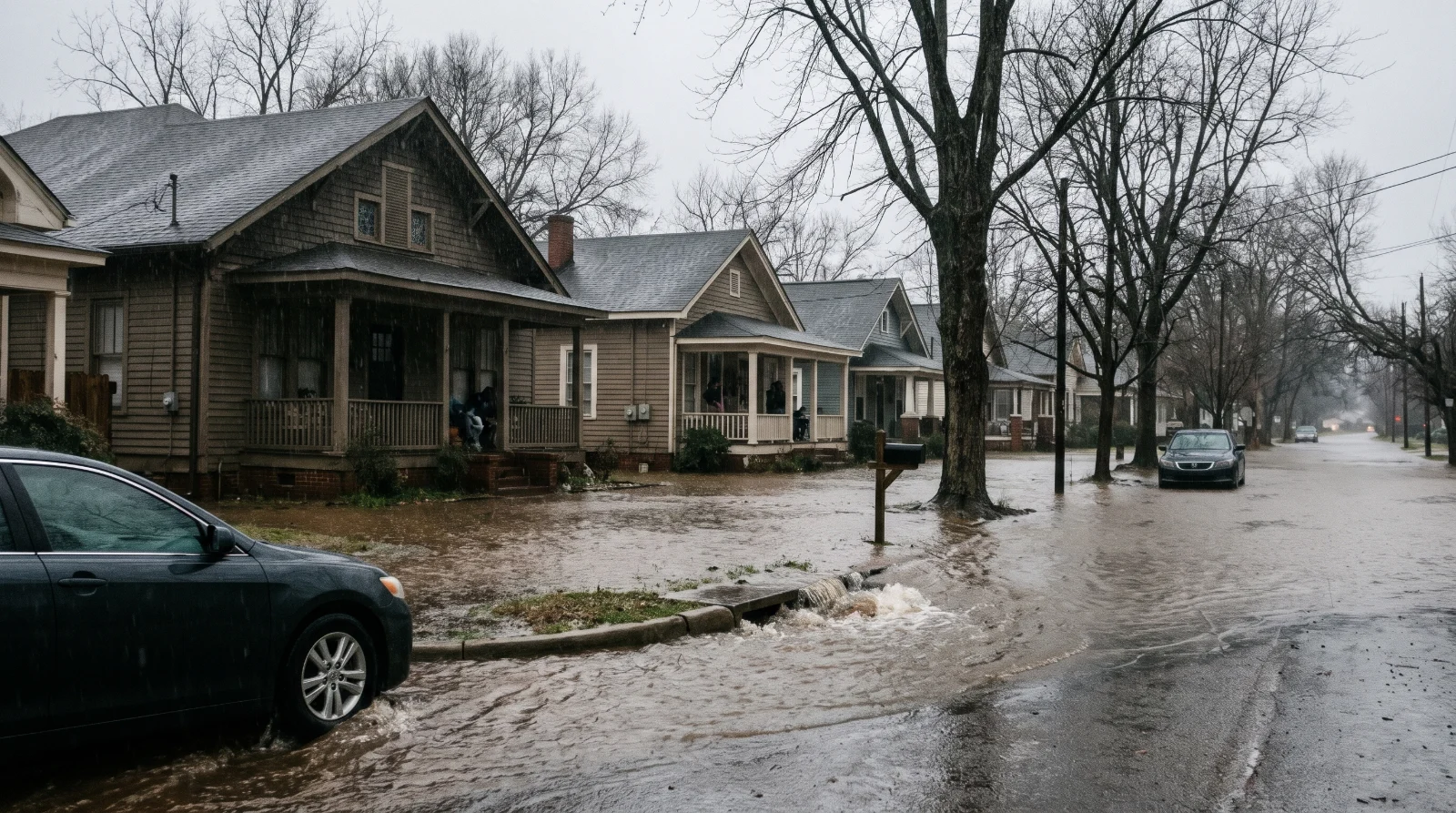
A stormier southern track can bring repeated heavy rain events that overwhelm storm drains and sewers.
Why a Warm Winter Can Still Freeze Your Pipes
Seasonal outlooks describe averages over three months. A winter that is warmer than average overall can still include a few days of severe cold, and those few days are when pipes burst. Homes in milder regions are often more vulnerable when cold does arrive, because pipes may run through uninsulated attics, exterior walls, crawl spaces and slab edges, and homeowners are less practiced at protecting them. The February 2021 Texas freeze happened in a region not built for extreme cold. Even in a mild winter, protecting vulnerable pipes is cheap insurance.
The Bigger Risk This Winter: Water From Above
For much of the South, Southwest and East Coast, the bigger threat this winter may be rain. Heavy, repeated storms saturate soil, raise groundwater, overwhelm storm drains and push sewers past capacity. That can mean flooded basements and crawl spaces, sewage backups through floor drains, overflowing gutters dumping water against foundations, and septic drain fields that stop working. Hillside and burn scar areas in California face mudslides and debris flows that can bury or break water and sewer lines. We covered storm season lessons in our 2026 hurricane season recap, and much of that advice applies to winter storms too.
Protecting Basements and Crawl Spaces
Basements and crawl spaces take the brunt of a wet winter. Make sure the ground slopes away from your foundation, that downspouts discharge several feet from the house and that window wells have covers or drains. Inspect crawl space vapor barriers and look for standing water after storms. A sump pump with a check valve and a properly routed discharge line keeps groundwater out; make sure the discharge does not freeze or drain right back toward the house. If your home has fixtures below street level, ask about a backwater valve on the main sewer line. These steps protect not only your belongings but also furnaces, water heaters and electrical panels that often live in the lowest level of the home.
Your Winter Plumbing Checklist
Insulate exposed pipes. Foam pipe insulation on pipes in crawl spaces, attics, garages and exterior walls is inexpensive and effective. Heat tape can protect the most vulnerable runs when installed correctly.
Protect outdoor faucets. Disconnect hoses, shut off and drain outdoor spigots if you have interior shutoffs, and add insulated faucet covers.
Seal drafts. Close crawl space vents in very cold weather and seal gaps where pipes enter the house.
Know your shutoff. Find and test your main water shutoff so you can stop a burst quickly.
Test your sump pump. Pour water into the pit and make sure it starts, pumps and stops. Consider a battery backup through professional sump pump installation.
Clear drainage. Clean gutters and downspouts, extend downspouts away from the foundation and keep yard drains open. A professional storm drain repair or installation can solve chronic pooling.
Check your water heater. Winter is the hardest season for water heaters. Flush sediment and test the relief valve, and schedule water heater repair if it is slow to recover or noisy.
Add leak sensors. Smart leak sensors and automatic shutoff valves, available on our plumbing products page, can catch a burst early.
Review insurance. Know what your policy covers for burst pipes, flooding and sewage backup. We explained rising claim costs in water damage claims have never cost more.
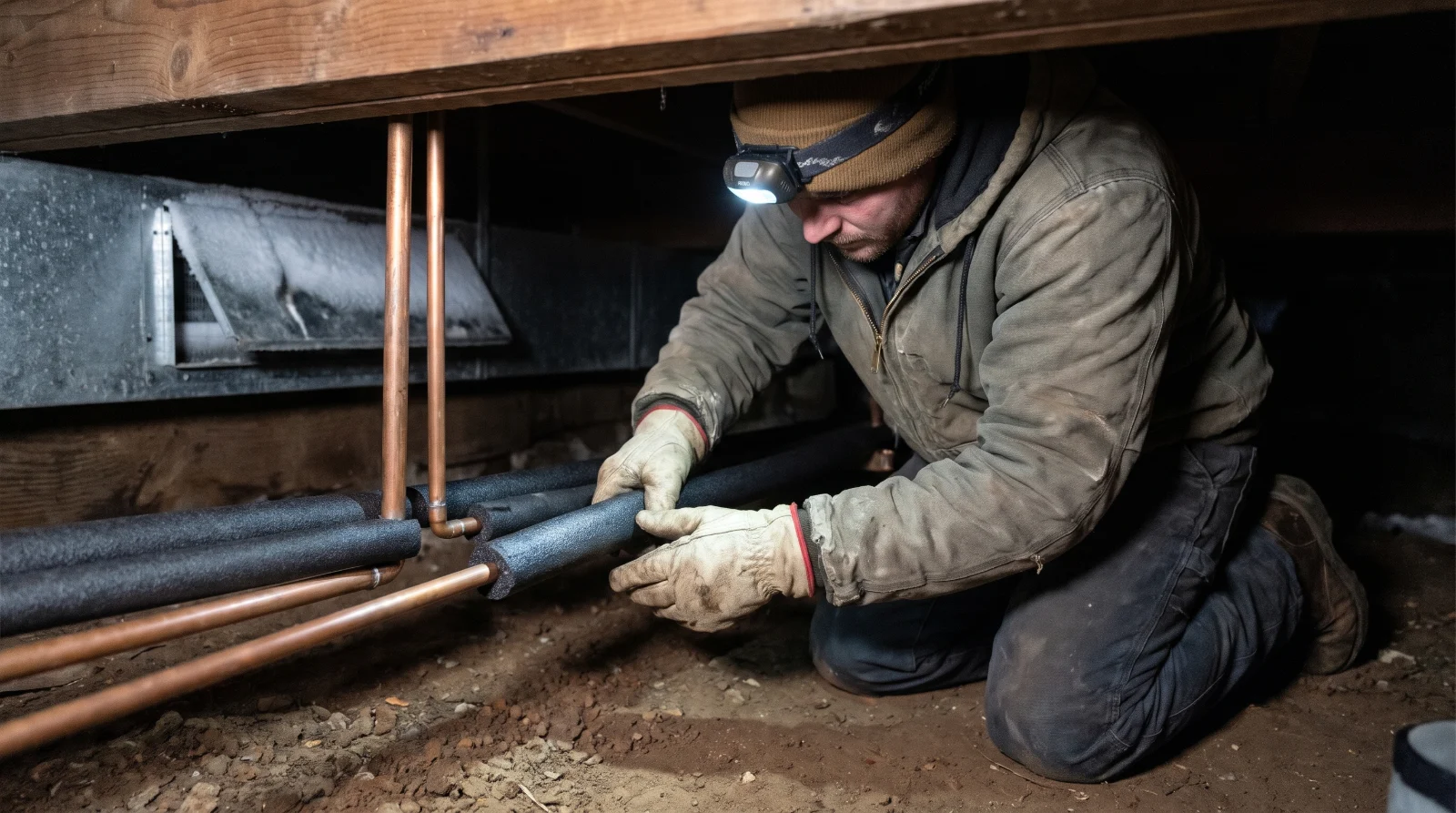
Insulating pipes in crawl spaces and exterior walls is one of the cheapest ways to prevent freeze damage.
Do Not Forget the Water Heater
Winter is the busiest season for water heater failures. Incoming water is colder, so heaters work harder and longer, and sediment buildup or a failing element or burner can finally give out. Signs of trouble include lukewarm water, rumbling or popping noises, rusty water, moisture around the base and a relief valve that drips. A quick tune up before the coldest weeks can prevent a cold shower crisis on a holiday weekend, when service calls cost more and parts are harder to find. If your unit is more than 10 to 12 years old, start planning its replacement before it fails on its own schedule.
When a Cold Snap Comes
Let faucets on exterior walls drip slightly, which keeps water moving. Open cabinet doors under sinks to let warm air reach pipes. Keep the thermostat at a steady temperature day and night, and do not set it lower than about 55 degrees Fahrenheit if you travel. If a pipe freezes, open the faucet and warm the pipe gently with a hair dryer or space heater placed safely, never an open flame. If you cannot find the frozen section or the pipe has split, shut off the water and call for pipe repair.
When Heavy Rain Comes
Watch basements and crawl spaces during storms. Keep valuables off floors in lower levels. If water does get in, professional flood cleanup helps prevent mold. If sewage backs up into your home, stop using water, keep away from the contaminated area and call a professional. If floodwater reaches gas appliances, water heaters or furnaces, have them inspected before using them. In septic areas, conserve water while the ground is saturated. For any after hours burst or backup, find an emergency plumber quickly.
California’s Special Situation
For California, a wet winter after years of drought and devastating fires is a mixed blessing. Reservoirs and groundwater may recover, but burn scars can turn heavy rain into dangerous debris flows. Homeowners near burn areas should know their evacuation routes, clear drainage, consider sandbags or deflection barriers and keep important documents ready. Plumbing in homes rebuilt after fires should be checked for proper backflow protection and drainage. Rainwater capture is a smart way to benefit from the wet season where allowed.
The Northern Tier: Do Not Get Complacent
For the northern states, a warmer than average winter may sound like good news for pipes. In many ways it is. But averages hide extremes. Forecasters note that a warmer than normal winter can still include major cold outbreaks and blockbuster snowstorms. A mild December followed by a week of subzero cold in January can catch homeowners off guard, especially in vacation homes and rental properties left unheated. Keep heat on in unoccupied properties, have someone check on them regularly and consider remote temperature and leak monitoring.
What Plumbers Expect
Plumbers in the South and Southwest expect more calls for drainage problems, sump pumps, sewer backups and water heater failures this winter, while those in the North may see fewer burst pipe calls overall but sharp spikes during any cold snaps. Booking preventive work now, before storms and cold arrive, means shorter waits and better prices than calling during an emergency when every plumber in town is busy.
A Salute to Winter Plumbers
Winter is the hardest season for plumbers. They crawl through frozen crawl spaces, dig in rain soaked yards and work through holidays to get water flowing and drains working. During cold snaps and storms, many work around the clock. They deserve our patience and gratitude, and a warm cup of coffee when they arrive.
Our Take
We are optimistic that a strong El Niño could bring drought relief to many dry regions, which is good news for water supplies. But every forecast has uncertainty, and plumbing damage comes from extremes, not averages. Spend an afternoon now insulating pipes, testing the sump pump, clearing gutters and finding your shutoff. Those small steps prevent most winter plumbing disasters.
How Best Plumbers Helps
Best Plumbers has been the Internet’s original plumbing directory since July 12, 2002, and the most trusted. We list every plumbing company and show every review, good and bad, and our Best Plumbers Recommended seal marks those we trust most. We never sell leads. Find winter ready plumbers through our locations directory and read the reviews.
The Short Version
NOAA expects a very strong El Niño this winter, favoring warmer conditions across the northern US and wetter, stormier weather across the Southwest, South and East Coast. Warm averages do not prevent cold snaps, so insulate vulnerable pipes and protect outdoor faucets. The bigger risk in many southern areas is heavy rain, so clear drainage, test sump pumps, prepare for sewer backups and review insurance. Book preventive work now.
Frequently Asked Questions About the El Niño Winter and Plumbing
1. What is El Niño?
A warming of the tropical Pacific that shifts storm tracks and the jet stream.
2. How strong is this El Niño?
NOAA expects a very strong event this winter.
3. When did NOAA release its winter outlook?
October 16, 2026.
4. Which areas may be warmer than normal?
Much of the northern US, including the Northwest, Midwest and much of the East.
5. Which areas may be wetter than normal?
The Southwest, the South and the East Coast.
6. Can pipes still freeze in a warm winter?
Yes, a few cold days can burst unprotected pipes.
7. Why are southern homes vulnerable to freezes?
Pipes often run through uninsulated spaces.
8. How do I protect pipes from freezing?
Insulate exposed pipes, seal drafts and drip faucets during cold snaps.
9. What thermostat setting is safe when traveling?
Generally no lower than about 55 degrees Fahrenheit.
10. How do I thaw a frozen pipe?
Open the faucet and warm the pipe gently; never use an open flame.
11. Why does heavy rain cause sewer backups?
Storm water overwhelms sewer capacity.
12. Should I test my sump pump?
Yes, before the wet season and periodically.
13. Do I need a battery backup sump pump?
It is wise where storms cause power outages.
14. Why clean gutters in winter?
Overflowing gutters dump water against foundations.
15. What about California burn scars?
Heavy rain can trigger debris flows; prepare drainage and evacuation plans.
16. Will drought improve?
NOAA says drought could ease in parts of the Southwest, South and East.
17. Are leak sensors worth it?
Yes, they provide early warning of bursts and leaks.
18. Does insurance cover burst pipes?
Often, but flooding and sewage backup may require separate coverage.
19. What about vacation homes?
Keep heat on, monitor remotely and have someone check regularly.
20. Should I flush my water heater?
Yes, removing sediment helps it perform in winter.
21. Are outdoor faucets at risk?
Yes, disconnect hoses and cover or drain them.
22. When should I book preventive work?
Now, before storms and cold snaps fill plumbers’ schedules.
23. What if sewage backs up into my home?
Stop using water, avoid contact and call a professional.
24. How do I find a trusted plumber?
Search Best Plumbers, read every review, look for the Best Plumbers Recommended seal and verify licensing.
25. Why does Best Plumbers cover winter outlooks?
Since 2002, we have helped homeowners prepare for every season.
Sources
FOX Television Stations, NOAA official winter outlook. NOAA Climate Prediction Center, seasonal forecast discussion. Unofficial Networks, winter outlook compared. Time Out, winter precipitation outlook.

