
The most ambitious plumbing mandate in modern American history is now in the hands of a federal appeals court. The Lead and Copper Rule Improvements, finalized by the EPA in October 2024, require nearly every water system in the United States to replace its lead service lines within about ten years and lower the lead action level from 15 to 10 parts per billion. The American Water Works Association challenged the rule, the current EPA chose to defend it, and the U.S. Court of Appeals for the D.C. Circuit heard oral arguments on September 30, 2026. Meanwhile, Flint, Michigan completed its lead service line replacement commitments, and the EPA now estimates about 4 million lead lines remain nationwide. Here is what is at stake and what homeowners should do regardless of the outcome.
By the Best Plumbers Editorial Team. Published November 22, 2026.
If you have been reading Best Plumbers for any length of time, you know we have been beating the drum about lead pipes for years. There is no safe level of lead exposure, especially for children, and the lead service line, the pipe connecting the water main under the street to a home, is often the single biggest source of lead in drinking water where it exists. Getting those pipes out of the ground is one of the most important public health projects of our time, and plumbers are the people doing it.
So when the rule that requires their removal ended up in court, we paid close attention.
The Rule in Brief
The Lead and Copper Rule dates to 1991 and has been revised several times. The 2024 Lead and Copper Rule Improvements, known as LCRI, made the biggest changes in decades. Among the key requirements, water systems must replace lead service lines and certain galvanized lines at a pace of roughly 10 percent per year, generally completing replacement within ten years, with some systems allowed longer timelines in specific circumstances. The rule lowers the lead action level, the threshold that triggers additional actions, from 15 to 10 parts per billion. It strengthens tap sampling, public notification and education, and requires systems to build and maintain inventories of service line materials. Water systems face a November 1, 2027 deadline to complete a baseline inventory and begin mandatory replacement programs, according to recent EPA compliance guidance summarized by county government groups.
The rule was one of the relatively few environmental regulations from the previous administration that the current administration chose to keep. In February 2026, the EPA told the court it would defend the ten year replacement requirement, and in its filing argued that utilities exercise enough control over service lines, including portions on private property, to be required to replace the whole line. In the same period, the EPA updated its national estimate, now projecting about 4 million remaining lead service lines, down from earlier estimates of around 9 million, based on improved inventory data from states.
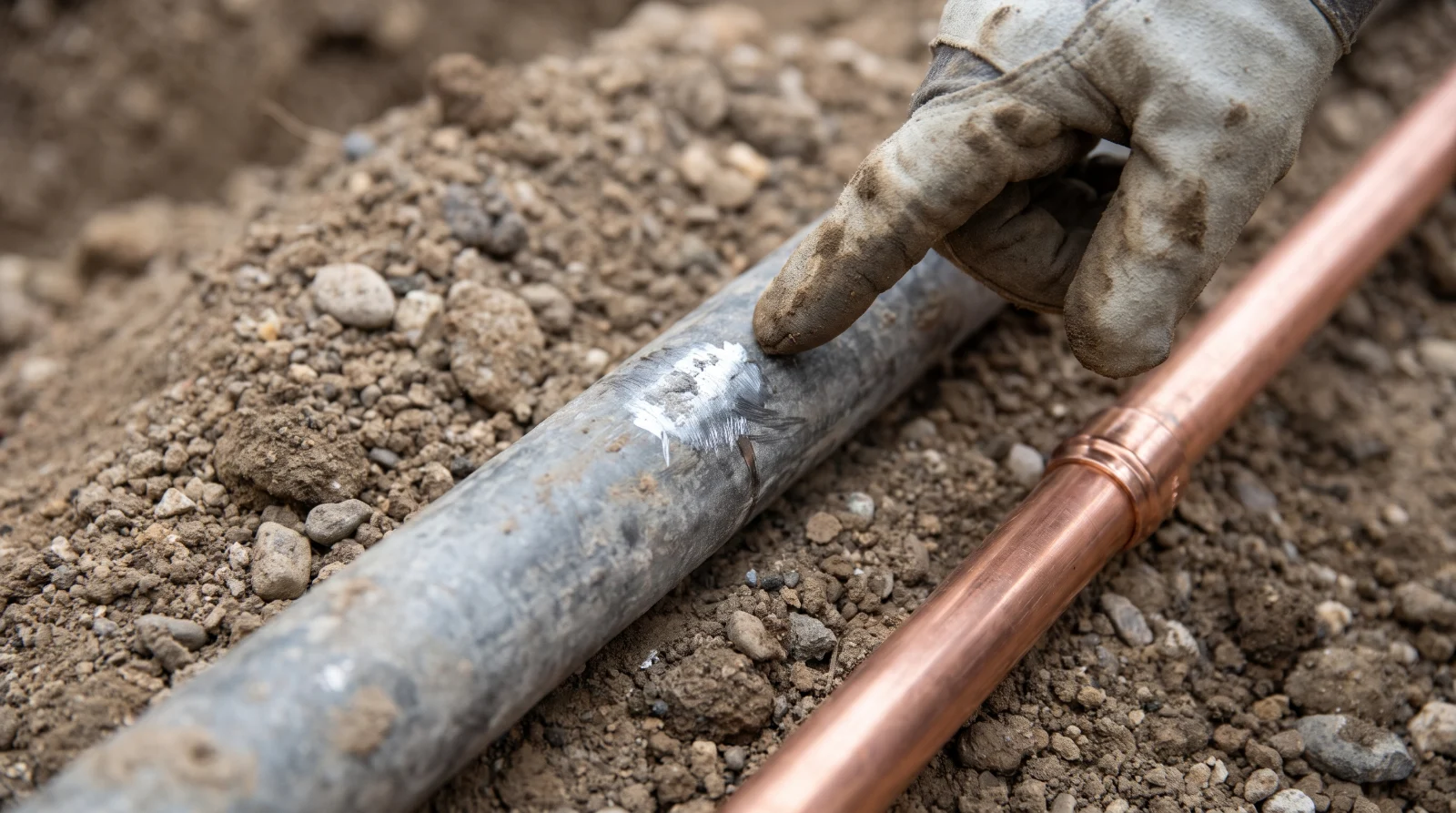
Lead service lines are soft, dull gray and easily scratched to reveal shiny metal. Many are being replaced with copper or approved plastic.
What the Lawsuit Is About
The American Water Works Association, the largest trade group for water utilities, petitioned for review of the rule. Utilities generally support removing lead pipes, but the challenge argues, among other things, that the EPA exceeded its authority by requiring replacement of the portion of service lines on private property, which utilities often do not own, and that replacing every lead line in ten years is not feasible for many systems given workforce, supply and access constraints. Utilities also raised concerns about cost and the burden on ratepayers.
Environmental and public health groups, including the Natural Resources Defense Council and Earthjustice, intervened to defend the rule, and a coalition of state attorneys general filed in support. They argue that the Safe Drinking Water Act requires the EPA to protect public health, that utilities have sufficient control over service lines to replace them and that replacement in ten years is feasible, pointing to cities that have scaled up rapidly. The court heard oral arguments on September 30, 2026. A decision could come at any time and might uphold the rule, strike parts of it or send portions back to the EPA.
Both Sides Deserve a Fair Hearing
We will say this plainly. Utilities are not the villains here. They face genuine practical challenges, from tracking down records for pipes installed a century ago to persuading property owners to grant access, from finding enough trained crews to paying for it all without crushing ratepayers. And public health advocates are not unrealistic dreamers. Lead harms children’s developing brains, and every year a lead line stays in the ground is another year of risk. Thoughtful people can disagree about the legal question of authority and the practical question of pace while agreeing on the goal.
There has also been debate about EPA guidance released in spring 2026 describing compliance flexibilities. Some advocates warned that it could give utilities room to delay replacements, while others saw it as practical help for complex situations. As always, the details will matter in how each state and utility implements the rule.
Flint Crosses the Finish Line
In a moment of real symbolism, Flint, Michigan completed its lead service line replacement commitments in 2026, closing a decade long legal chapter that began after the city’s water crisis. Flint’s experience taught the country hard lessons: that changes in water treatment can unleash lead from pipes, that inventories are often wrong, that excavating to verify materials is sometimes the only way to know, and that sustained pressure from residents and courts matters. It also showed that replacing lead lines across an entire city is possible. We covered another city still working through its water legacy in Jackson, Mississippi four years after the water crisis.
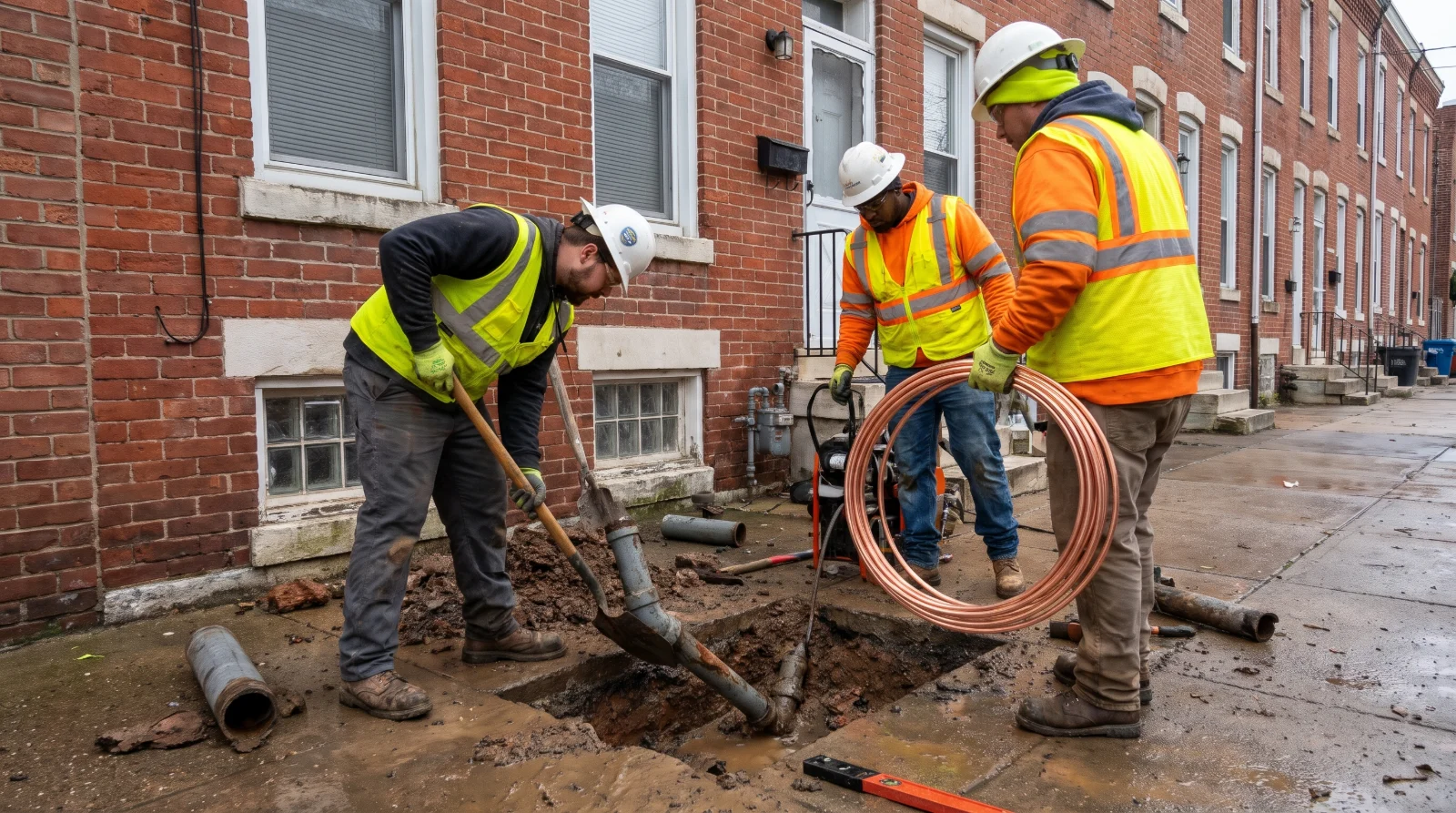
Cities that have scaled up replacement programs show that thousands of lead lines can be replaced each year.
What Happens If the Rule Survives, or Does Not
If the court upholds the rule, utilities will continue on the current path: completing inventories, notifying customers and ramping up replacement programs, with a ten year horizon that runs roughly into the mid 2030s. If the court strikes the private side requirement, utilities may still replace public portions and offer programs for private portions, but homeowners could carry more of the burden. Partial replacements, which replace only the public side, are discouraged by health experts because they can temporarily raise lead levels by disturbing the remaining pipe. If the court sends the rule back to the EPA, timelines could shift.
Regardless of the outcome, several things will not change. Many states have their own lead pipe laws, including some that require full replacement on their own timelines. Billions of dollars in federal infrastructure funding have been dedicated to lead line replacement. Inventories already show homeowners whether their lines are lead, galvanized or unknown. And the science on lead is not in dispute.
What Homeowners Should Do Now
Check your utility’s inventory. Most systems now publish searchable maps or lists showing service line materials. Look up your address. If your line is listed as unknown, ask how to verify it.
Inspect your own pipe. Where the water line enters your home, usually near the meter or main shutoff, gently scratch the pipe with a key. Lead is soft, dull gray and turns shiny silver when scratched, and a magnet will not stick to it. Galvanized steel is magnetic. Copper looks like a penny. If you are unsure, a plumbing inspection will tell you.
Ask about replacement programs. Many utilities replace the private side free or at reduced cost, especially with federal or state funding. Check our plumbing rebates page and your utility’s website.
Coordinate private side work. If you must hire your own contractor, a licensed plumber experienced in water line replacement can often coordinate with the utility so the full line is replaced at once. If your interior plumbing includes lead or old galvanized pipe, consider repiping at the same time.
Reduce exposure while you wait. Use only cold water for drinking, cooking and baby formula. Run the tap for a few minutes when water has been sitting. Clean faucet aerators. Use a filter certified to NSF/ANSI 53 for lead reduction, and change cartridges on schedule; our water filtration pros can help.
Test your water. Many utilities offer free lead testing, especially for homes with known or suspected lead lines.
What a Lead Line Replacement Looks Like
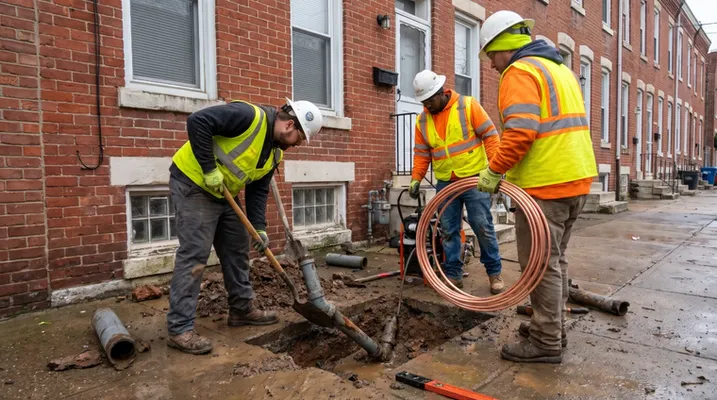
Homeowners are often nervous about what replacement involves, so here is what typically happens. A crew locates the curb stop and the point where the line enters the house. Many projects now use trenchless techniques, pulling a new copper or approved plastic line through the path of the old one or boring a new path, so only two small pits are needed: one near the street and one near the foundation. Inside, a plumber reconnects the new line to the home’s plumbing, often installing a new main shutoff valve and sometimes a new meter setting. After the work, the crew flushes the plumbing to clear particles that may have been disturbed, and many programs provide a filter and instructions for the following months. A typical replacement takes a day or less, and water is usually off for only a few hours. Yards and sidewalks are restored afterward.
A Huge Opportunity for the Trade
Replacing roughly 4 million lead lines is an enormous amount of work, and it is one of the biggest sources of steady, meaningful employment for plumbers and utility crews in a generation. It needs excavation operators, pipe layers, plumbers to reconnect homes, inspectors, project managers and community outreach staff. Cities that have scaled up have relied on apprenticeship programs and local hiring. We covered the progress in lead service line replacement accelerates and the earlier deadlines in lead pipe replacement reaches a turning point. Canada faces similar work, as we explained in lead pipes in Canadian homes.
Our Warning: Lead Line Scams
Wherever there is public money and public fear, scammers follow. Be cautious of anyone who knocks on your door claiming to be from the water department and demanding payment for lead line replacement. Utility programs usually communicate by mail and official channels, and legitimate workers carry identification. Verify any program by contacting your utility directly using the number on your bill. Be skeptical of contractors who insist you need a full repipe without showing evidence of lead or galvanized pipe, and of water treatment salespeople who use lead fears to sell systems that are not certified for lead reduction.
Our Take
We hope the court upholds a strong, workable path to removing every lead service line, and we hope utilities, regulators and advocates keep working together on the practical problems. Whatever the legal outcome, homeowners should not wait. Find out what your pipe is made of, reduce your exposure and replace lead lines as soon as you can. And to the crews digging up streets across the country to do this work: thank you. You are protecting children’s futures one connection at a time.
How Best Plumbers Helps
Best Plumbers has been the Internet's original plumbing directory since July 12, 2002, and the most trusted. We list every plumbing company and show every review, good and bad, and our Best Plumbers Recommended seal marks those we trust most. We never sell leads. Find a licensed plumber experienced in lead line work through our locations directory, compare reviews and learn why it pays to hire a licensed plumber.
The Short Version
The EPA’s Lead and Copper Rule Improvements require most U.S. water systems to replace lead service lines within about ten years and lower the lead action level to 10 parts per billion. Utilities challenged the rule in the D.C. Circuit, the EPA is defending it and oral arguments were held September 30, 2026. Flint completed its lead line replacements, and about 4 million lead lines remain nationwide. Check your utility inventory, identify your pipe, use certified filters and replace lead lines as soon as possible.
Frequently Asked Questions About the Lead Pipe Rule
1. What is the Lead and Copper Rule Improvements?
A 2024 EPA rule requiring most water systems to replace lead service lines within about ten years and lowering the action level to 10 ppb.
2. Who challenged the rule?
The American Water Works Association, a water utility trade group.
3. Is the EPA defending the rule?
Yes. In February 2026 the EPA said it would defend the ten year replacement requirement.
4. When did the court hear arguments?
The D.C. Circuit heard oral arguments on September 30, 2026.
5. How many lead service lines remain?
The EPA now estimates about 4 million nationwide.
6. What is the main legal dispute?
Whether the EPA can require utilities to replace portions of lines on private property, and whether ten years is feasible.
7. Did Flint finish replacing its lead lines?
Yes. Flint completed its lead service line replacement commitments in 2026.
8. What is the new lead action level?
10 parts per billion, down from 15.
9. When must utilities complete baseline inventories?
EPA guidance points to November 1, 2027 for the baseline inventory and start of replacement programs.
10. How do I know if I have a lead service line?
Check your utility’s inventory and inspect the pipe where it enters your home.
11. How can I identify lead pipe?
It is dull gray, soft, turns shiny when scratched and is not magnetic.
12. Who pays to replace the private side?
It varies. Many utilities cover it fully or partly with public funding.
13. What is a partial replacement?
Replacing only part of a lead line, which can temporarily raise lead levels and is discouraged.
14. What filter reduces lead?
One certified to NSF/ANSI 53 for lead reduction.
15. Should I use hot water for cooking?
No. Use cold water, which picks up less lead.
16. Do galvanized pipes matter?
Yes. Galvanized lines downstream of lead can hold lead and may require replacement.
17. Do state laws also require replacement?
Some states have their own lead pipe replacement requirements.
18. What if the court strikes the rule?
Timelines or private side requirements could change, but state laws and funding programs would continue.
19. Is federal funding available?
Yes. Billions have been dedicated to lead service line replacement.
20. Can my utility test my water?
Many offer free lead testing. Contact your utility.
21. Are there lead line scams?
Yes. Verify any program directly with your utility before paying anyone.
22. Will this create plumbing jobs?
Yes. Replacing millions of lines requires a large skilled workforce.
23. Does Canada have lead pipe programs?
Yes. Cities like Toronto, Montreal and Ottawa run replacement programs.
24. How do I find a trusted plumber?
Search Best Plumbers, read every review, look for the Best Plumbers Recommended seal and confirm licensing.
25. Why does Best Plumbers cover lead pipes?
Since 2002, Best Plumbers has advocated for safe drinking water and the plumbers who protect it.
Sources
NRDC, AWWA v. EPA case page. Water Online, EPA defends ten year lead pipe replacement mandate. Environmental Policy Innovation Center, court sets hearing date and Flint completes replacement. NACo, EPA guidance for lead pipe removal requirements. E&E News, EPA guidance on lead pipes.

