
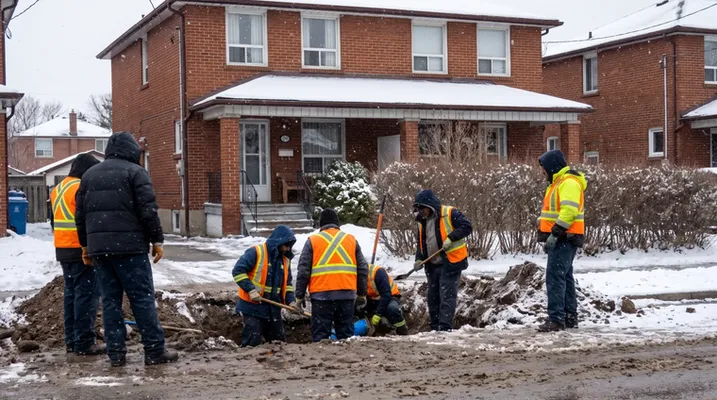
Lead water service pipes, the pipes that connect a home to the city water main, are still found in many older Canadian homes, typically those built before the mid 1950s. Cities including Toronto, Montreal and Ottawa run programs to replace them, but because the pipe is usually owned partly by the city and partly by the homeowner, full replacement depends on both sides. Toronto estimates just under 16,000 City owned lead service pipes remain. Montreal has been working to replace tens of thousands by 2030. Health Canada's guideline for lead in drinking water is 5 parts per billion. If your home is older, finding out whether you have a lead service and replacing it fully is one of the best investments you can make in your family's health.
By the Best Plumbers Editorial Team. Published November 22, 2026.
Lead was used for water service pipes in many Canadian cities well into the twentieth century because it was flexible, durable and easy to work with. We now know that lead can dissolve into drinking water and that there is no known safe level of exposure, particularly for babies, young children and pregnant people. Canadian cities have made real progress through treatment changes and replacement programs, but many homes still have lead pipes hidden underground or entering through basement walls. Best Plumbers has many readers and listed companies across Canada, and this guide explains how the major programs work and what families can do.
Who Owns the Pipe?
In most Canadian cities, the water service pipe is split. The city owns the portion from the water main to the property line, and the homeowner owns the portion from the property line into the house. That split matters. Replacing only one side, called a partial replacement, can leave lead in place and may temporarily increase lead levels by disturbing the remaining pipe. Health and water authorities encourage full replacement of both sides whenever possible.
Toronto's Approach
Toronto serves roughly 437,000 residential customers and estimates that just under 16,000 City owned lead water service pipes remain. Through its Priority Lead Water Service Replacement Program, residents who commit to replacing their side of the pipe can apply to have the City replace its side. The City also replaces its portion of substandard pipes during planned road, sewer and watermain work. Toronto provides a free faucet filter for lead removal when the City owned portion of a lead service is replaced, and homeowners can request a free lead testing kit to have their water tested at an accredited lab. Since 2014, Toronto has added phosphate to its treatment process for corrosion control, which forms a protective layer inside pipes and has significantly lowered lead levels in regulated tests.
Toronto homeowners are also dealing with basement flooding risks, which we covered in our article on Toronto's expanded basement flooding subsidy. If you are opening up the front yard or basement for a lead replacement, it can be an efficient time to plan other upgrades.
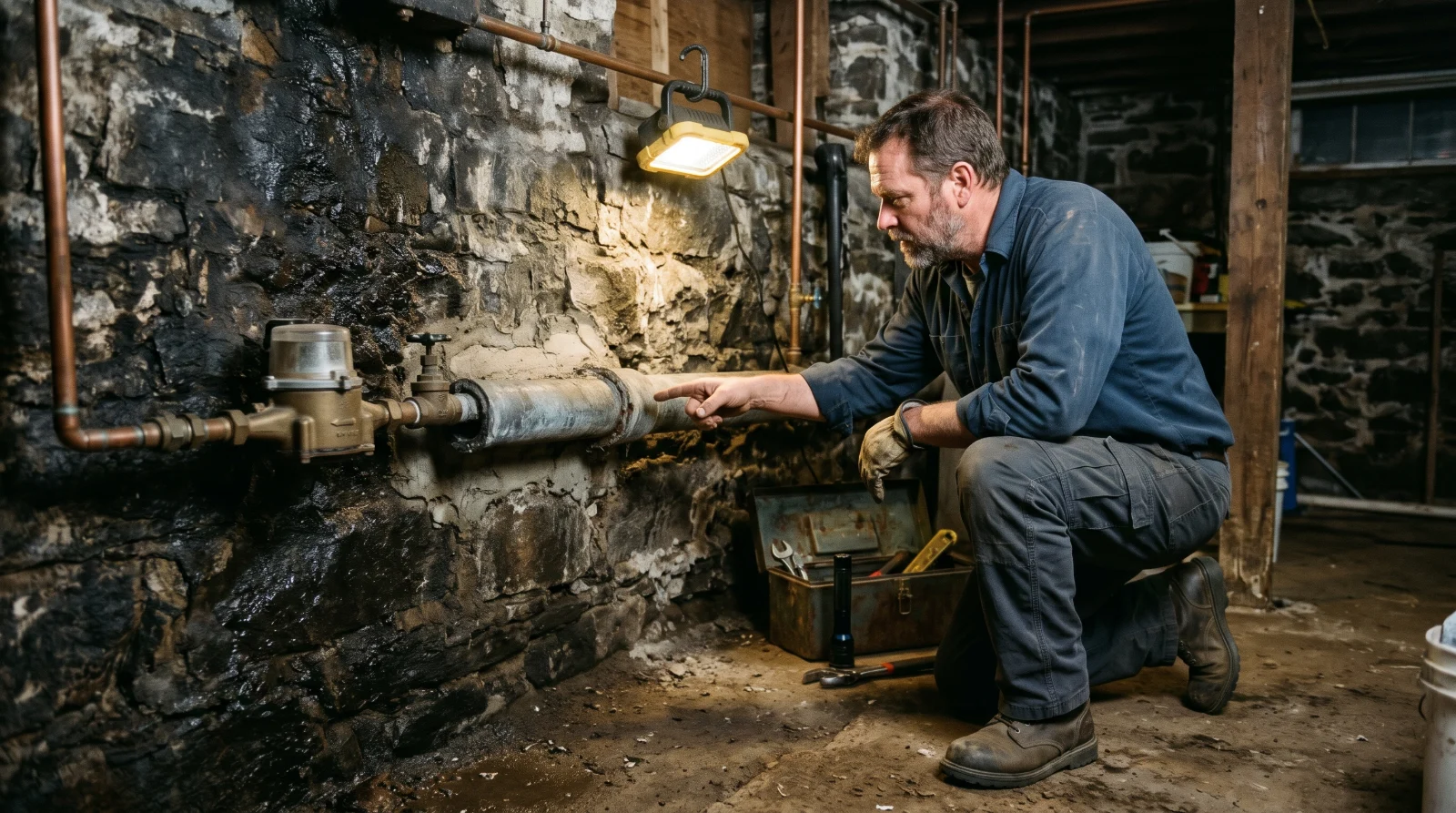
Lead service pipes usually enter older homes through the basement wall near the water meter. A plumber can confirm the material.
Montreal's Approach
Montreal has been replacing lead service lines since 2007 and accelerated its program after Health Canada tightened its guideline in 2019. The city has said it planned to replace about 48,000 lead service lines by 2030, with a budget of more than half a billion dollars. Montreal's approach is distinctive: when the city replaces its portion and finds lead on the private side, it can replace the private portion at the same time and bill the owner, with the option to pay over an extended period. The city has estimated private side costs ranging from about 2,000 to 15,000 dollars depending on the property. Montreal also offers an interactive map so residents can check whether their address is likely to have a lead service.
Ottawa's Approach
Ottawa's Lead Pipe Replacement Program supports eligible residents to replace their private lead water service at the same time the City replaces its portion. Families with children under six or those expecting a child receive priority. Ottawa's program materials refer to water testing by City staff and lead levels relative to Health Canada's guideline of 5 parts per billion. Check the City of Ottawa's website for current eligibility and support details.
Other Canadian Cities
Lead services are not limited to the largest cities. Older neighbourhoods in Halifax, Hamilton, London, Winnipeg, Quebec City and many smaller communities also have lead pipes. Most municipalities have some form of lead program, testing service or replacement policy. Search your city's website for "lead water service" or ask your local plumber.
How to Tell if You Have a Lead Service
Find where the water pipe enters your home, usually in the basement near the water meter. Lead pipe is dull grey, soft and scratches easily to reveal shiny silver metal. It often has a rounded, bulb like joint where it connects to the meter or valve, and it will not attract a magnet. Copper pipe is reddish brown, and galvanized steel is grey but hard and magnetic. Some homes have a newer pipe inside the house but lead buried underground, so checking only the visible section may not tell the whole story. If your home was built before about 1955, it is worth having a plumber inspect and having your water tested. A general plumbing inspection can identify the pipe material and other issues.
Health Canada's Guideline
In 2019, Health Canada lowered its guideline for lead in drinking water to a maximum acceptable concentration of 5 micrograms per litre, or 5 parts per billion, and emphasised keeping levels as low as reasonably achievable. Provinces and municipalities use the guideline to set testing and action programs. Because lead levels can vary over time and between first draw and flushed samples, a single test does not tell the whole story, so follow your city's sampling instructions carefully.
Steps to Reduce Lead Exposure Now
Flush before drinking. If water has been sitting for several hours, run the cold tap until it feels noticeably colder, then use it for drinking and cooking.
Use cold water only. Hot water can carry more lead. Never use hot tap water for baby formula or cooking.
Use a certified filter. Choose a filter certified to reduce lead, such as one meeting NSF/ANSI standards for lead reduction, and replace cartridges on schedule. Our water filtration professionals can help.
Clean aerators. Remove and rinse tap aerators periodically to clear trapped particles.
Test your water. Use your city's testing program if available.

Until lead pipes are replaced, a certified lead reducing filter and flushing cold water before use help protect children.
Replacing Your Side of the Pipe
Replacing the private portion typically involves a licensed plumber excavating or boring from the property line to the house and installing new copper or approved plastic pipe. Trenchless methods can reduce damage to lawns, driveways and gardens; see our trenchless plumbing listings. A permit is often required, and work is typically coordinated with the city so both sides are replaced together. Costs vary widely with distance, depth, access and surface restoration. Get several written quotes and ask whether the price includes permits, restoration and coordination with the city. Our water line replacement specialists handle this work, and if your interior plumbing also contains lead or old galvanized pipe, a partial or full repipe may be worth considering.
What a Replacement Day Looks Like
For many homeowners, the idea of digging up the front yard is the biggest barrier. In practice, a typical private side replacement is often completed in a day or two. The plumber locates the existing pipe and other utilities, then either digs a narrow trench or uses a trenchless boring tool to pull a new pipe from the property line to the basement. Inside, a new hole is made through the foundation and sealed, the new pipe is connected to a new shutoff valve and the meter, and the old lead pipe is cut off and capped or removed. The city then connects its new section at the property line. Afterward, the plumber flushes the lines thoroughly to clear any particles disturbed during the work. Restoration of lawns, walkways and driveways follows. Ask your plumber to explain each step in advance, and keep the receipts and permit documents for your records. In winter, frozen ground can complicate excavation, so many replacements are scheduled for spring through autumn, although experienced crews can work year round with the right equipment.
Why Full Replacement Matters
Research and health guidance have consistently found that partial lead service replacement, where only one side is replaced, can leave significant lead in place and may cause short term spikes in lead levels. Full replacement removes the source. That is why cities increasingly coordinate both sides and why homeowners should replace their portion when the city replaces its portion, or ask the city to coordinate when the homeowner initiates the work.
Lead Is a Global Issue
Canada is not alone. The United States has set a goal of replacing nearly all lead service lines, which we covered in our article on lead pipe replacement and in lead service line replacement accelerates. Ireland offers a grant of up to 5,000 euro for lead pipe replacement, as we described in our report on Ireland's water leaks and lead grants, and Australia has moved to lead free plumbing products, as explained in Australia goes lead free.
Warning: Scams and Shortcuts
Lead headlines attract opportunists. Be cautious of door to door water testers who always find dangerous lead and push expensive treatment systems, contractors who claim to be affiliated with the city without proof and quotes that skip permits or restoration. Use your city's official testing program, verify licensing and insurance, confirm any claimed city partnership directly and read reviews before hiring.
Renters and Landlords
Renters in older buildings can ask their landlord whether the building has lead service pipes and whether water has been tested. Many cities offer testing to residents regardless of whether they own the property. Landlords should prioritise full lead replacement, particularly in units occupied by families with young children, and can often coordinate with the city. In the meantime, renters can use a certified lead reducing pitcher or faucet filter, which requires no permanent installation.
A Salute to Canadian Plumbers
Canadian plumbers work through frozen ground and tight urban lots to replace lead services, often coordinating with city crews and careful to restore lawns and driveways. Their work quietly protects children's health in neighbourhoods across the country. We are proud to have so many Canadian plumbing companies in our directory.
How Best Plumbers Helps
Best Plumbers has been the Internet's original plumbing directory since July 12, 2002, serving readers worldwide, including across Canada. We list every plumbing company and every review, good and bad, and our Best Plumbers Recommended seal marks those we trust most. We never sell leads. Find a licensed plumber through our locations directory, and read the reviews before you hire.
The Bottom Line
Lead service pipes remain in thousands of older Canadian homes, but city programs in Toronto, Montreal, Ottawa and elsewhere make full replacement more achievable. Find out what your service pipe is made of, test your water, use a certified filter and flush cold water in the meantime, and work with a licensed plumber and your city to replace both sides of the pipe.
Frequently Asked Questions About Lead Pipes in Canada
1. Which Canadian homes are likely to have lead pipes?
Homes built before about the mid 1950s are most likely to have lead water service pipes.
2. What is Health Canada's lead guideline?
A maximum acceptable concentration of 5 parts per billion, with levels kept as low as reasonably achievable.
3. Who owns the water service pipe?
Usually the city owns the portion to the property line and the homeowner owns the portion into the house.
4. What is Toronto's Priority Lead Water Service Replacement Program?
Residents who commit to replacing their side can apply to have the City replace its side of the lead pipe.
5. How many lead services remain in Toronto?
Toronto estimates just under 16,000 City owned lead water service pipes remain.
6. Does Toronto test water for lead?
Yes. Homeowners can request a free lead testing kit for analysis at an accredited lab.
7. How does Montreal handle private lead pipes?
Montreal can replace private lead pipes while replacing the public side and bill owners, with extended payment options.
8. What does Ottawa's program offer?
Support for eligible residents to replace private lead services alongside City work, with priority for families with young children.
9. How do I identify a lead pipe?
It is dull grey, soft, scratches to shiny silver, is not magnetic and often has a bulb shaped joint.
10. Is partial replacement enough?
No. Partial replacement can leave lead and may cause temporary spikes. Full replacement is recommended.
11. How much does it cost to replace my side?
Costs vary widely with distance, depth and restoration. Montreal has estimated about 2,000 to 15,000 dollars.
12. Can trenchless methods be used?
Often yes. Trenchless boring can reduce damage to lawns and driveways.
13. Do I need a permit?
Often yes. Your plumber and city can confirm requirements.
14. What can I do before replacement?
Flush cold water before drinking, use cold water only, use a certified lead filter and clean aerators.
15. Are filters effective for lead?
Filters certified for lead reduction are effective when maintained and replaced on schedule.
16. Does boiling water remove lead?
No. Boiling does not remove lead and can concentrate it.
17. What is corrosion control?
Treatment that adds compounds like phosphate to form a protective layer inside pipes, reducing lead release.
18. Can renters do anything?
Yes. Ask landlords about testing and replacement, use city testing programs and use a certified filter.
19. Are children at special risk?
Yes. Babies, young children and pregnant people are most vulnerable to lead.
20. Should I use hot tap water for baby formula?
No. Use cold water, flushed or filtered, and heat it separately.
21. Does my home insurance cover lead replacement?
Usually not, since it is an upgrade rather than sudden damage. Check your policy.
22. Will replacing lead pipes raise my home value?
It can reassure buyers and remove a disclosure concern for older homes.
23. How do I avoid lead testing scams?
Use official city testing programs and be cautious of door to door testers pushing expensive systems.
24. How do I find a qualified plumber in Canada?
Search Best Plumbers, read every review, look for the Best Plumbers Recommended seal and confirm licensing.
25. Why does Best Plumbers cover Canadian lead programs?
Since 2002, Best Plumbers has served readers worldwide, including many in Canada, with trusted plumbing information.
Sources
City of Toronto, lead in drinking water and Priority Lead Water Service Replacement Program. City of Ottawa, Lead Pipe Replacement Program. CBC News, how Montreal is reducing lead exposure.

