
In Harare, residents like to say that water bills arrive more reliably than water itself. Zimbabwe's capital, home to more than two million people, still relies on a water system originally built for about 300,000. Its main treatment plant, Morton Jaffray, struggles with ageing equipment, erratic supplies of treatment chemicals and raw water from Lake Chivero that is badly polluted by sewage. In many suburbs, taps are dry for days or weeks at a time, and households that can afford it have turned to private and shared boreholes, while others draw water from shallow wells and streams. In September 2026, a parliamentary committee report warned that collapsed sewer mains have sent about 80 megalitres of raw sewage a day into a river feeding the lake for 15 years and urged the President to declare a state of emergency over water and sanitation by the end of the year. Zimbabwe has already lived through deadly cholera epidemics. Here is how Harare's water system broke down, what is being done and what every city and household can learn about the link between clean water and working sewers.
By the Best Plumbers Editorial Team. Published November 23, 2026.
A System Built for a Smaller City
Harare's water comes mainly from Lake Chivero and smaller reservoirs southwest of the city, treated at the Morton Jaffray works and pumped across the capital. The system was designed decades ago for a fraction of today's population. According to The Herald, one specialist estimated that of roughly 320 megalitres produced each day at Morton Jaffray, a large share, reportedly around 60 percent, is lost through leaks and other losses before reaching customers. Population growth, low investment, currency shortages and years of economic difficulty have left pipes, pumps and treatment plants in poor condition.
Zimbabwe has also faced repeated droughts, with an International Finance Corporation specialist counting 13 major droughts since the 1980s. Low lake levels concentrate pollution and make treatment harder.
Dry Taps and Disputed Causes
In February 2026, the Harare Residents Trust accused procurement officials at the city council of deliberately blocking payments to suppliers of water treatment chemicals, calling the resulting shortage an artificial crisis. The allegations had not been proven, but they reflected deep public frustration. In March 2026, NewsDay reported that a senior Harare city official had written to the chief secretary in the Office of the President and Cabinet acknowledging that the water problem had spiralled beyond the municipality's capacity to handle.
By May 2026, NewsDay reported that the city's 2026 budget relied partly on a controversial special water levy to finance improved service, while many residents felt they were paying more for a service that barely existed. Securing foreign currency for chemicals, spare parts and upgrades remained a central challenge.
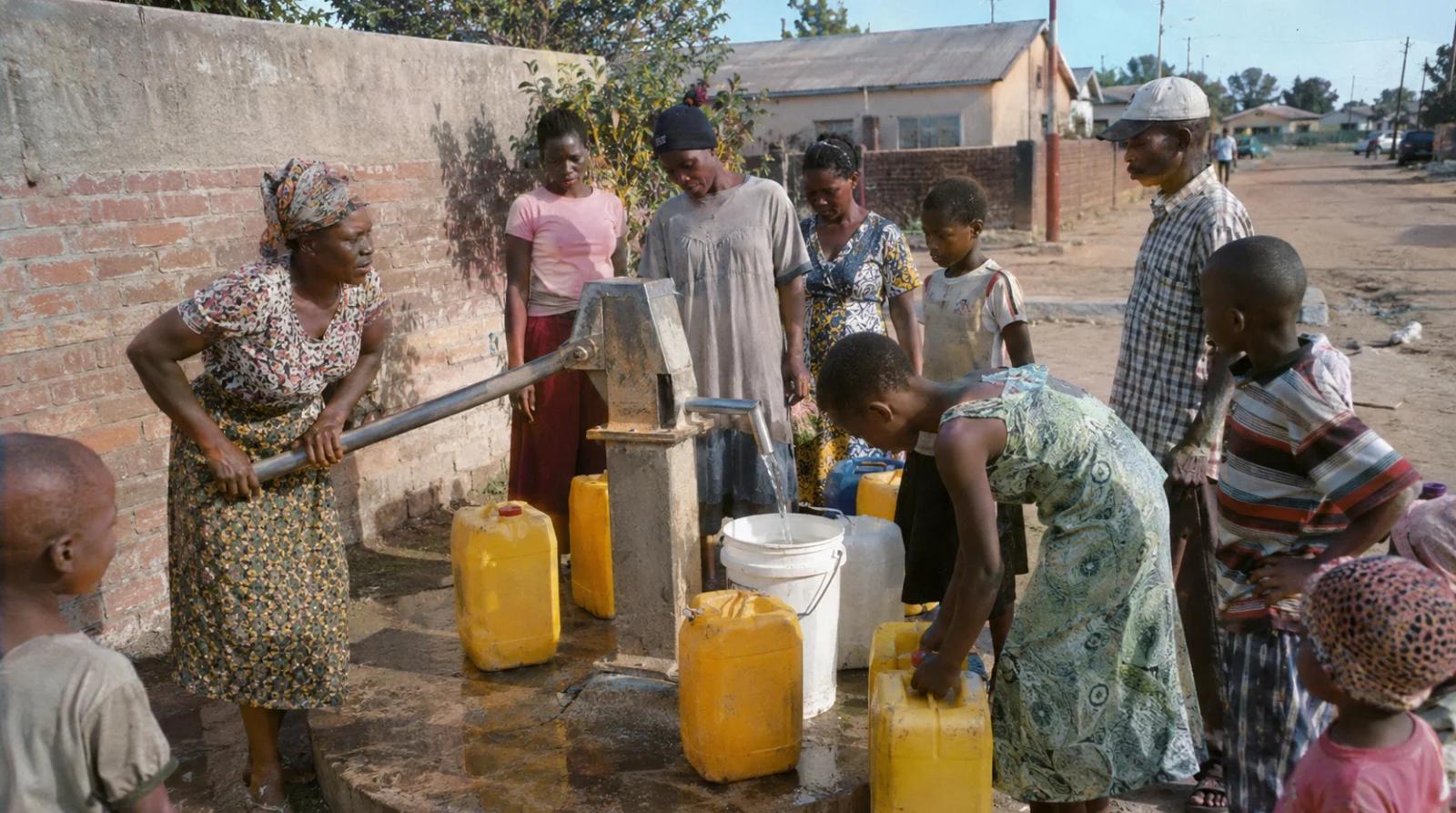
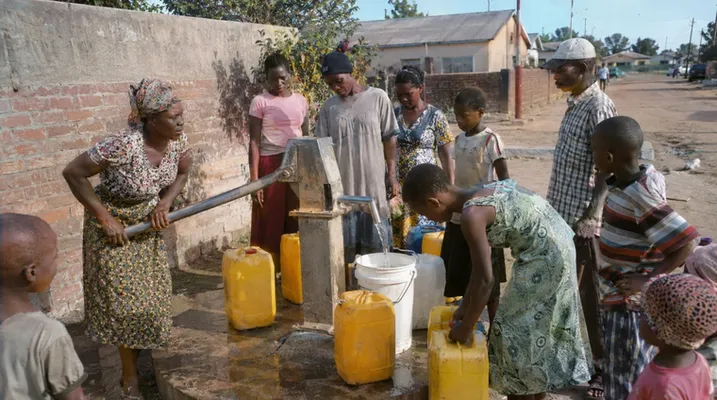
Shared boreholes have become a lifeline as municipal taps run dry across Harare.
The Rush to Boreholes
As municipal supply failed, Harare residents increasingly abandoned taps for private and shared boreholes. In April 2026, NewsDay described neighbourhoods pooling money for shared borehole schemes, with costs rising as boreholes had to be drilled deeper. Access to clean water is becoming tied more to household income than to municipal service, widening the gap between those who can pay and those who cannot. Residents without boreholes may rely on shallow wells or streams that are vulnerable to contamination from leaking sewers and pit latrines.
Boreholes can provide safe water if drilled, sealed and maintained properly, tested regularly and sited well away from sewage. But unregulated drilling across a city can lower the water table and, in crowded suburbs with broken sewers, the risk of contaminated groundwater is high.
Sewage in the Drinking Water Source
The September 2026 parliamentary report, by the Portfolio Committee on Environment, Climate and Wildlife, painted a stark picture. Nationally, only 20 of Zimbabwe's 63 sewage treatment plants were found to be functional, and those operating were estimated to discharge about 570 megalitres of raw or partly treated sewage a day. In Harare, the Firle plant, designed for 144 megalitres a day, treats about 54. The Crowborough plant was non functional. At Amalinda Crossing, collapsed trunk sewer mains have discharged about 80 megalitres of raw sewage a day into the Mukuvisi River for 15 years, with repairs not expected to finish until June 2027. A pump station that failed in 2014 sends sewage into another river and back into residential yards.
The Mukuvisi flows into Lake Chivero, Harare's main raw water source. The committee found low dissolved oxygen and a biological oxygen demand about four times the safe limit, along with high phosphates blamed for fish deaths and the spread of water hyacinth. Every litre of sewage that enters the lake has to be removed at the treatment plant, using more chemicals that the city struggles to afford.
The Cholera Shadow
Zimbabwe knows the cost of failing water and sanitation. The 2008 to 2009 cholera epidemic, which started in Harare, killed around 4,200 people and infected about 98,000. Outbreaks have recurred since, and in 2023 the country declared a state of emergency as cases passed 7,000. In 2026, health officials and residents warned of the risk of new outbreaks as taps ran dry in high density suburbs, and the Red Cross activated early action plans for cholera. The parliamentary committee linked sanitation failures to recurring cholera, typhoid and dysentery and said the situation was inconsistent with the constitutional right to an environment not harmful to health.
Calls for a State of Emergency
The committee urged the President to declare a state of emergency over the water and sanitation crisis by December 31, 2026, to unlock resources and coordinate action. Supporters say an emergency is needed to fix collapsed sewers, restore treatment plants and protect the lake. Others argue that emergencies have been declared before, during cholera outbreaks, without lasting change, and that what Harare needs is sustained investment, better governance and accountable procurement.
A Southern African Pattern
Harare's crisis is part of a wider regional pattern. Johannesburg has faced repeated outages tied to aging pipes and power failures, as we reported in Johannesburg's water crisis. Durban and Nelson Mandela Bay have struggled with leaks and dry taps, as covered in Durban's dry taps and dams full, taps dry in Nelson Mandela Bay. And in Ghana, pollution from illegal mining has shut treatment plants, as explained in gold before water. Across these cases, the lesson is the same: water supply, sanitation and maintenance rise or fall together.
What Households Can Do
Test borehole and well water. In crowded suburbs with leaking sewers, test for bacteria regularly and treat drinking water if in doubt.
Site boreholes carefully. Use a registered driller, and keep boreholes as far as possible from septic tanks, latrines and sewer lines, and make sure the casing is sealed at the top.
Treat drinking water. Boiling, chlorination and certified filters reduce the risk of cholera and other diseases; read about water filtration installation.
Store water safely. Use clean, covered containers with taps and wash them regularly. Never dip cups or hands into stored drinking water, and keep storage containers off the floor and away from cleaning chemicals, fuel and animals.
Maintain household plumbing. Fix leaks, check tank float valves and look after water heaters, which suffer when supply is intermittent; plan for water heater replacement when needed. Our plumbing cost guide and plumbing rebates guide help with budgeting.
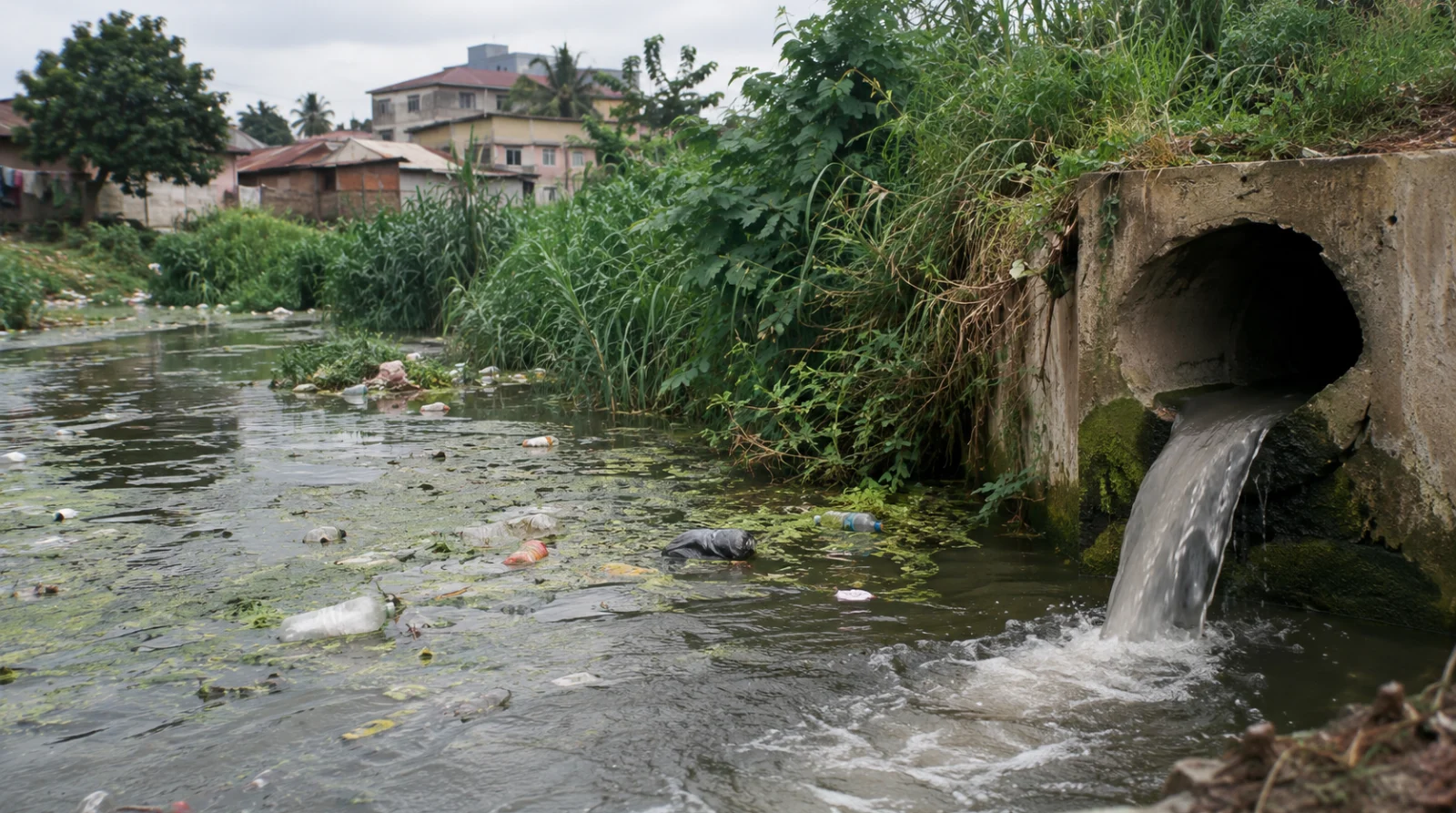
Raw sewage entering rivers that feed the city's main reservoir makes water harder and costlier to treat.
How Intermittent Supply Damages Pipes and Health
When water flows only some of the time, the pipe network itself becomes part of the problem. Empty pipes lose pressure, and where they pass near leaking sewers or polluted ground, contaminated water can be sucked in through cracks and loose joints. When supply returns, that contamination is pushed to household taps. Pressure surges as pipes refill can also burst weak joints, adding more leaks. That is why public health experts consider continuous, pressurised supply one of the most important protections against waterborne disease, and why cities with intermittent supply often see outbreaks even when treatment plants are working.
Inside homes, intermittent supply leads people to store water in buckets, drums and tanks, which can be contaminated if not kept covered and clean. Taps left open when supply is off can flood homes when water returns. Water heaters may run dry and fail. A licensed plumber can help families install a properly sealed storage tank, a float valve and a non return valve so stored water stays clean and the household is protected when pressure comes back.
Why Sewers Matter as Much as Water Pipes
It is easy to think of water supply and sewage as separate systems. Harare shows they are two halves of one cycle. When sewers collapse, sewage reaches rivers and lakes that supply drinking water, making treatment more expensive and less reliable. When water supply fails, people turn to shallow wells and streams contaminated by that same sewage. Breaking the cycle requires fixing both: treating wastewater properly protects the drinking water source, and reliable piped water reduces reliance on contaminated alternatives.
A Fair Debate: Who Is Responsible?
Residents' groups blame mismanagement, corruption and political interference for the city's decline and want accountability for chemical procurement and spending. City officials point to foreign currency shortages, old infrastructure, population growth and droughts beyond their control, and say they are doing what they can with limited resources. National authorities have at times taken over parts of water management, while critics say central government shares responsibility for underfunding. Development partners have offered support but often call for governance reforms first. Each perspective holds part of the truth, and lasting solutions will likely require cooperation among all of them.
Signs of Hope
There are reasons for cautious optimism. Neighbouring Bulawayo has tapped new aquifers to supplement supply, showing that groundwater, carefully managed, can help. Development partners have funded water projects in Zimbabwe's cities before and continue to offer support. Residents' associations are pushing hard for transparency in how water levies and chemical budgets are spent. And the parliamentary report, by laying out the facts in detail, gives decision makers a clear list of priorities, starting with the collapsed sewers that pollute Lake Chivero. Fixing those sewers would reduce treatment costs, protect public health and improve the lake for fishing and recreation. Restoring reliable chemical supplies to Morton Jaffray and cutting leakage in the distribution network would then let far more of the water the city already treats actually reach homes.
What to Watch Next
Watch closely in the coming months whether a state of emergency is declared, whether sewer repairs at Amalinda finish by mid 2027, whether chemical supplies to Morton Jaffray stabilise and whether cholera cases rise in the rainy season.
A Salute to Harare's Water Workers
Plant operators, sewer crews, borehole drillers, health workers and plumbers in Harare work in extremely difficult conditions to keep people safe. We salute them, and the residents' groups who keep asking hard questions.
Our Take
Harare shows how quickly a city's water system can decline when maintenance, investment and governance fall behind, and how that decline puts public health at risk. Every city, rich or poor, depends on unglamorous pipes, pumps and sewers. For households, the lesson is to protect your own water: test it, treat it, store it safely and keep your plumbing in good order.
How Best Plumbers Helps
Best Plumbers is the Internet's original plumbing directory, helping people find plumbers since July 12, 2002, and the most trusted plumbing directory on the Internet. We list every plumbing company we can find, with every review, good and bad, so you can judge for yourself, and only the best earn the Best Plumbers Recommended seal. Read how we rank plumbers. We never sell leads. Find a plumber through our locations directory, read real plumber reviews and, once your job is done, write a review to help your neighbours choose well.
The Short Version
Harare serves more than two million people with a water system built for about 300,000. Its main plant, Morton Jaffray, struggles with chemical shortages, old equipment and polluted raw water from Lake Chivero, and much treated water is reportedly lost to leaks. Residents increasingly rely on boreholes. A 2026 parliamentary report found collapsed sewers sending about 80 megalitres of sewage a day toward the lake and urged a state of emergency by year end. Cholera remains a serious risk. Test, treat and store water safely.
Frequently Asked Questions About Harare's Water Crisis
1. How many people does Harare's water system serve?
More than two million people.
2. What was it designed for?
About 300,000 people, according to The Herald.
3. What is Morton Jaffray?
Harare's main water treatment works.
4. Where does Harare get its water?
Mainly from Lake Chivero and nearby reservoirs.
5. How much treated water is lost?
Reportedly a large share, around 60 percent, before reaching customers.
6. Why are taps dry?
Old infrastructure, chemical shortages, polluted raw water and losses.
7. What did residents allege in February 2026?
That officials blocked payments for treatment chemicals.
8. Are residents using boreholes?
Yes, many have turned to private and shared boreholes.
9. Are boreholes safe?
They can be if sealed, sited away from sewage and tested.
10. How much sewage enters the Mukuvisi?
About 80 megalitres a day at Amalinda Crossing, according to Parliament.
11. How long has that been happening?
About 15 years.
12. When will repairs finish?
Not until June 2027, according to the report.
13. How many sewage plants work nationally?
Only 20 of 63, according to the committee.
14. How polluted is Lake Chivero?
Biological oxygen demand was about four times the safe limit.
15. What did Parliament recommend?
A state of emergency over water and sanitation by December 31, 2026.
16. How deadly was the 2008 to 2009 cholera outbreak?
About 4,200 deaths and 98,000 infections.
17. Was there an emergency in 2023?
Yes, as cholera cases passed 7,000.
18. What is the special water levy?
A charge in the city's 2026 budget to fund water service.
19. Why are chemicals hard to buy?
The city struggles to secure foreign currency.
20. How can I make borehole water safer?
Test for bacteria and treat drinking water.
21. Does boiling prevent cholera?
Yes, boiling kills cholera bacteria.
22. How far should a borehole be from a latrine?
As far as possible and according to local rules.
23. Why do sewers matter for drinking water?
Sewage pollutes the sources that supply drinking water.
24. What can other cities learn?
Maintain water and sewer systems together and fund them steadily.
25. Why does Best Plumbers cover Harare?
Because safe water and working sewers are the foundation of plumbing everywhere.
Sources
NewsDay, Harare residents abandon taps for boreholes. NewsDay, residents pay more for less. AllAfrica, Parliament calls for state of emergency over sewage. AllAfrica, residents say water crisis is artificial. The Herald, shared water crisis in Harare and Bulawayo. AllAfrica, cholera and climate change in Zimbabwe.

