
Nairobi is running short of water again. In November 2026, the Nairobi City Water and Sewerage Company announced it was cutting production by 35 percent with immediate effect, citing falling levels at Ndakaini Dam, the city’s main reservoir, and warned residents of Nairobi and parts of Kiambu, Kajiado and Machakos counties to expect longer rationing periods. For millions of people already used to scheduled supply, it means more days with dry taps, more trips to water vendors and more money spent on water. Yet the story is not only about rain. Analysts point out that a large share of the city’s treated water is lost to leaks, illegal connections and faulty meters before it is ever billed. Here is what is happening in one of Africa’s most important cities and what it teaches every growing city about pipes, water and fairness.
By the Best Plumbers Editorial Team. Published November 23, 2026.
We have covered water stress in African cities before, including Durban’s long outages. Nairobi’s situation, like Metro Manila’s brush with a record low reservoir, shows how much a fast growing city depends on a few dams and the pipes that connect them.
How Nairobi Gets Its Water
Most of Nairobi’s water comes from the Aberdare highlands north of the city. Ndakaini Dam on the Thika River is the largest reservoir, feeding water through tunnels to the Ngethu and Kigoro treatment plants, which together supply the bulk of the city’s water. Smaller sources include the Sasumua and Ruiru dams and boreholes. Treated water then travels through long transmission pipelines and an aging distribution network to homes, businesses and water kiosks across a metropolitan area that has grown rapidly for decades.
What Happened in November 2026
According to the Daily Nation, the utility said it was scaling back production at the Ngethu and Kigoro treatment plants by 35 percent because of falling levels at Ndakaini, and told consumers to expect longer rationing periods, without immediately publishing a new schedule. Kenyans.co.ke reported that the rationing covers Nairobi, Kiambu, Kajiado and Machakos counties, with households and businesses facing reduced or interrupted piped supply. The cut came even as Kenya’s meteorological service forecast above average rainfall over much of the country for the October to December short rains, a reminder that reservoirs often lag behind the weather.
The year had already brought repeated disruptions from pipeline bursts, flood damage and planned maintenance shutdowns at treatment plants, each requiring residents to adjust.
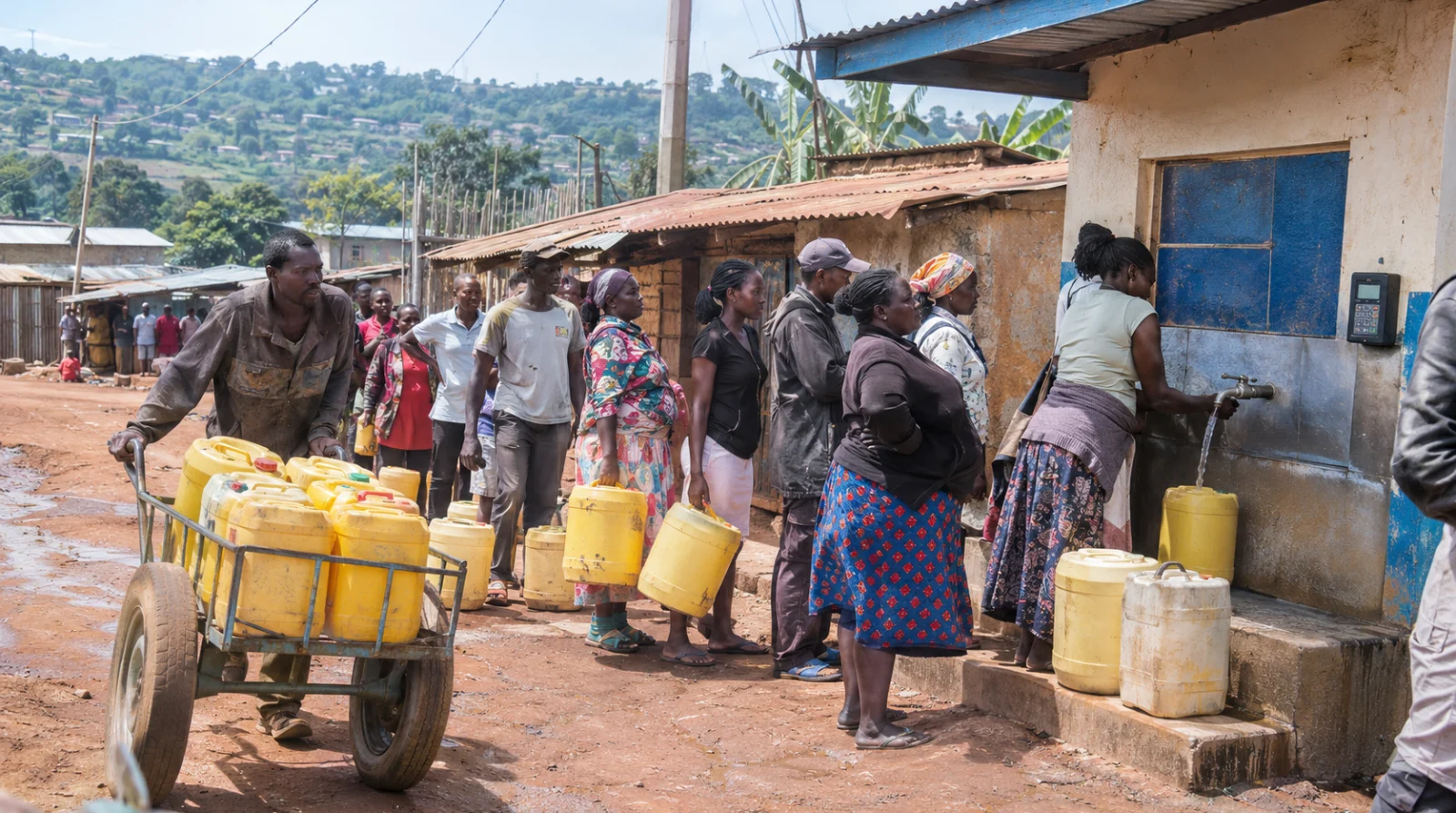
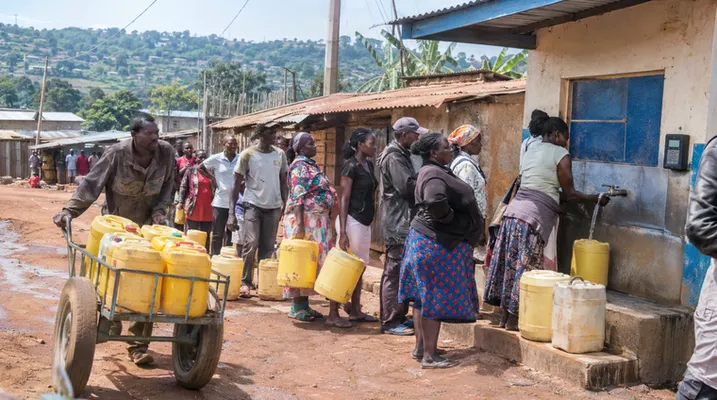
Community water kiosks and handcarts are a lifeline in many Nairobi neighbourhoods during rationing.
For families, the uncertainty is often as hard as the shortage itself. Without a clear schedule, people stay home to catch the few hours of supply, fill every container they own and plan cooking, laundry and bathing around the taps. Clear, reliable timetables would ease much of that burden.
A Long Running Shortage
Rationing is not new. Nairobi has rationed water since about 2017, when drought exposed a widening gap between supply and demand. At the time, utility officials said rationing would continue until new dams were completed under the city’s water master plan, then expected around 2026. Some projects have moved forward, but demand from a growing population has continued to outpace new supply, and dam projects have faced delays.
The Problem of Lost Water
An analysis by Dawan Africa in November 2026 argued that the shortage cannot be explained by rainfall alone. Utilities use the term non revenue water for treated water that is produced but never billed, including water lost through leaks, illegal connections, faulty meters and inaccurate billing. In many African cities, as in parts of Asia and Latin America, non revenue water can reach a large share of production. Every litre lost has already been collected, treated and pumped at great expense. Reducing those losses is often the fastest and cheapest way to stretch supply.
Investigations have also highlighted water vendors and so called cartels that divert water from public pipes to fill tankers and resell it at high prices, sometimes while nearby taps run dry. Residents’ associations have asked how vendors continue to access large volumes during official shortages and have called for stronger enforcement and transparency.
The Human Cost
For many households, rationing means paying twice: a monthly bill to the utility and extra money for vendor water when the pipes are dry. The Star described residents who pay a fixed monthly water bill yet still buy jerrycans from vendors because supply through the pipes is never enough. Vendors can charge many times the utility price per litre. In lower income settlements, people may walk long distances or queue for hours. Water shortages also raise health risks when people store water in unclean containers or reduce hygiene, and Nairobi has experienced cholera outbreaks during past shortages.
Some relief has come from water ATMs and community kiosks, where residents buy affordable water using cards or mobile money. Commentators have noted that a 20 litre jerrycan can cost as little as a couple of shillings at such ATMs, compared with far higher prices from private vendors.
How Households Cope
Storage tanks. Plastic tanks on rooftops or stands, often with a booster pump, store water during supply hours. Tanks should be covered, cleaned regularly and installed on strong bases.
Rainwater harvesting. During the long and short rains, roof runoff can fill tanks for cleaning, laundry and gardens. Water for drinking should be filtered and treated; a water filtration system can help.
Protecting the mains. Tanks and pumps should never be connected in a way that sucks water from the main or allows backflow. Proper backflow prevention protects your family and your neighbours.
Fixing leaks. A running toilet or dripping tap empties a storage tank fast. Simple toilet repairs and leak detection stretch every litre.
Efficient fixtures. Aerators and low flow showerheads cut use; see our faucets and fixtures page and compare products on our plumbing products page.
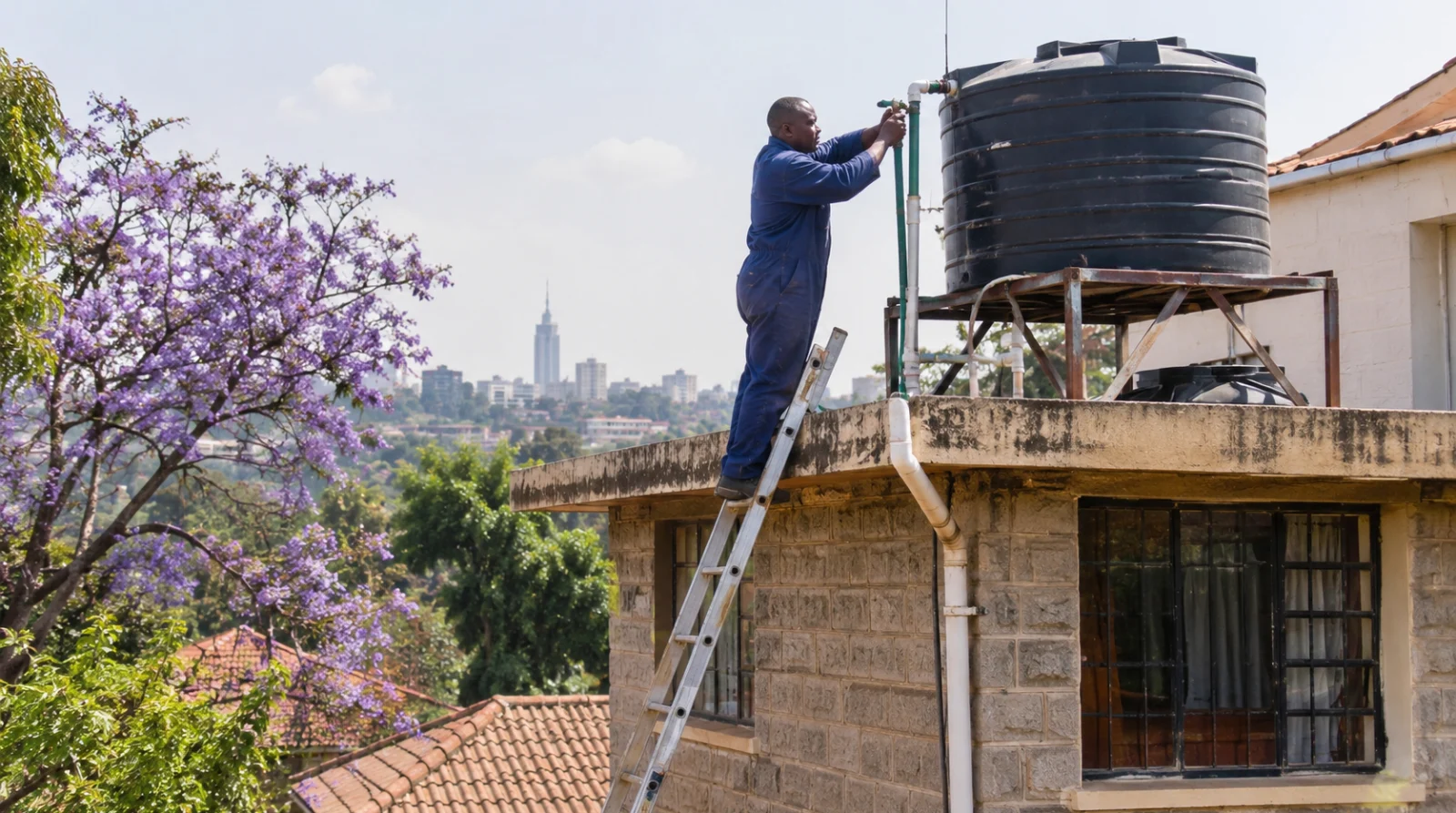
Storage tanks installed by qualified plumbers help households ride out rationing safely.
Keeping Stored Water Safe
When water arrives only a few days a week, how it is stored matters as much as how much there is. Health experts recommend a few simple habits. Use tanks and containers made for drinking water, with tight fitting lids. Clean and disinfect tanks at least a couple of times a year, and after floods or any contamination. Draw water with a tap rather than dipping cups or buckets into the tank. Keep tanks away from sewage, toilets and animal areas, and shade them to limit algae. Treat drinking water by boiling, chlorinating or filtering when quality is uncertain, and store drinking water separately from water for washing. These steps cost little and protect families from waterborne illness.
Estates, Apartments and Boreholes
Many Nairobi apartment blocks and gated estates rely on a combination of utility supply, private boreholes and tanker deliveries. Estate managers can reduce costs and conflict by installing individual meters for each unit, maintaining tanks and pumps on a schedule, publishing water use data to residents and fixing leaks in shared pipes quickly. Boreholes must be properly licensed and tested, since groundwater quality varies and some areas have high natural fluoride. Combining rainwater harvesting with borehole and utility supply gives estates more resilience during rationing.
What the City and Country Are Doing
Kenya’s water sector has pursued new dams, transmission pipelines, treatment upgrades and programmes to cut non revenue water through district metering, pipe replacement and crackdowns on illegal connections. Water ATMs have expanded access in informal settlements. National water agencies and county governments have also promoted rainwater harvesting and borehole regulation. Still, the gap between supply and a fast growing population remains large, and progress depends on sustained funding, good governance and enforcement.
Floods, Sewers and the Other Side of Water
Nairobi faces too much water as well as too little. Heavy rains have repeatedly flooded low lying estates, damaged water pipes along rivers and caused sewage to overflow, sometimes contaminating supply lines. The Nairobi River and its tributaries carry heavy pollution from untreated sewage and illegal discharges. Expanding sewer connections, repairing broken sewers and keeping stormwater out of sewage pipes are essential to protect both public health and the rivers that run through the city. Every proper toilet connection and septic system helps.
Lessons for Every Growing City
Plan supply ahead of growth. Dams, pipelines and treatment plants take many years to design and build, so cities need to build before shortages bite, not after.
Attack lost water. District metering, pressure management and rapid leak repair often deliver new supply faster than new dams.
Enforce fairly. Illegal connections and diversion undermine both supply and public trust in the utility.
Communicate clearly. Published, reliable rationing schedules help households plan their days, store water and avoid costly vendor purchases.
Protect the poorest. Affordable kiosks and ATMs reduce dependence on expensive vendors.
For a broader view of how water systems differ worldwide, see is plumbing the same around the world.
Businesses and Institutions
Hospitals, schools, hotels, restaurants and factories feel rationing acutely. Many now install large storage tanks with automatic changeover, boreholes where permitted, rainwater harvesting systems and water efficient fixtures, and some recycle water for cleaning and landscaping. Hospitals in particular need reliable, safe water for infection control, so backup storage and treatment are essential. A qualified plumbing contractor can design a resilient system sized to an institution’s needs and compliant with local standards, and can train staff to maintain it.
A Global Pattern
Nairobi’s experience echoes cities across the world, from Johannesburg and Durban to Mexico City, Tehran and Bengaluru, where rapid growth, aging pipes, high losses and climate variability strain water systems. The details differ, but the remedies are remarkably similar: diversify sources, cut losses, protect the poor, communicate clearly and build a skilled workforce. Cities that do these things well recover faster from droughts and build public trust along the way.
What Comes Next
The short rains may ease pressure on Ndakaini in the coming weeks, but residents should expect rationing to remain a feature of life until new supply comes online and losses fall. Following the utility’s published schedules, keeping storage clean and topped up and reporting leaks and illegal connections are the most useful steps households can take now.
A Fair Debate
Some residents, civil society groups and analysts argue that Nairobi’s shortages reflect poor management, high losses, corruption and weak enforcement more than rainfall, and that utilities and officials should be held accountable. Utility and government officials point to rapid population growth, climate variability, aging infrastructure inherited from earlier decades, vandalism and the long timelines and costs of new dams. Others emphasise that both supply expansion and loss reduction are essential, and that informal settlements must not be left behind. All of these perspectives contain truth, and progress likely requires action on every front.
What unites these views is a shared goal: reliable, affordable, safe water for every resident of the city, delivered through pipes that are maintained, metered and protected from theft and contamination.
A Salute to Kenya’s Water Workers
Kenya’s treatment plant operators, pipeline crews and plumbers work under difficult conditions to keep water flowing, repairing bursts in floods, maintaining aging plants and connecting new customers. Community water kiosk operators serve neighbourhoods that the pipes do not reach well. We salute them, and we encourage young Kenyans to consider careers in water and plumbing, where skills are in demand. Our plumbing associations page lists industry bodies around the world.
Our Take
Nairobi’s water crisis is serious, but it is solvable. Better rains will refill Ndakaini for now, yet lasting security depends on new supply, aggressive reduction of lost water, fair enforcement and support for households. Every home can help by storing water safely, fixing leaks and using water wisely. We are optimistic about Kenya’s water future because of the talent and determination of its people.
How Best Plumbers Helps
Best Plumbers has been the Internet’s original plumbing directory since July 12, 2002, and the most trusted, serving readers around the world. We list every plumbing company and show every review, good and bad, and our Best Plumbers Recommended seal marks those we trust most. We never sell leads. Find plumbers through our locations directory and read the reviews before you hire.
The Short Version
In November 2026, Nairobi’s water utility cut production by 35 percent as Ndakaini Dam levels fell, extending rationing across Nairobi, Kiambu, Kajiado and Machakos. Rationing has persisted since about 2017. Large losses from leaks, illegal connections and faulty meters compound shortages, and vendors charge high prices. Households cope with storage tanks, rainwater harvesting, leak repair and efficient fixtures.
Frequently Asked Questions About Nairobi’s Water Rationing
1. Why did Nairobi cut water production?
Because levels at Ndakaini Dam were falling.
2. By how much?
35 percent, with immediate effect.
3. Which areas are affected?
Nairobi and parts of Kiambu, Kajiado and Machakos counties.
4. What is Ndakaini Dam?
Nairobi’s largest reservoir, in the Aberdare highlands.
5. Which plants were scaled back?
Ngethu and Kigoro treatment plants.
6. How long has rationing lasted?
Since about 2017.
7. What is non revenue water?
Treated water lost to leaks, theft, faulty meters or billing errors.
8. Why does lost water matter?
It wastes expensive treated water that could supply customers.
9. Who are water cartels?
Groups accused of diverting public water to resell.
10. What are water ATMs?
Kiosks selling affordable water by card or mobile money.
11. Why do households pay twice?
They pay utility bills and buy vendor water when taps are dry.
12. Are rains expected?
Forecasts called for above average short rains in much of Kenya.
13. Will rain end rationing?
It helps, but reservoirs take time to recover and demand keeps growing.
14. How should I store water?
In covered, clean tanks on strong bases.
15. Can I connect a pump to the main?
Not in ways that draw from the main or allow backflow.
16. Is rainwater safe to drink?
Only after filtration and treatment.
17. How can I save water?
Fix leaks, use aerators and reuse water where safe.
18. Are health risks higher during shortages?
Yes, poor storage and hygiene raise disease risks.
19. What is the city doing?
New supply projects, loss reduction and enforcement.
20. Why do pipelines burst?
Age, pressure changes, floods and damage.
21. Are boreholes a solution?
They help some users but must be regulated to protect aquifers.
22. What can other cities learn?
Plan ahead, cut losses, enforce fairly and protect the poor.
23. Are plumbing jobs in demand in Kenya?
Yes, skilled water and plumbing workers are needed.
24. How do I find a trusted plumber?
Search Best Plumbers, read every review and look for the Best Plumbers Recommended seal.
25. Why does Best Plumbers cover Nairobi?
We serve readers worldwide and champion water security everywhere.
Sources
Daily Nation, longer rationing as Ndakaini levels fall and rationing to continue. Kenyans.co.ke, 35 percent supply reduction. Dawan Africa, Ndakaini explainer. The Star, water cartels and household costs and solutions beyond supply.

