
This month the International Association of Plumbing and Mechanical Officials, better known as IAPMO, led a plumbing trade mission between the United States and Indonesia that brought government standards officials, regulators, utilities and manufacturers to the same table. One of the goals was a coordinated fight against counterfeit and nonconforming plumbing products. It is a good moment for homeowners everywhere to learn the small marks stamped on faucets, valves, toilets and water heaters. Those marks are the difference between a product that was tested to protect your drinking water and one that was not. Here is how to read them in the United States, Canada, the UK, Ireland, Europe, Australia, New Zealand, South Africa and beyond.
By the Best Plumbers Editorial Team. Published November 24, 2026.
Key Takeaways
- In November 2026, IAPMO led a U.S. and Indonesian plumbing trade mission focused on product standards, conformity assessment, workforce development and drinking water safety, including a framework to address counterfeit and nonconforming products.
- Independent testing commissioned by Moen and performed by IAPMO found 17 of 19 off-brand faucets sold online failed drinking water health and safety standards. Eleven leached lead above allowable levels.
- All six off-brand pressure balancing shower valves in a separate test failed the ASSE 1016 anti-scald standard.
- Look for real certification marks such as cUPC, NSF/ANSI 61 and 372, CSA, WRAS, WaterMark, KIWA, DVGW, ACS or SABS, depending on where you live, and verify them in the certifier's online listing.
- Most plumbing products sold by reputable brands and suppliers are legitimate. The risk is concentrated in unknown brands sold by anonymous third party sellers.
The News: Standards Go Global
According to Plumber magazine's November 2026 industry news roundup, IAPMO led the U.S. and Indonesia plumbing trade mission with senior officials from Indonesia's National Standardization Agency, its Ministries of Industry, Trade and Public Works, utilities, IAPMO clients and technical experts, alongside U.S. plumbing manufacturers. The group discussed a coordinated approach to plumbing product standards, conformity assessment, workforce development and drinking water safety. The mission also advanced the APEC Plumbing Regulatory Roadmap and set up a framework for continued work against counterfeit and nonconforming plumbing products.
That may sound like inside baseball. It is not. Plumbing products move around the world faster than ever. A faucet sold to a homeowner in Ohio, Ontario, Queensland or Gauteng may have been made in one country, certified in another and shipped through a third. When standards bodies in different countries agree on testing and recognize each other's certification, good products reach more people at lower cost. When they do not, counterfeiters slip through the gaps. Every step toward shared standards is a step toward safer water in kitchens everywhere, and we applaud the people doing that unglamorous work.
Why This Matters: What the Testing Found
In 2025, Moen commissioned IAPMO to independently test widely available off-brand faucets sold online. The results were alarming. Seventeen of the 19 faucets failed to meet health and safety standards for drinking water. Eleven leached lead above allowable levels, one by more than 500 percent. Fifteen contained chemicals linked to cancer, birth defects and organ damage. In a separate test, all six foreign made pressure balancing shower valves failed ASSE 1016, the standard that protects people from scalding when someone flushes a toilet or runs a sink, and one exceeded safe temperature limits by 750 percent.
Moen also testified that some of these products, or their advertising, misused legitimate certification marks, including IAPMO's. In other words, a mark printed on a box or in a product photo is not proof. It has to be verified. Federal officials also recalled nine faucets made in China and sold on Amazon.
The industry has kept pushing. Plumbing Manufacturers International, whose members make about 90 percent of the plumbing products sold in the United States, recruited IAPMO to conduct further independent testing of counterfeit and contraband faucets and showerheads in 2026 to show federal agencies the scope of the problem. PMI also championed the INFORM Consumers Act, which requires online marketplaces to collect and verify information about high volume third party sellers.
And here is the reassuring part. PMI itself points out that because its members and other reputable companies make the overwhelming majority of products on the market, most products found online or in stores are not counterfeit. You do not need to be afraid of buying plumbing products. You need to know what to look for.
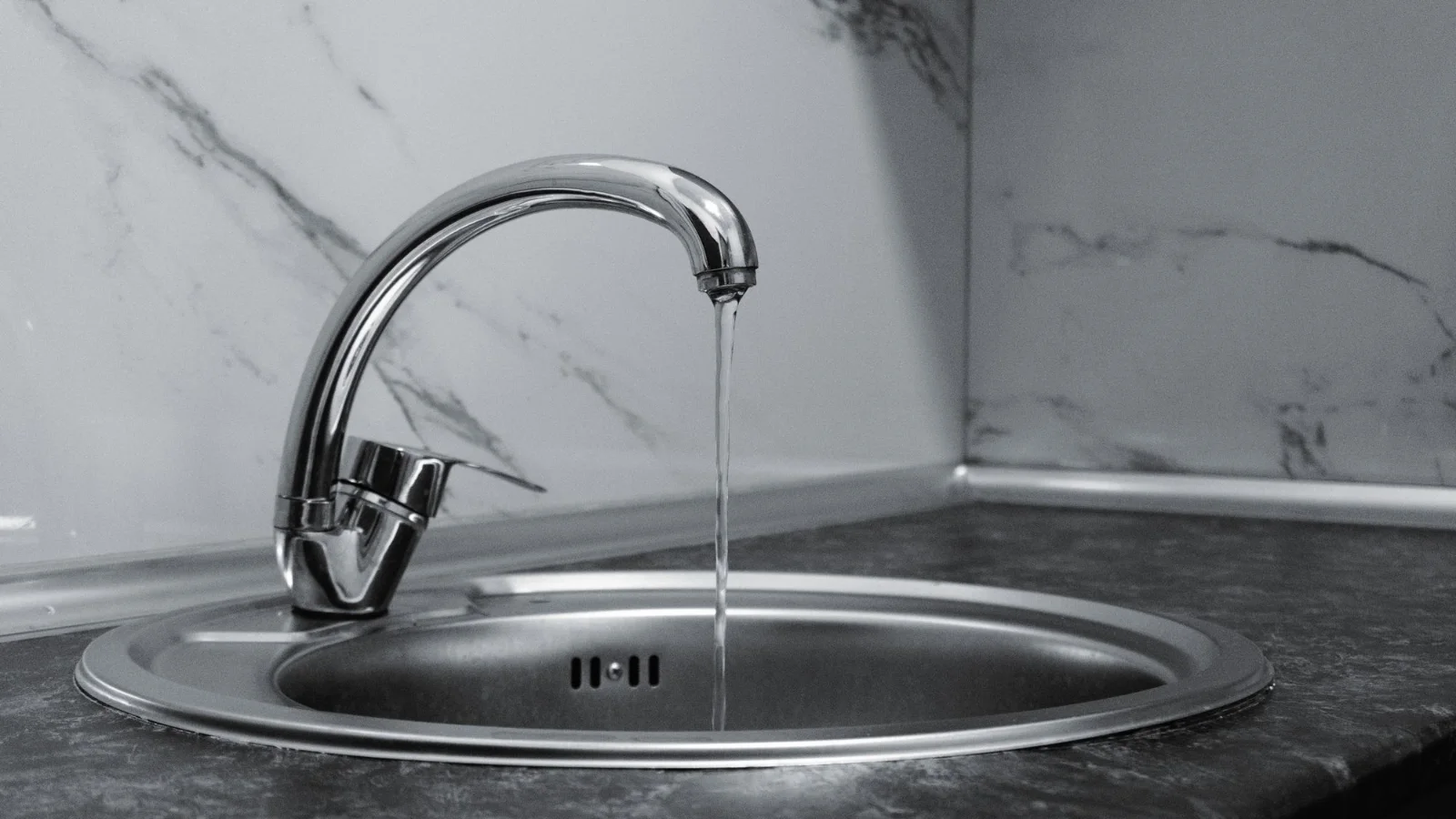
A kitchen faucet delivers the water your family drinks every day. It should carry a verifiable drinking water certification. Photo via Pexels.
The Certification Marks Decoder
Marks vary by country, and many products carry several. Here is a practical guide to the ones homeowners are most likely to see. Rules change, and local codes decide what is required where you live, so treat this as a starting point and ask a licensed local plumber when in doubt.
United States and Canada
- cUPC or UPC (IAPMO). The cUPC mark means the product was certified by IAPMO to the applicable U.S. and Canadian standards and accepted under the plumbing codes. IAPMO tells consumers to look for it as confirmation of independent testing and compliance.
- NSF/ANSI/CAN 61. The key drinking water health standard. It limits what a faucet, valve, pipe or fitting can leach into drinking water.
- NSF/ANSI/CAN 372. The lead content standard. In the U.S., products that carry drinking water must be lead free under federal law, defined as a weighted average of no more than 0.25 percent lead on wetted surfaces.
- CSA. CSA Group certifies plumbing fittings to standards such as CSA B125, widely required in Canada and also seen on U.S. products.
- ASSE. ASSE International standards cover safety devices, including ASSE 1016 and 1070 for anti-scald valves and many backflow preventers.
- Other listing agencies. Recognized certifiers such as Intertek (ETL), UL Solutions, ICC-ES and others list plumbing products to the same standards. The mark alone is not the point. The listing behind it is.
- WaterSense. An EPA label for water efficiency and performance. It is a good sign but it is not a drinking water safety certification on its own.
United Kingdom and Ireland
- WRAS approval. The Water Regulations Advisory Scheme approval shows a fitting has been assessed against the requirements that support the Water Supply (Water Fittings) Regulations. Many water companies and installers look for it.
- KIWA Reg 4 and other approvals. Kiwa and other approved bodies also assess fittings for compliance in the UK.
- Ireland. Irish installers commonly work to European EN product standards, and many fittings sold in Ireland carry WRAS, KIWA or other European approvals. Ask your plumber what applies to your installation.
Europe
- DVGW in Germany, KIWA and KOMO in the Netherlands, and ACS in France are among the best known national approvals for products in contact with drinking water.
- Europe is in the middle of a major update to the rules for materials touching drinking water under its revised Drinking Water Directive, with key dates at the end of 2026. Expect labels and approvals to evolve.
Australia and New Zealand
- WaterMark. In Australia, most plumbing products must be WaterMark certified before they can be installed. The mark shows the product meets the applicable Australian standard. Many products sold in New Zealand also carry WaterMark, and installations must comply with the New Zealand Building Code.
- WELS. The Water Efficiency Labelling and Standards star rating shows water efficiency, not safety. New Zealand has its own water efficiency labeling as well.
- Lead free requirements. Australia has introduced tighter lead limits for plumbing products in contact with drinking water, so check for current lead free compliance on new taps and fittings.
South Africa
- SABS mark and JASWIC acceptance. South African plumbing components are commonly certified to SANS standards, and many municipalities look for approval under the Joint Acceptance Scheme for Water Installation Components. Ask a registered plumber which approvals your municipality requires.
Indonesia and the Asia Pacific
Because this month's news centers on Indonesia, it is worth knowing the Indonesian mark too:
- SNI. Indonesia's national standard mark, administered through its National Standardization Agency, the same body that took part in this month's trade mission. Across the region, the APEC Plumbing Regulatory Roadmap aims to bring standards and conformity assessment into closer alignment.
How to Verify a Mark in Two Minutes
IAPMO's chief technical services officer has advised consumers to look for certification marks and verify them with the certification agency online or by calling the agency. Here is how to do that in practice:
- Find the brand name and model number on the box, the product or the listing.
- Note which marks are claimed, such as cUPC, NSF 61 or WaterMark.
- Go to the certifier's own website and search its public product listings for that brand and model. Most major certifiers publish searchable directories.
- Confirm the listing covers the exact model and the right standard, for example NSF/ANSI/CAN 61 and 372 for a kitchen faucet.
- If you cannot find a listing, assume the claim is not verified and buy something else.
Red Flags When Shopping Online
- A brand name you have never heard of with a random string of capital letters.
- Listings that say "replacement for" or "compatible with" a famous brand's valve or cartridge.
- Prices far below every known brand for the same type of product.
- Certification logos that appear only in the product photos, not in a verifiable listing.
- No model number, no manufacturer address, and no installation instructions in English or your local language.
- Reviews that are vague, repetitive or posted all on the same day.
- Anti-scald shower valves and backflow devices from unknown sellers. These are safety devices. Do not gamble on them.
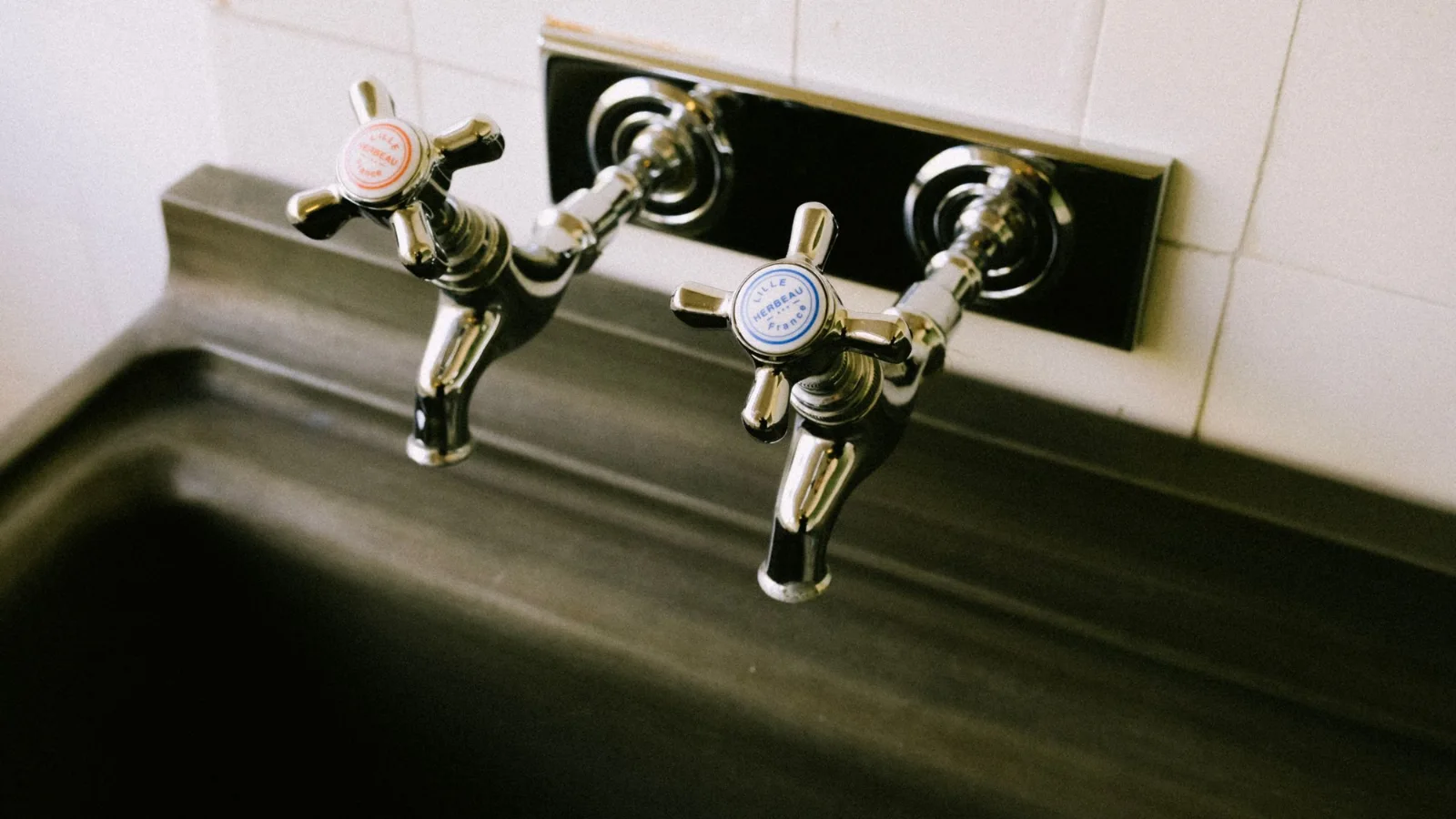
Certified faucets and valves are tested for lead, chemical leaching and safety performance. Photo via Pexels.
Where Counterfeit and Uncertified Products Do the Most Harm
Kitchen and bathroom faucets. These deliver drinking water directly. A faucet that leaches lead puts it straight into the glass. If you are shopping for a kitchen faucet replacement, make NSF/ANSI 61 and 372 certification nonnegotiable, and have a pro handle the faucet installation if the supply valves under your sink are old.
Shower valves. Pressure balancing and thermostatic valves protect children and older adults from scalding. The test results above show why an uncertified valve is a real hazard. A certified shower valve replacement installed by a licensed plumber is the safe route.
Water heaters. Tanks, relief valves and gas controls are safety critical. Buy from established manufacturers and let a licensed pro handle water heater installation, including the relief valve, expansion and venting.
Toilets and fill valves. Uncertified toilets may not flush to standard or may use fill valves without proper anti-siphon protection. A certified fixture and a professional toilet installation avoid leaks and backflow risk.
Water filters. A filter that claims to remove lead or PFAS should be certified to the relevant NSF/ANSI standard for that claim. Our report on Michigan's Filter First program shows how seriously certified filtration is taken in schools. At home, a pro who does water filtration installation can match the right certified system to your water test.
PEX, fittings and backflow devices. Pipe and fittings hidden in walls must be certified to the right standards, and so must backflow preventers. These are the products most likely to cause expensive or dangerous failures years later.
A Quick Shopper's Checklist, Product by Product
Print this, screenshot it, or keep it on your phone for the next time you are tempted by a bargain faucet.
- Kitchen or bathroom faucet: NSF/ANSI/CAN 61 and 372 in North America, or your country's drinking water approval such as WRAS, WaterMark or KIWA. Brand name and model number you can look up. Replacement cartridges available from the manufacturer.
- Shower valve or tub and shower trim: ASSE 1016 or 1070 anti-scald certification in North America, or the equivalent where you live. Buy the valve body and trim from the same manufacturer.
- Showerhead: a verifiable plumbing certification, plus a flow rate that is legal where you live. WaterSense or WELS if efficiency matters to you.
- Toilet: certification to the applicable fixture standard and a fill valve with anti-siphon protection.
- Water heater: an established manufacturer, a properly rated temperature and pressure relief valve, and a licensed installer.
- Water filter: certification to the specific NSF/ANSI standard for each contaminant claim, such as lead or PFAS.
- PEX, fittings and supply lines: markings printed right on the product showing the standards it meets. If the printing is missing or smudged, walk away.
- Backflow preventer: an approved device that your local water authority accepts, installed and tested by a certified tester where required.
Already Installed Something You Are Not Sure About?
Do not panic. Plenty of people have bought an off-brand faucet or shower valve without knowing any of this. Here is what we suggest:
- Look up the brand and model. If you can find a real certification listing, you are probably fine.
- If you cannot, and it is a faucet you drink from, consider having your tap water tested for lead, or simply replace the faucet with a certified one. It is an affordable fix.
- If it is a shower valve, test it carefully. With the shower running at a comfortable temperature, have someone flush a nearby toilet. A sudden jump in temperature is a warning sign. Have a plumber replace it, especially if children or older adults use that shower.
- If it is a water heater relief valve, gas part or backflow device, call a licensed professional right away. Those are not parts to leave in question.
Why Plumbers Are Your Best Defense
Licensed plumbers buy from established supply houses, work with brands they trust, and know which products their local inspectors accept. They also stand behind their work. When a homeowner supplies a cheap online fixture, many pros will install it only with a warning, or not at all, and now you know why. That is not a sales tactic. It is professional judgment backed by test data.
If you want to understand how plumbing standards differ from country to country, our feature Is Plumbing the Same Around the World? is a great companion to this guide. To learn more about the organizations that write codes and standards and train the trade, browse our directory of plumbing associations. And for brand information, start with the Best Plumbers plumbing products directory.
Our Take
The plumbing industry has built one of the most effective safety systems in the modern world. Codes, standards, testing labs, inspectors and licensed plumbers work together so that billions of people can turn on a tap without a second thought. Missions like this month's U.S. and Indonesian trade mission show that system expanding and connecting across borders, and that is worth celebrating.
The weak spot is the shopping cart. Anonymous sellers can list products that never saw a test lab, borrow a logo and ship straight to your door. You do not have to be an expert to beat them. Look for the mark, verify the listing, buy from reputable sources, and let a licensed professional install anything that touches your drinking water or protects your family from scalding.
Best Plumbers has spent more than twenty years helping people find the right plumber. Read our piece on the importance of hiring a licensed plumber, then search plumbers near me to find a pro in your area who will put certified products on your walls and your sink.
Frequently Asked Questions
1. What happened with the IAPMO trade mission in November 2026?
IAPMO led a U.S. and Indonesian plumbing trade mission that brought together Indonesian standards and government officials, utilities and U.S. manufacturers to discuss product standards, conformity assessment, workforce development, drinking water safety and counterfeit products.
2. What is the APEC Plumbing Regulatory Roadmap?
It is a framework among Asia Pacific economies to align plumbing product standards and conformity assessment, making it easier to trade safe products and harder to sell nonconforming ones.
3. How many off-brand faucets failed IAPMO testing?
In testing commissioned by Moen, 17 of 19 off-brand faucets sold online failed drinking water health and safety standards, and 11 leached lead above allowable levels.
4. What happened with the shower valve tests?
All six off-brand pressure balancing shower valves tested failed the ASSE 1016 anti-scald standard, and one exceeded safe temperature limits by 750 percent.
5. Are most plumbing products sold online counterfeit?
No. PMI says its members make about 90 percent of plumbing products sold in the U.S., so most products are legitimate. The risk is concentrated in unknown brands from anonymous sellers.
6. What does the cUPC mark mean?
It means IAPMO certified the product to the applicable U.S. and Canadian standards for acceptance under the plumbing codes.
7. What is NSF/ANSI 61?
It is the health effects standard for products in contact with drinking water, limiting what they can leach into the water.
8. What is NSF/ANSI 372?
It is the standard for verifying lead content. U.S. law defines lead free as a weighted average of no more than 0.25 percent lead on wetted surfaces.
9. What is ASSE 1016?
It is the performance standard for individual shower and tub anti-scald valves, such as pressure balancing and thermostatic valves.
10. Is WaterSense a safety certification?
No. WaterSense is an EPA label for water efficiency and performance. Look for drinking water safety certifications such as NSF/ANSI 61 as well.
11. What certification should I look for in the UK?
WRAS approval is widely used to show compliance with the Water Supply (Water Fittings) Regulations, and Kiwa and other bodies also provide approvals.
12. What is WaterMark?
WaterMark is Australia's certification scheme for plumbing products. Most products must be WaterMark certified before installation, and many products in New Zealand carry it too.
13. What do I look for in South Africa?
Look for SABS certification to SANS standards and acceptance under the Joint Acceptance Scheme for Water Installation Components, and ask a registered plumber what your municipality requires.
14. Which approvals are common in Europe?
DVGW in Germany, KIWA and KOMO in the Netherlands and ACS in France are among the best known approvals for drinking water products.
15. What is the SNI mark?
SNI is Indonesia's national standard mark, administered through its National Standardization Agency.
16. Can a certification logo on a product be fake?
Yes. Testimony to Congress described misuse of legitimate certification marks on products sold online. Always verify the listing with the certifier.
17. How do I verify a certification mark?
Note the brand and model number, go to the certifier's website, search its public product listings and confirm the exact model and standard are listed.
18. What is the INFORM Consumers Act?
A U.S. law that requires online marketplaces to collect and verify information about high volume third party sellers, helping fight counterfeit and stolen goods.
19. Which plumbing products are riskiest to buy uncertified?
Faucets, shower valves, water heaters and their relief valves, backflow preventers, water filters, and pipe and fittings that go inside walls.
20. Will my plumber install a product I bought online?
Many will, sometimes with a warning, but some decline uncertified products because of safety and liability. Ask before you buy.
21. Do water filters need certification?
Yes. A filter claiming to reduce lead, PFAS or other contaminants should be certified to the NSF/ANSI standard for that specific claim.
22. How can I tell if a faucet is lead free?
Look for NSF/ANSI 372 or an equivalent lead free certification in your country, and verify the listing for the exact model.
23. Are cheap replacement cartridges safe?
Be cautious with cartridges sold as replacement for or compatible with a famous brand from unknown sellers. Genuine or certified parts protect anti-scald performance.
24. Does this apply to commercial buildings?
Yes, and the stakes are higher. Commercial projects are usually reviewed by inspectors who require certified products.
25. How can Best Plumbers help me buy and install safe products?
Best Plumbers connects you with licensed local plumbers who use certified products, and offers a plumbing products directory and guides so you can shop with confidence.
Sources
Plumber magazine, Industry News, November 2026. IAPMO, Moen Partners with IAPMO to Expose Counterfeit Faucets. PHCP Pros, PMI 2026 advocacy priorities. Plumbing Manufacturers International, How to Buy a High Quality Plumbing Product. Office of Senator Tammy Duckworth, Faucets recalled over potential chemical hazards.

