
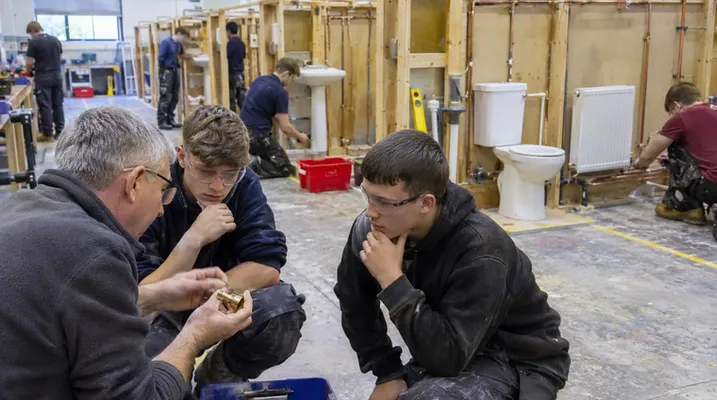
Britain is building homes, upgrading heating systems for net zero and replacing aging water infrastructure, and all of it needs plumbers. Industry estimates suggest the UK needs around 73,700 new plumbers by 2032. Yet according to City and Guilds, only about 2,100 apprentices completed a plumbing apprenticeship between 2021 and October 2025, and the Association of Plumbing and Heating Contractors says plumbing apprenticeship starts have fallen by around 37 percent since 2021 to 2022. In Scotland, research by the plumbing employers’ federation found that one in three plumbing firms planned to stop taking on apprentices. New apprenticeship standards have stalled under review, even as the government pledges tens of thousands of new apprenticeship places. As a proud champion of the trade, Best Plumbers looks at what is going wrong, what is being done and why a plumbing career in Britain has never been more promising.
By the Best Plumbers Editorial Team. Published November 23, 2026.
The workforce challenge is global. We reported on America’s gap in plumbing’s 550,000 jobs to fill, and on UK debates about whether every plumber should need a licence. Britain’s apprenticeship crunch sits at the heart of both.
The Size of the Gap
The Chartered Institute of Plumbing and Heating Engineering’s skills research has estimated the UK needs at least 70,000 new plumbers by 2032, and more recent figures cited in FE Week put the number at about 73,700. Demand comes from new housing, the shift from gas boilers toward heat pumps and other low carbon systems, water efficiency and leak reduction targets and replacing a workforce that is aging fast. Many experienced plumbers are approaching retirement, and not enough young people are entering to replace them.
Why Apprenticeships Are Falling
Cost and risk for small firms. Most plumbing businesses are small. Taking on an apprentice means wages, supervision time, tools, insurance and vans, often for years before the apprentice is fully productive. When margins are tight, firms hesitate.
Funding complexity. Employers in England can use apprenticeship levy funds and government support, but rules have changed repeatedly. In Scotland, employers say they cannot access levy receipts in the same way and lack transparency over how levy income allocated to Scotland is used.
Drop out rates. FE Week reported that construction apprenticeship drop out rates stand at around 47 percent, according to the British Association of Construction Heads, meaning many who start never finish.
Supervisory capacity. Apprentices need experienced mentors on site, and an aging, stretched workforce has limited time to train.
Uncertain standards. Skills England has been developing new Level 2 and Level 3 plumbing and heating apprenticeship standards with the Chartered Institute and awarding bodies. But other stakeholders challenged the proposals, and Skills England set up a taskforce to review them. The Chartered Institute said it was now unlikely the new standards would be approved in time for September 2026 delivery, while the existing Level 3 standard remains in place.
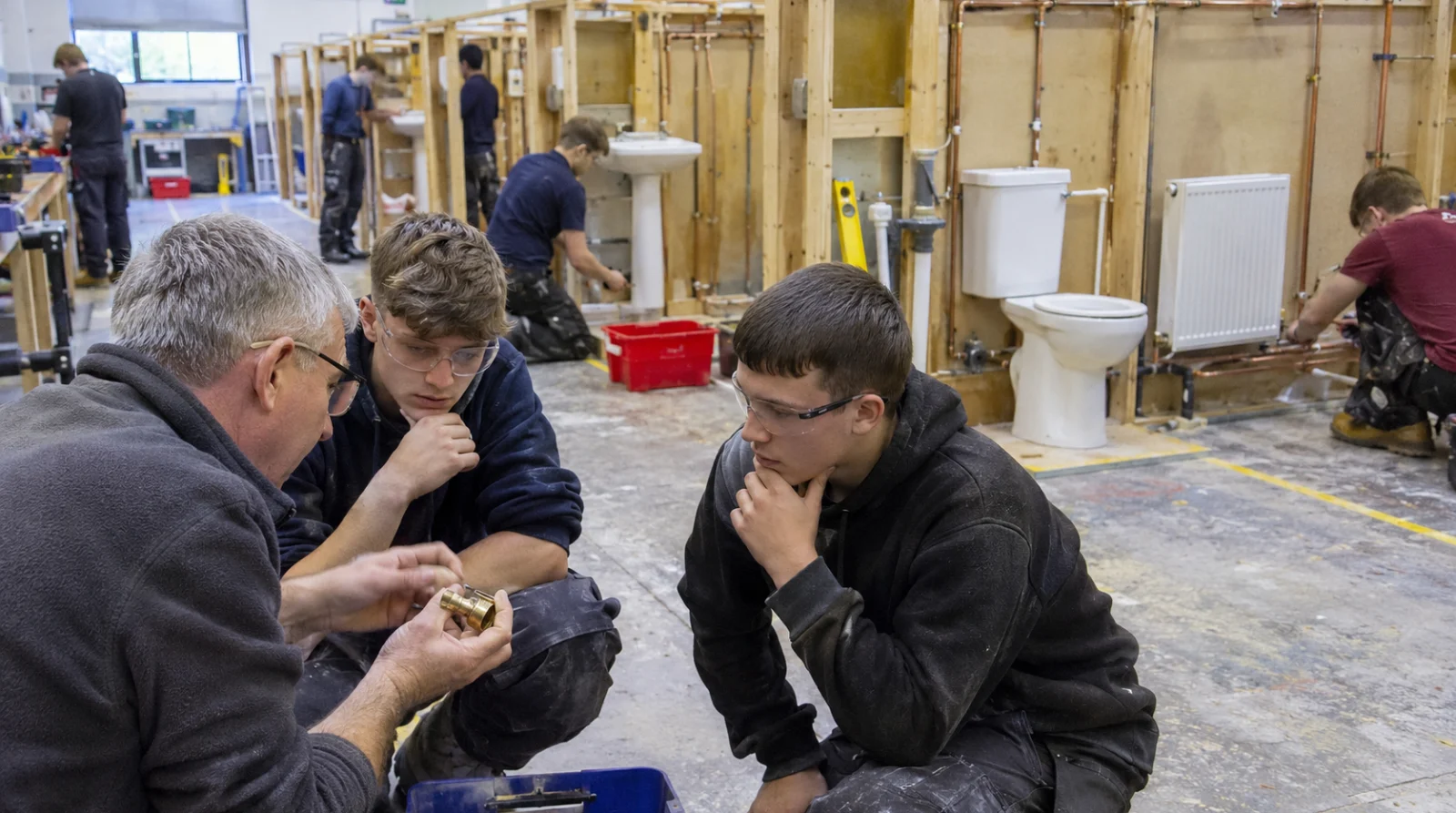
College workshops give apprentices hands on practice before and alongside work on real job sites.
The Net Zero Factor
Britain’s climate goals add a new layer of demand. Every heat pump, hot water cylinder, solar thermal system and heat network connection needs skilled installers, and research by Nesta has asked whether the country has enough people to deliver the heating transition. Many experienced gas engineers are retraining, but new entrants are essential. Without enough trained plumbers and heating engineers, low carbon heating targets risk falling behind, installation quality could suffer and households could face long waits. Training is therefore not just an industry issue but a national one, tied to energy bills, housing and climate commitments.
What the Government Is Doing
The UK government reformed the apprenticeship levy into the Growth and Skills Levy, with a stronger focus on younger learners and smaller firms, and announced a package of about 725 million pounds to support around 50,000 new apprenticeship places in England. According to Construction Index reporting, the package removes the 5 percent co investment cost for small and medium sized employers training apprentices under 25. Further reforms to assessment, shorter apprenticeship units and new standards are in progress. In February 2026, the government also announced thousands of apprenticeship and T Level placement opportunities linked to school building programmes, including routes into plumbing.
Industry bodies welcome the support but warn that funding alone will not solve the problem unless small firms find it practical to take on apprentices and training standards are settled. Independent training providers have also called for equal access to funding.
Wales and Northern Ireland have their own apprenticeship systems and funding arrangements, and plumbing employers there report many of the same pressures: rising costs, an aging workforce and growing demand from housing and heating upgrades.
Scotland’s Different Picture
In Scotland, the Scottish and Northern Ireland Plumbing Employers’ Federation reported that one in three plumbing companies planned to stop taking on apprentices, citing rising costs, stagnant funding, limited supervisory capacity and low confidence in the labour market. The federation said recruiting an apprentice had become a burden many members could no longer carry. The Scottish Government said it was engaging industries and reforming the skills system, and pointed to migration policy as a factor in skills gaps. Employers and government agree the trade needs more young entrants; they differ on how to fund and support them.
Why It Matters for Homeowners
A shortage of qualified plumbers means longer waits, higher prices and, worryingly, more room for unqualified operators. We have reported on fake gas engineers prosecuted across Britain, and the risk grows when demand outstrips supply. The transition to low carbon heating also depends on skilled installers; Britain’s Future Homes Standard and the shift away from hydrogen for homes described in our hydrogen heating report both require thousands more trained heating engineers. Homeowners should always check qualifications and registration, as we explain in why licensing and registration matter.
A Career Worth Choosing
For young people and career changers, the shortage is an opportunity. Plumbing and heating offer:
Earn while you learn. Apprentices are paid from day one while gaining qualifications.
Strong demand. Qualified plumbers and heating engineers are needed in every town and city.
Good earnings. Experienced, qualified engineers, especially those with gas and heat pump skills, can earn well, and many run their own businesses.
Variety. From bathrooms to boilers, heat pumps, commercial systems, water efficiency and leak detection, no two days are ever quite the same, and specialisms open new doors throughout a long career.
Purpose. Plumbers protect public health, a point we made in why plumbers have saved more lives than doctors.
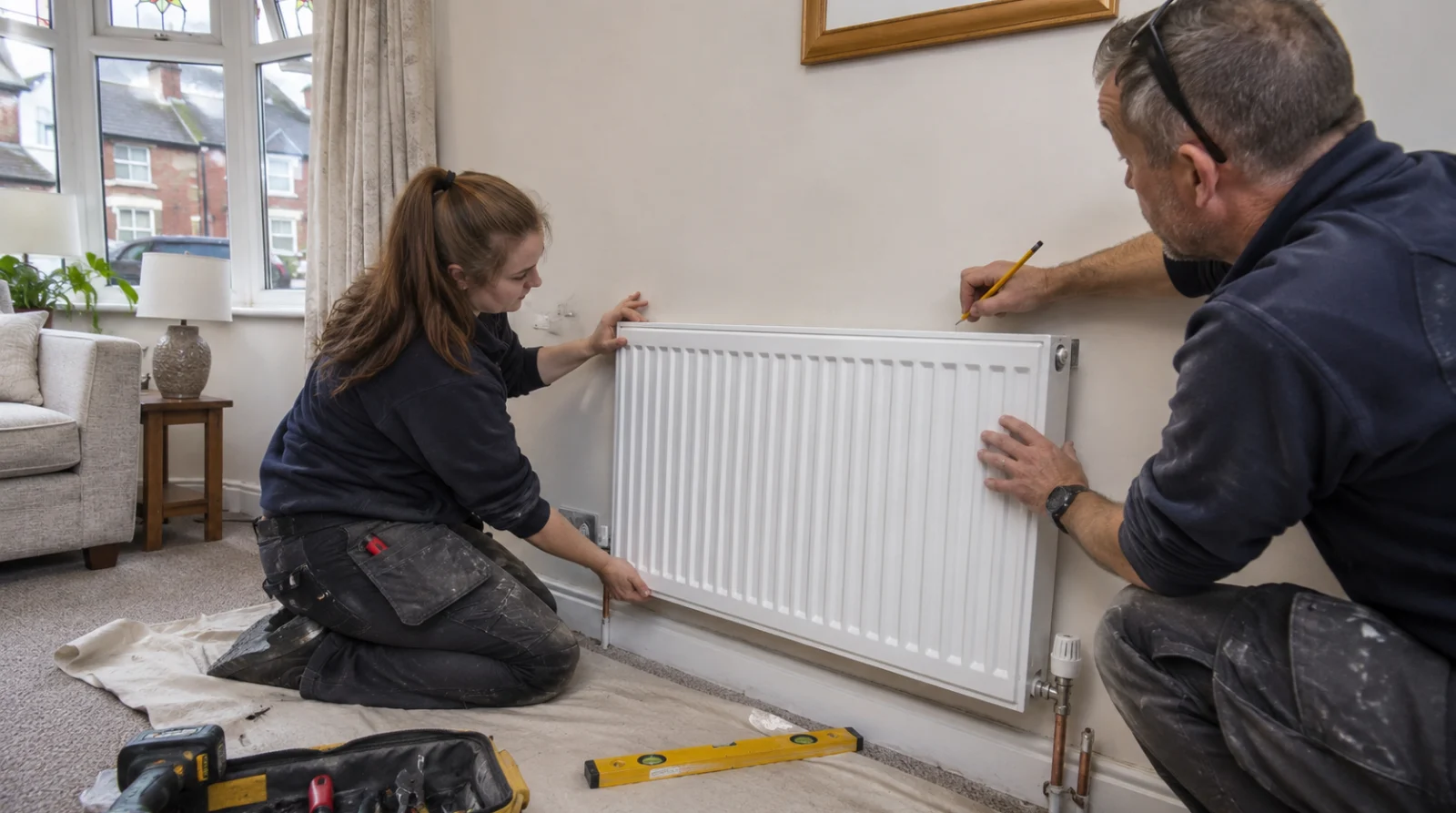
Mentorship on real jobs is the heart of a plumbing apprenticeship.
A Day in the Life of an Apprentice
A typical apprentice day starts early, loading the van with fittings, pipe and tools before heading to a job. Mornings might mean helping replace a bathroom suite, running new pipework for a kitchen or assisting with a boiler swap. Afternoons might bring a leak call, a radiator installation or a service visit. One or two days a week, or in blocks, apprentices attend college to learn theory, regulations and practical skills in workshops. Over time, responsibility grows: an apprentice who started carrying materials ends up planning jobs, talking to customers and solving problems independently. It is physical, varied and rewarding work, and every day brings something new.
Widening the Talent Pool
Women still make up only a small share of plumbers in Britain, and people from many backgrounds remain under represented. Industry bodies, colleges and employers are working to change that with outreach, mentoring networks and flexible routes in. Career changers, veterans and older adults bring maturity and transferable skills. A more diverse workforce helps fill the gap and better reflects the customers plumbers serve.
How to Become a Plumber in the UK
1. Research routes. Apprenticeships combine paid work with college training, typically over several years. College courses and T Levels can provide a foundation.
2. Find an employer. Search government apprenticeship listings and approach local plumbing and heating firms directly. Our plumbing jobs board lists openings.
3. Get the basics right. Maths and English qualifications, reliability, a willingness to learn and, ideally, a driving licence.
4. Plan additional qualifications. Gas work requires registration with the Gas Safe Register after appropriate training, and heat pump, unvented hot water and water regulations qualifications add value.
5. Join the community. Industry bodies offer support, training and recognition; see our plumbing associations page.
Advice for Employers
Firms considering an apprentice should check current funding rules, including the removal of co investment for small employers taking on under 25s in England, and talk to local colleges and training providers about support. Sharing apprentices between small firms, partnering with larger contractors or using shared apprenticeship schemes can spread the burden. Clear training plans, regular feedback and good mentors reduce drop out. And showing the next generation what modern plumbing looks like, through school visits, social media and open days, helps recruitment.
Lessons From Other Countries
Germany’s dual training system, which combines structured workplace training with vocational school and is highly respected by employers and families, is often cited as a model. Australia and New Zealand rely on licensed trades with structured apprenticeships and strong public recognition of trade careers. In the United States, union and non union apprenticeship programmes, community colleges and employer academies all feed the trade, and many states are expanding career and technical education. The common thread in successful systems is respect for trades, stable funding and close ties between employers and training providers.
What Parents and Schools Can Do
For decades, many young people were steered toward university as the default path. Parents, teachers and careers advisers can help by presenting skilled trades as the serious, well paid and secure careers they are. Work experience placements, taster days at colleges and visits from local plumbers give students a real picture of the work. A young person who enjoys solving practical problems, working with their hands and helping people may find plumbing a perfect fit.
A Fair Debate
Industry bodies argue that government should provide stable, generous funding, simplify rules and back trade led apprenticeship standards, and that Scotland’s employers deserve clearer levy support. Government officials point to the funding package, levy reforms and new places, and argue that standards must be robust and fair to all stakeholders. Some training providers say independent providers need equal access to funding, while some employers want more flexibility in how training is delivered. Others highlight immigration policy as part of the skills picture. Reasonable people differ, but all agree that the UK must train many more plumbers, and soon.
Whatever the policy route, the measure of success will be simple: more young people starting plumbing apprenticeships, more of them finishing and more qualified plumbers available when households need them.
A Salute to Britain’s Trainers and Mentors
College tutors, assessors and the plumbers who take apprentices under their wing are the unsung heroes of this story. Every qualified plumber in Britain learned from someone willing to share their knowledge. If you are training the next generation, thank you. For more on the global pipeline challenge, see our coverage of the apprentice shortage.
Our Take
Britain’s plumbing skills gap is serious, but it is also a huge opportunity for young people, career changers and the trade itself. With settled standards, practical funding for small firms and a positive message about modern plumbing careers, the UK can train the plumbers it needs. We are optimistic, because the trade has always found ways to pass on its skills.
How Best Plumbers Helps
Best Plumbers has been the Internet’s original plumbing directory since July 12, 2002, and the most trusted, serving readers in the United Kingdom, Ireland, Australia, New Zealand, Canada, South Africa, the United States and beyond. We list every plumbing company and show every review, good and bad, and our Best Plumbers Recommended seal marks those we trust most. We never sell leads. Find qualified plumbers through our locations directory and read the reviews before you hire.
The Short Version
The UK needs around 73,700 new plumbers by 2032, but only about 2,100 completed plumbing apprenticeships from 2021 to late 2025 and starts have fallen about 37 percent. Costs, funding complexity, drop out rates and stalled new standards are to blame. England has a 725 million pound package and levy reforms, while Scottish employers report pulling back. For young people, it is an excellent time to enter the trade.
Frequently Asked Questions About UK Plumbing Apprenticeships
1. How many plumbers does the UK need?
Around 73,700 new plumbers by 2032, according to estimates.
2. How many apprentices are completing?
About 2,100 completed between 2021 and October 2025.
3. Have apprenticeship starts fallen?
Yes, by around 37 percent since 2021 to 2022.
4. Why are firms hesitant?
Costs, supervision time, funding complexity and risk.
5. What is the drop out rate?
Construction apprenticeships see around 47 percent drop out.
6. What is the Growth and Skills Levy?
The reformed apprenticeship levy in England.
7. What funding did the government announce?
About 725 million pounds for around 50,000 places.
8. Do small firms pay co investment?
The package removes it for SMEs training under 25s in England.
9. What happened to new standards?
They are under review and unlikely for September 2026.
10. Is the current standard still available?
Yes, the existing Level 3 standard remains.
11. What is happening in Scotland?
One in three plumbing firms plans to stop taking apprentices.
12. Why does this matter to homeowners?
Shortages mean longer waits, higher prices and more unqualified operators.
13. Is plumbing a good career?
Yes, with strong demand, good pay and variety.
14. Are apprentices paid?
Yes, from the first day.
15. Do I need qualifications to start?
Maths and English help, plus reliability and willingness to learn.
16. How do I work on gas?
Complete training and register with the Gas Safe Register.
17. Are heat pump skills valuable?
Yes, demand is growing fast.
18. Can adults retrain as plumbers?
Yes, through apprenticeships, college courses and training providers.
19. How can employers reduce drop out?
Clear training plans, feedback and good mentoring.
20. Can small firms share apprentices?
Shared schemes and partnerships can help.
21. Are women welcome in plumbing?
Absolutely, and their numbers are growing.
22. How do I check a plumber is qualified?
Ask for qualifications and check registers such as Gas Safe.
23. Is immigration part of the debate?
Some argue it is; others focus on domestic training.
24. How do I find a trusted plumber in the UK?
Search Best Plumbers, read every review and look for the Best Plumbers Recommended seal.
25. Why does Best Plumbers cover apprenticeships?
Because the future of the trade depends on training.
Sources
City and Guilds, future plumbing and heating education landscape. FE Week, new apprenticeships will boost flow of plumbers. APHC, National Apprenticeship Week 2026. CIPHE, apprenticeship standards statement. Construction Index, Scottish plumbers scale back on apprentices. Nesta, will we have a shortage of plumbers.

