
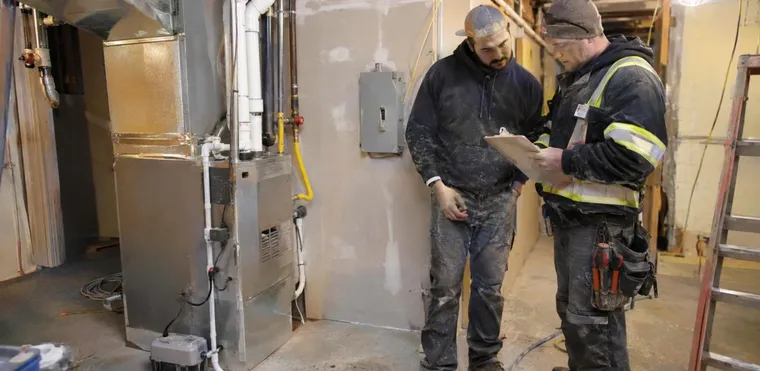
"A callback can look like a bad installation even when every trade completed its own portion of the work." That line, from a November 25, 2026 article in CONTRACTOR magazine by James Sandison, captures one of the most frustrating realities in home services. Sandison leads Sandison Plumbing, Heating, Cooling and Electrical, a Michigan contractor serving residential and commercial customers, and he brings a mechanical engineering background to the problem. His point is simple and powerful: many return visits are not caused by sloppy work inside one trade. They happen at the boundaries between trades, where the plumber assumed the electrician would handle something, the HVAC installer assumed the drain was ready, and nobody owned the handoff. His fix: every interface needs an owner, a written acceptance condition and evidence that the condition was met.
At Best Plumbers, we hear from homeowners every week who are caught in the middle of exactly this kind of finger-pointing. The water heater is installed but will not fire. The new furnace leaks water onto the basement floor. The new vanity blocks the cleanout. Each contractor says their part is fine. This article breaks down Sandison's advice for contractors and translates it into practical steps for homeowners managing a renovation or system replacement.
Where Things Fall Through the Cracks
Sandison described a series of boundary problems that will sound painfully familiar to anyone who has worked in the trades or lived through a remodel:
- An appliance is installed before its electrical feed is ready. The plumber finishes, the electrician has not arrived, and the homeowner is left with equipment that cannot run.
- A condensate line is routed without confirming its approved discharge point. High-efficiency furnaces, air conditioners, heat pumps and condensing water heaters all produce condensate that must drain somewhere legal and functional.
- Finished work is damaged while another crew completes its scope. Drywallers crush a pipe stub; a flooring crew cracks a toilet flange; a roofer knocks a vent loose.
- The scope says only "electrical by others." Equipment needs a specific voltage, breaker size or disconnect location, but nobody wrote that down for the electrician.
- A new air handler blocks access to a cleanout. The next time the drain clogs, the plumber cannot reach it without moving equipment.
- A panel upgrade is needed before startup but nobody identified it in advance.
- The installer confirms the equipment is connected and the electrician confirms the circuit is energized, yet the system still will not start. Control wiring, a safety switch or a configuration step falls between scopes.
- Condensate problems get assigned to whichever trade arrives after a leak appears.
- An open floor drain or sanitary connection is assumed to be an acceptable discharge point when code or conditions say otherwise.
- Responsibility for sealing roof penetrations and protecting finished work is unclear.
None of these are exotic. They are everyday problems, and they cost contractors and homeowners time, money and patience.
Sandison's Seven Practices
Sandison laid out seven practices to prevent boundary callbacks. Here they are, with our commentary on what they mean in the field.
1. Define the system boundary before pricing
Before a price is given, identify who supplies power, controls, gas, venting, condensate routing, access and restoration, and have the responsible contractors acknowledge their requirements. In practice, that means replacing vague phrases like "electrical by others" with specifics: a 240-volt, 30-amp dedicated circuit with a disconnect within sight of the unit, for example.
2. Treat the preinstallation visit as a coordination visit
Check equipment dimensions, clearances, access, drain elevations and service capacity, and document discrepancies early. Will the new tankless water heater fit where the old tank was? Does the gas line have enough capacity? Is there a drain at the right elevation for condensate? Is there room to service the unit later?
3. Use rough-in hold points
Require inspection or acceptance before work is concealed, including pressure testing, verifying sleeves and photographing completed rough-ins. Once drywall goes up, every hidden mistake becomes expensive. A quick photo log of every wall before it closes is one of the cheapest insurance policies in construction.
4. Make condensate and drainage shared design decisions
Assign who designs, installs, supports and tests the full route, and test the discharge path under realistic operating conditions. Condensate is a classic orphan: it starts at HVAC equipment, runs through plumbing territory and may need a pump that requires electrical power. Somebody has to own it end to end.
5. Verify power, controls and utilities together
Assign one person to own the final startup checklist, record measured values and label unfinished items as open work rather than calling the system fully commissioned. A system is not done because each piece is connected. It is done when it runs correctly under real conditions and someone has verified that.
6. Protect approved work after handoff
Define responsibility for weather protection, penetration sealing and who may alter installed systems, and keep dated photos and turnover notes. This prevents the "it was fine when I left" standoff.
7. Close with a usable record
Include equipment model and serial numbers, warranties, test results, shutoff locations, open punch-list items and responsible contacts. For callbacks, capture the complaint, failure time, error codes, recent work by others and photos before dispatch.
Measuring What Causes Callbacks
Sandison also recommended tracking return visits by cause: installation defect, design or sizing issue, incomplete prerequisite, damage by another trade, maintenance issue or new failure. Review the patterns monthly. If many callbacks trace back to missing electrical readiness, for example, a better preinstallation checklist will help more than adding inspections at the end of the job. It is a smart, engineering-minded approach that any plumbing company can adopt.
What This Means for Homeowners
Sandison wrote for contractors, but homeowners are the ones who live with the consequences. If you are planning a kitchen or bathroom remodel, a basement finish, an addition or even a single equipment swap that touches more than one trade, these steps will help protect you.
Know who is in charge
On larger projects, a general contractor usually coordinates the trades. On smaller jobs, you may be hiring the plumber, electrician and HVAC company separately, which quietly makes you the coordinator. Decide up front who owns the schedule and the handoffs. If it is you, take the role seriously and keep notes.
Get scopes in writing, with specifics
Ask each contractor to write down exactly what they will and will not do. For a new water heater, does the plumber's price include the expansion tank, the gas line changes, the venting, the drain pan, the condensate line if it is a condensing model, haul-away of the old unit and the permit? Does the electrician know the required circuit? Vague scopes are where gaps hide. Our guide to eight things to consider before hiring a plumbing contractor covers what a good estimate should include.
Ask about access
Make sure valves, cleanouts, shutoffs, filters and service panels stay accessible after everything is finished. A beautiful custom cabinet that hides the main water shutoff is a problem waiting to happen. Before any wall closes, ask your plumber to point out where every shutoff and cleanout will be.
Photograph walls before they close
Take your own photos of every open wall, floor and ceiling, with a tape measure in the shot if possible. Years later, those photos will help you avoid drilling into a pipe and help any plumber find what they need quickly.
Insist on testing before concealment
New water lines should be pressure tested and drain lines tested before drywall or tile covers them. Ask whether the inspector will see the rough-in. Permits exist for exactly this reason, and skipping them is a false economy. We explain why in our article on the importance of hiring a licensed plumber.
Do not accept "it is not my problem"
If a system does not work after installation, ask each contractor to show you their test results and photos. Good companies will cooperate to solve the problem. If one contractor refuses to engage, that tells you something about how they operate, and their reviews may already say so. Best Plumbers lists companies with honest reviews, good and bad, so you can see how they handle problems before you hire.
Condensate: The Most Common Orphan in Your Home
Because condensate came up so often in Sandison's article, it deserves extra attention. Modern high-efficiency equipment creates a lot of water:
- Condensing furnaces and boilers produce acidic condensate from combustion.
- Air conditioners and heat pumps pull moisture from indoor air in cooling mode.
- Condensing tankless and high-efficiency tank water heaters produce acidic condensate as well.
- Heat pump water heaters remove moisture from the surrounding air.
That water has to go somewhere. Options include gravity drains to an approved receptor, condensate pumps that lift water to a drain, and neutralizer kits that treat acidic condensate before it reaches drain pipes. Problems we see include lines that slope the wrong way, pumps with no power or no overflow switch, lines that freeze in unheated spaces, clogged traps and lines dumped where they damage foundations or floors. A full condensate route should be designed, installed, supported and tested as one system, just as Sandison recommends. If you have water appearing near your furnace or water heater, our water heater repair guide and advice on when to call a leak detection pro can help.
Common Plumbing Boundary Points in a Home
Here are the places where plumbing meets other trades most often in residential work, and what to clarify for each:
- Water heaters: gas line sizing, venting, electrical supply for power-vent, tankless and heat pump models, condensate disposal and seismic strapping where required.
- Dishwashers and garbage disposals: electrical outlets or hardwired circuits, air gaps or high loops, and cabinet modifications. See our page on garbage disposals.
- Refrigerator ice makers and water dispensers: water line routing and shutoff access.
- Sump and ejector pumps: dedicated circuits, alarms and discharge routing.
- Whole-home water filtration and softeners: drain connections, electrical outlets and bypass valves.
- Bathroom remodels: exhaust fans, heated floors, lighting near showers and tile waterproofing around valves.
- Kitchen remodels: sink locations relative to venting, island drains and appliance placement.
- Roof penetrations: plumbing vents and flues that roofers must seal correctly.
Planning a remodel? Our sections on residential plumbing and plumbing repairs are useful starting points.
Multi-Trade Companies vs. Separate Specialists
Sandison's own company provides plumbing, heating, cooling and electrical services, and multi-trade companies have an obvious advantage when it comes to boundaries: one company owns more of the system, so fewer handoffs exist. That can simplify life for homeowners on projects like heat pump conversions, tankless water heater upgrades and basement finishes.
That said, separate specialists can deliver excellent results when the scopes are clear and someone coordinates. The important thing is not the business model. It is whether every interface has an owner. Whichever route you choose, ask the same questions and expect the same documentation.
What Boundary Mistakes Cost
Boundary failures are rarely cheap. A condensate line that drips inside a finished wall for months can rot framing, ruin drywall and grow mold. A water line nicked by a drywall screw can leak slowly until a ceiling stains or collapses. Equipment that sits idle waiting for an electrician leaves a family without hot water or heat. And every return trip a contractor makes eats into profit that could have gone to wages, training or better equipment. Our article on the dangers of delaying plumbing repairs shows how small problems grow, and that is doubly true for hidden problems created during a remodel. Prevention at the handoff is almost always cheaper than repair after the fact.
A Positive Sign for the Industry
We love seeing contractors talk openly about callbacks and how to prevent them. It reflects a professional, continuous improvement mindset that benefits everyone. Companies that measure causes, refine their checklists and document their work deliver better results and earn more trust. That culture of accountability is exactly what we look for when evaluating companies, as described on our page about how we rank plumbers.
Our Take
Every plumbing system in your home touches other systems. The best outcomes happen when every handoff has an owner, a written standard and proof that the standard was met. Contractors who adopt Sandison's practices will see fewer callbacks and happier customers. Homeowners who ask the right questions will avoid being caught in the middle.
When you are ready to hire, Best Plumbers can help you find trusted, well-reviewed plumbers near you who take coordination seriously, whether you are in Columbus, Calgary or anywhere else we serve.
Frequently Asked Questions About Callbacks Between Trades and Remodel Coordination
1. What is a callback in plumbing?
A return visit to fix a problem after a job was supposedly completed.
2. What causes callbacks between trades?
Unclear responsibilities at handoffs between plumbing, electrical, HVAC and other trades.
3. Who wrote the CONTRACTOR article on trade boundaries?
James Sandison, who leads Sandison Plumbing, Heating, Cooling and Electrical in Michigan.
4. What does 'electrical by others' mean?
Scope language assigning electrical work to another contractor, which often lacks needed specifics.
5. Why are condensate lines a common problem?
They cross HVAC, plumbing and sometimes electrical scopes, so nobody may own the full route.
6. What is a rough-in hold point?
A required inspection or acceptance step before work is concealed by walls, floors or ceilings.
7. Why photograph rough-in work?
Photos document pipe, wire and duct locations before they are hidden, helping future repairs and disputes.
8. What should a startup checklist include?
Measured values, verified power and controls, safety checks and a clear list of open items.
9. What should a job closeout record include?
Model and serial numbers, warranties, test results, shutoff locations, punch-list items and contacts.
10. How should contractors track callbacks?
By cause: installation defect, design issue, incomplete prerequisite, other-trade damage, maintenance or new failure.
11. Where can condensate be discharged?
Only to approved locations under local code. An open floor drain is not automatically acceptable.
12. Do high-efficiency furnaces need a drain?
Yes. Condensing furnaces produce condensate that requires a proper drain or condensate pump.
13. Why might new equipment not start even if connected?
Control wiring, safety switches, configuration or utility readiness may fall between trade scopes.
14. Who should coordinate trades on a remodel?
A general contractor or a single designated lead, or the homeowner if no GC is hired.
15. Can new equipment block plumbing access?
Yes. Cleanouts, shutoffs and valves must remain accessible after other work is installed.
16. What should homeowners ask before a remodel?
Who owns each connection, who pulls permits, who tests before walls close and who coordinates the schedule.
17. How can homeowners prevent finger-pointing?
Get detailed written scopes, one point of contact, and photos and test records from each trade.
18. Should I hire one company for plumbing, HVAC and electrical?
A multi-trade company can simplify coordination, but separate specialists can work well with clear scopes.
19. What is a pressure test?
A test that pressurizes new piping to confirm there are no leaks before it is covered.
20. Who is responsible for roof penetrations?
It should be defined in writing; often the roofer seals and the plumber or HVAC installer provides the flashing.
21. What should I do if trades blame each other?
Gather the records, call a meeting with both contractors and ask each to show test results and photos.
22. Are permits important for multi-trade jobs?
Yes. Permits trigger inspections that catch coordination and code issues.
23. How do callbacks affect contractors?
They cost time, profit and reputation, so preventing them improves both business and customer satisfaction.
24. How can plumbing companies reduce callbacks?
Use preinstallation visits, hold points, shared drainage decisions, startup checklists and closeout records.
25. How do I find a well-organized plumber?
Use Best Plumbers to compare licensed plumbers with genuine reviews near you.
Sources
- CONTRACTOR magazine: Preventing Callbacks at the Boundaries Between Trades

