
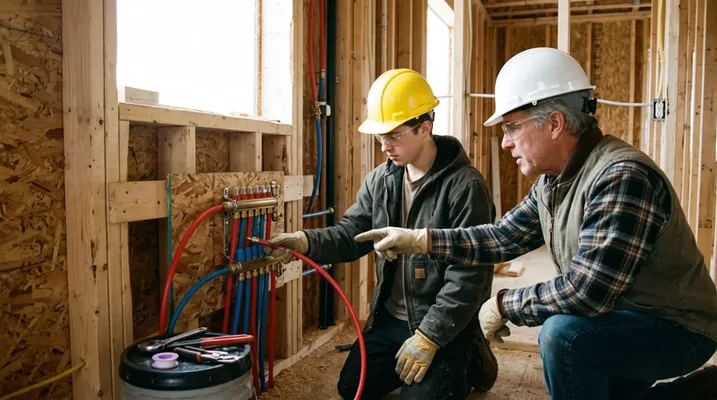
Plumbing is one of the most valuable trades on earth, and the numbers now prove it. A 2026 study from Plumbing Manufacturers International puts the combined annual economic impact of plumbers and plumbing manufacturers in the United States at more than $442 billion, supporting almost 1.8 million jobs. At the same time, researchers project a shortfall of about 550,000 plumbers by 2027. The good news is that a new wave of workers, including college graduates, is turning toward the trade. Here is what that means for plumbers, for future plumbers and for every homeowner who needs one.
By the Best Plumbers Editorial Team. Published November 22, 2026.
If you have tried to book a plumber on a holiday weekend, you already felt this story. Calendars are full. Good companies are booked out. And behind those full calendars is a trade that has been quietly holding modern life together while struggling to recruit enough young people to replace the masters who are retiring.
At Best Plumbers we have watched this trend build for more than twenty years. We are the Internet's original plumbing directory, online since July 12, 2002, and we have always said plumbers deserve more respect than they get. This year, the data finally caught up with what we have been saying, and the culture seems to be catching up too.
The Numbers: Plumbing Is an Economic Engine
In August 2026, Plumbing Manufacturers International released its Plumbing Manufacturing Industry Economic Impact Study. The headline figures are worth sitting with for a moment.
Combined impact. Plumbers and plumbing manufacturers together generate more than $442 billion in total annual economic impact, with nearly 1.8 million jobs, over $142 billion in wages and almost $60 billion in tax revenue.
Plumbers alone. Plumbing contractors and professionals account for about $313.5 billion in economic impact, 1,283,579 jobs and $105.1 billion in wages.
Manufacturers alone. The companies that design and make fixtures, fittings and valves contribute about $129 billion in impact, 500,487 jobs and $37 billion in wages.
Those are United States numbers, but the pattern holds around the world. In Australia, industry analysts value plumbing services at roughly $25 billion in 2026 across more than 32,000 businesses. Britain, Canada, Ireland, New Zealand and South Africa all lean on the same trade for clean water, safe sanitation and working heat. Every hospital, school, restaurant, data center and home depends on it.
We have argued before that plumbers have done more for human health than almost any other profession. If you have not read it, our piece on why plumbers have saved more lives than doctors makes the case.
The Gap: 550,000 Plumbers Short by 2027
Here is the challenge. A study commissioned by LIXIL, titled Blocked Pipes: The Economic Consequences of Skilled Worker Shortages, projects roughly 550,000 unfilled plumbing positions in the United States by 2027 if current trends continue. The causes are well known in the trade: a large generation of experienced plumbers heading into retirement, decades of schools steering students away from the trades, and slow pipelines into apprenticeship programs.
The same research found that even modest increases in the plumbing workforce could save the country an estimated $1.27 billion a year in plumbing related costs. In plain terms, more plumbers would mean faster service, fewer delayed construction projects and fewer homeowners waiting days with a broken water heater.
We dug into the root causes in our earlier report on the plumbing apprentice shortage. The short version: the trade has a demand problem that most industries would envy, and a supply problem it is now working hard to fix.
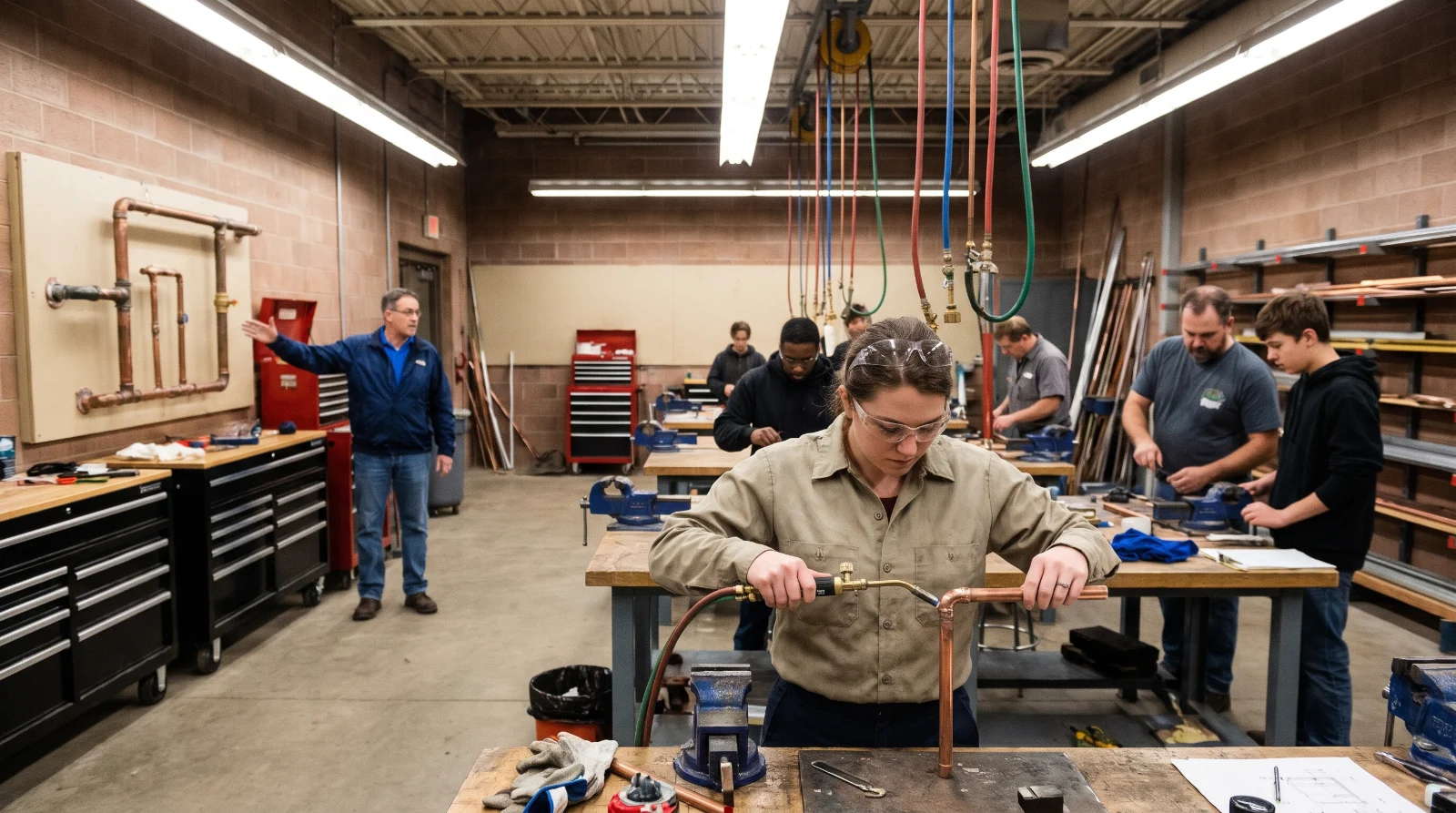
Training labs are filling with students of every age, including career changers and college graduates.
A New Pipeline: College Graduates Turning to the Trades
This fall brought a wave of stories about a group the trade rarely recruited: people who already have a college degree. NPR reported in mid November that apprenticeships in the skilled trades are having a moment, drawing in college graduates who found that the careers they pursued after school simply did not pay enough or felt uncertain in the age of artificial intelligence.
An executive at Wrench Group, a home services company operating in 27 markets across 14 states, made the case this month in an industry column that employers should actively recruit graduates. The reasoning is persuasive. College trains people to absorb new information, solve complex problems, manage competing priorities and work with diverse groups. Those are exactly the skills a great service plumber uses every day. The technical skills then come through structured training, apprenticeships and mentorship.
The pay case is getting stronger too. Fortune reported this fall that skilled trades careers pay about 32 percent more than other jobs that do not require a college degree, with a clear path to running your own business later. And plumbing work is stubbornly hard to automate. No software is going to crawl under a house and find a slab leak.
Why We Are So Optimistic
We are cheerleaders for this trade, and right now there is a lot to cheer about.
The stigma is fading. Parents and counselors who once pushed every student toward a four year degree are taking a second look. Panels of business leaders now openly reject the old college versus trades framing. Some of the best plumbers we know have degrees and chose the trade anyway.
Training is expanding. Trade schools are opening new campuses and fast track programs, and contractors are building their own academies. In the UK, Australia and Canada, apprenticeship pathways remain strong and respected.
Diversity is growing. More women are entering plumbing, and the work is better for it. Customers frequently tell us they love having more options and different perspectives in the trade.

More women are building rewarding plumbing careers, bringing new perspectives to a trade that needs every skilled hand.
Technology makes the work smarter. Camera inspection, leak detection sensors, trenchless repair and connected water heaters are making plumbing more technical and more interesting. The trade rewards curious problem solvers.
What the Shortage Means for Homeowners
We would be failing our readers if we only celebrated. A tight labor market has real consequences for consumers, and some of them are risky.
Longer waits. In busy seasons, expect longer lead times for non emergency work. Plan ahead for projects like water heater replacements and remodels instead of waiting for a failure.
Higher prices. When demand outpaces supply, prices rise. That is not always gouging. Skilled labor costs more when it is scarce. Use our plumbing cost guide to see what fair pricing looks like.
More unqualified operators. Here is the serious warning. Shortages create openings for untrained and unlicensed people who see easy money. They often offer quick availability and cheap rates, then leave behind leaks, code violations and safety hazards. Please read why hiring a licensed plumber matters before you hire anyone.
Emergency pressure tactics. When people are desperate, some companies use the moment to upsell or inflate prices. Know who you will call before an emergency happens. Our emergency plumber listings let you compare companies and reviews in advance.
How to Be the Customer Plumbers Love
When good plumbers are in high demand, the best ones can choose their customers. Here is how to be the client they prioritize:
Be clear about the problem when you call, including photos if you can. Clear a path to the work area. Respect the quote and pay promptly. Leave an honest review when the work is done well. Reviews are the lifeblood of a small plumbing business, and they help your neighbors find good help. You can read and write them on our reviews pages.
And when you find a great plumber, keep them. Schedule maintenance with them. Refer friends. Loyalty runs both ways.
For Anyone Considering a Plumbing Career
If you are reading this and wondering whether plumbing could be your path, the honest answer is that there may be no better time. The demand is enormous and will not disappear. The work is meaningful, protecting people's health and homes every day. The pay can be excellent, especially as you advance to journeyman and master, or open your own company. And the skills travel with you to any city or country.
Here is where to start on Best Plumbers:
Browse open positions on our plumbing jobs board. Connect with trade organizations through our plumbing associations directory. Meet the industry at events on our plumbing trade shows calendar. And learn from working pros who share their craft online through our list of plumbing influencers.
How Best Plumbers Supports the Trade
For more than two decades, Best Plumbers has stood with the men and women of this industry. We list every plumbing company so customers see the full picture, all reviews good and bad, and we reward excellence with the Best Plumbers Recommended seal. That seal is earned, never bought, and you can read exactly how we rank plumbers. We do not sell homeowner leads, and we never will.
For homeowners, that means you can make decisions based on real reputations. Start with plumbers near me to find highly rated professionals in your area. For plumbers, it means a fair place to be seen, judged on the quality of your work.
The Bottom Line
Plumbing is a $442 billion engine with a 550,000 person gap, and that gap is both a challenge and an opportunity. For the trade, it is a call to recruit, train and mentor like never before. For job seekers and college graduates, it is an open door to a stable, respected, well paid career. For homeowners, it is a reason to plan ahead, value good plumbers, and stay alert to unqualified operators. Best Plumbers is proud to cheer this trade on, and we are more optimistic about its future than we have been in years.
Frequently Asked Questions About the Plumbing Workforce
1. How big is the plumbing industry's economic impact?
Plumbing Manufacturers International's 2026 study found that plumbers and plumbing manufacturers in the United States generate more than $442 billion in annual economic impact, supporting almost 1.8 million jobs and over $142 billion in wages.
2. How many plumbers will the United States be short by 2027?
A study commissioned by LIXIL projects about 550,000 unfilled plumbing positions in the United States by 2027 if current workforce trends continue.
3. Why is there a plumber shortage?
Key causes include a wave of retiring experienced plumbers, years of schools steering students toward four year degrees instead of the trades, and limited apprenticeship capacity.
4. How much do plumbers contribute in wages?
According to the PMI study, plumbing contractors and professionals account for about $105.1 billion in wages across 1,283,579 jobs in the United States.
5. Are college graduates becoming plumbers?
Yes. Reporting in 2026, including from NPR, shows growing numbers of college graduates entering skilled trades apprenticeships, drawn by pay, job security and work that is hard to automate.
6. Do plumbers earn more than other non degree jobs?
Fortune reported in 2026 that skilled trades careers pay about 32 percent more than other jobs that do not require a college degree, with paths to business ownership.
7. Can artificial intelligence replace plumbers?
Not in any meaningful way. Plumbing requires hands on diagnosis, physical repair and judgment in unpredictable spaces. Technology helps plumbers work smarter, but it does not replace them.
8. How do I start a career in plumbing?
Most people begin through a trade school program or a registered apprenticeship with a plumbing company or union, then progress toward journeyman and master licensing where required.
9. How long does it take to become a licensed plumber?
In many places an apprenticeship takes about four to five years of combined classroom and on the job training before you can test for a journeyman license. Requirements vary by location.
10. Is plumbing a good career for women?
Absolutely. More women are entering and thriving in plumbing, and many customers value having more choice in who comes to their home.
11. Will the shortage make plumbing services more expensive?
It can. When demand exceeds supply, labor costs rise. Planning ahead, comparing quotes and maintaining your system can help manage costs.
12. How can homeowners avoid unqualified plumbers during the shortage?
Verify licenses and insurance, read all reviews, ask for written quotes and avoid cash only deals. Unqualified operators often target busy seasons when good plumbers are booked.
13. What is the economic benefit of adding more plumbers?
The LIXIL study estimated that even modest increases in the plumbing workforce could save the United States about $1.27 billion a year in plumbing related costs.
14. Is the plumber shortage only in the United States?
No. The UK, Canada, Australia, New Zealand and other countries also report skilled trade shortages and are expanding apprenticeship and training programs.
15. How big is the plumbing industry in Australia?
Industry analysts estimate the Australian plumbing services industry at around $25 billion in 2026, with more than 32,000 businesses.
16. What skills from college help in plumbing?
Problem solving, learning quickly, communication, managing priorities and working with diverse people all translate directly into success as a service plumber or business owner.
17. What does a plumbing apprentice do?
Apprentices work under experienced plumbers, learning installation, repair, codes, safety and customer service while attending classroom training, and they earn wages while they learn.
18. How much does plumbing manufacturing contribute to the economy?
PMI found plumbing manufacturers generate about $129 billion in total economic impact, supporting 500,487 jobs and $37 billion in wages in the United States.
19. How do I find plumbing job openings?
Browse the Best Plumbers plumbing jobs board, contact local plumbing companies and unions directly, and connect with plumbing associations and trade schools in your area.
20. Is it hard to get a plumber right now?
In busy seasons and some regions, yes. Building a relationship with a trusted plumber before an emergency helps you get service faster when it matters.
21. Do plumbers need to keep learning after licensing?
Yes. Codes, products and technologies change constantly, and many jurisdictions require continuing education to keep a license current.
22. Can a plumber start their own business?
Many do. After gaining experience and the required licenses, plumbers often open their own companies, which can be one of the most rewarding paths in the trades.
23. How can I support good plumbers in my area?
Hire licensed professionals, pay fairly and promptly, leave honest reviews and refer friends. Reviews on Best Plumbers help great local companies get found.
24. Does Best Plumbers sell leads to plumbers?
No. Best Plumbers does not sell homeowner leads. We list every plumbing company with every review, good and bad, and recognize the best with the Best Plumbers Recommended seal.
25. Why does Best Plumbers advocate for the plumbing trade?
Since 2002, Best Plumbers has championed the men and women of plumbing because their work protects public health and homes. A strong, respected workforce benefits everyone.
Sources
Plumbing and Mechanical, Plumbing industry adds $442B to U.S. economy, faces 550,000 worker shortage (August 20, 2026). Contractor, Plumbing industry generates $442 billion in economic impact. PHCP Pros, College graduates could be the skilled trades' next talent pipeline. NPR via WUSF, College grads turn to skilled trades (November 17, 2026). Fortune, skilled trades shortage and career opportunities (September 30, 2026).

