

New York City’s landmark gas piping inspection law, Local Law 152 of 2016, changed in several important ways in 2026. New Department of Buildings rules took effect January 3, bringing filing fees for the first time: 35 dollars to certify a building with gas service, 375 dollars to certify that a building has no gas piping and 480 dollars for buildings with gas piping but no active service. Inspection entities must notify the city at least two days before an inspection, qualification rules for the people doing the work were tightened under Local Law 142 of 2025, and filings moved into the DOB NOW: Safety portal in July. Buildings in Community Districts 4, 6, 8, 9 and 16 face a December 31, 2026 deadline, and missing it can bring a 5,000 dollar civil penalty. Here is a clear guide for owners, managers and the licensed master plumbers who do this vital work.
By the Best Plumbers Editorial Team. Published November 22, 2026.
Gas safety is one of the most serious subjects we cover. A leaking water pipe ruins a ceiling. A leaking gas pipe can take lives and level a building. New York learned that lesson in the most painful way possible, and Local Law 152 is one of the city’s most important responses. Whether you own a six unit walk up in Brooklyn or manage a high rise in Manhattan, this law applies to you, and the 2026 changes are worth understanding in detail.
Why Local Law 152 Exists
In March 2014, a gas explosion in East Harlem destroyed two buildings and killed eight people. In March 2015, a gas explosion in the East Village destroyed three buildings and killed two more. Investigations into both disasters pointed to problems with gas piping and to work done without proper oversight. In response, the City Council passed a package of gas safety laws in 2016. Local Law 152 created a requirement that gas piping in most buildings be inspected periodically by a licensed master plumber, with results reported to the owner and certified to the Department of Buildings. The first cycle of inspections began in 2019 and 2020, and the second cycle runs through 2027.
Who Must Comply
Local Law 152 applies to almost every building in New York City except one and two family homes and other buildings classified in occupancy group R-3. That means apartment buildings, co-ops, condos, mixed use buildings, offices, stores, schools, hospitals and houses of worship are generally covered, though some Department of Finance classes are exempt. Owners can check whether and when their building must comply through a public portal the Department of Buildings added to DOB NOW.
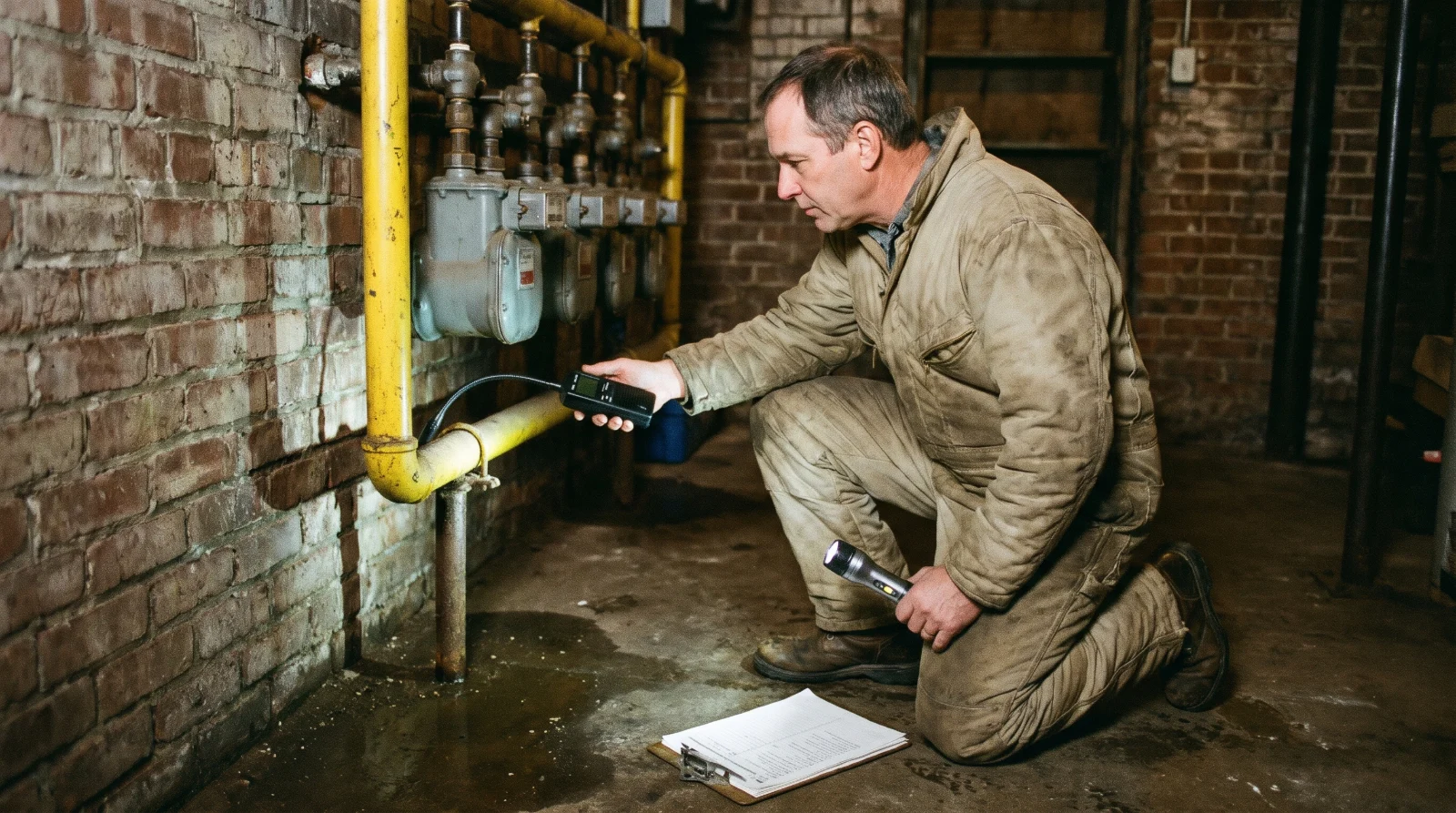
A Local Law 152 inspection includes a leak survey and a visual check of exposed gas piping from the point of entry through public spaces.
What the Inspection Covers
A Local Law 152 inspection is performed by a licensed master plumber or a qualified individual working under the direct and continuing supervision of one. The inspection covers all exposed gas piping from the point where gas enters the building, including building service meters, through public spaces, hallways, corridors, mechanical rooms and boiler rooms, and exposed piping on rooftops. It does not extend into individual apartments or tenant spaces, and buried piping is not inspected. The plumber performs a gas leak survey with a combustible gas detector in every area where the visual inspection is required, and looks for atmospheric corrosion, illegal connections, non code compliant installations and any other unsafe conditions.
If the inspector finds an unsafe or hazardous condition, such as an active leak, the plumber must immediately notify the owner, the gas utility and the Department of Buildings. Gas service may be shut off until repairs are made. That is not bureaucracy at work; it is exactly the kind of catch the law was designed to make.
The Step by Step Process
1. Check your deadline. Inspections are scheduled by Community District. In 2026, the deadline applies to Community Districts 4, 6, 8, 9 and 16. In 2027, it applies to Districts 11, 12, 14, 15 and 17. In 2028, the third cycle begins with Districts 1, 3 and 10.
2. Hire a licensed master plumber. Verify the license and disciplinary history before signing anything. Our guide on the importance of hiring a licensed plumber explains why.
3. Notification. The inspection entity must notify the Department of Buildings at least two days before performing the inspection.
4. Report. Within 30 days of the inspection, the plumber must give the owner a written inspection report.
5. Certify. Within 60 days of the inspection, the owner must file a Gas Piping System Periodic Inspection Certification signed and sealed by the licensed master plumber.
6. Correct. If conditions need correction, the owner must fix them and file a corrected certification within 120 days of the inspection, or within 180 days if the original filing indicated more time was needed. All repairs must follow the city’s construction codes and include any required permits.
Owners who cannot meet the deadline can request a one time 180 day extension through the portal before the due date.
What Changed in 2026
New fees. Under rules that took effect January 3, 2026, the Department of Buildings now charges filing fees. According to department materials, an initial certification for a building with gas service costs 35 dollars, a certification for a building with gas piping but no gas service costs 480 dollars and a certification for a building with no gas piping costs 375 dollars. Fees also apply to extension requests and corrected filings. Inspection notifications carry no fee. The Real Deal reported that 14 people commented at the rule hearing and that the department made no changes before adopting the rules.
All electric buildings are not off the hook. If your building has no gas piping at all, you still need to file a one time certification, signed by a registered design professional or licensed master plumber, stating that fact. That filing now carries the 375 dollar fee. Owners of new all electric buildings should budget for it.
Tighter inspector qualifications. Local Law 142 of 2025 clarified who may perform inspections, requiring that individuals doing the work be under the direct and continuing supervision of a licensed master plumber. A related rule on inspection entities took effect June 10, 2026. The Plumbing Foundation City of New York publicly commended the clarification.
A new portal. Beginning July 27, 2026, all Local Law 152 certifications and related transactions moved into DOB NOW: Safety. October 2026 updates added a comments box for inspection notifications and removed an earlier restriction on cancelling them.
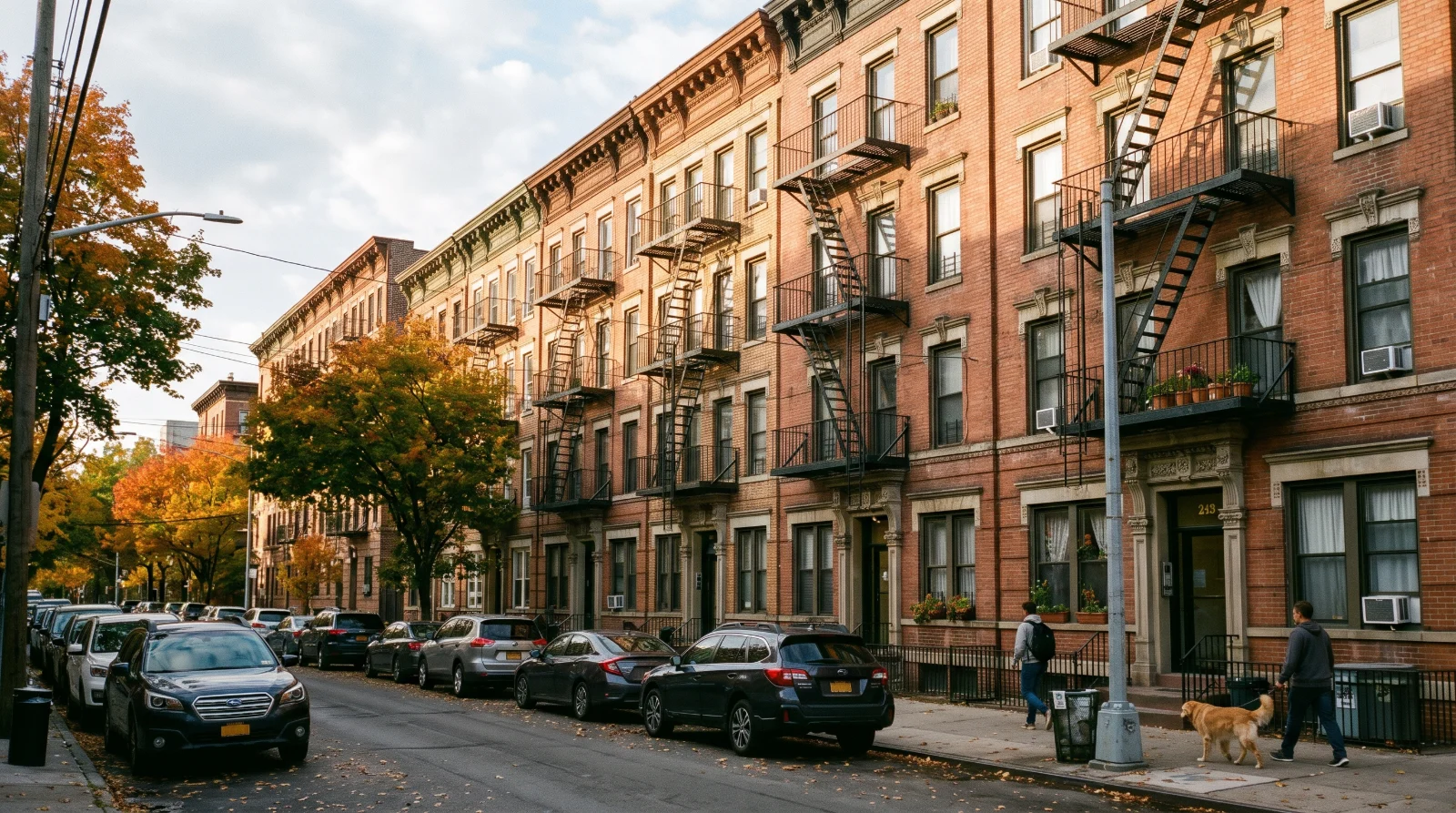
Most multifamily buildings in New York City, from walk ups to towers, fall under Local Law 152.
What It Costs Owners
The Real Deal reported that plumbers have generally charged around 600 dollars per inspection, though prices vary widely with building size, the amount of exposed piping, access and the number of meters. Add the filing fee, and any repair work found during the inspection, which can range from tightening a fitting to replacing long runs of corroded pipe. Our plumbing cost guide gives a sense of typical repair costs. The biggest cost, though, is often the one owners do not plan for: a gas shutoff. If an inspection finds a hazardous leak and the utility locks the meter, restoring service can require permits, pressure tests and utility sign off, which can leave tenants without cooking gas or hot water for weeks.
The Debate
Most people agree on the goal. The disagreements are about cost and burden. Owner groups and some small landlords say the new fees, inspection costs and repairs add up for buildings already squeezed by rent regulation, rising insurance and other local laws. Some commenters asked the city to reconsider advance notice requirements, arguing they complicate scheduling. Tenant advocates, safety experts and many plumbers counter that the cost is small compared with the risk, that fees help the department run the program, and that tighter oversight of who performs inspections protects everyone. The Department of Buildings has said the inspections are designed to find and fix exactly the dangerous conditions that caused past tragedies. We think both points deserve respect: the law is right, and the city should keep the process as simple and affordable as possible for responsible owners.
Warnings for Owners
Be wary of confusing letters and aggressive solicitations. The Real Deal reported on a letter to owners that warned of deadlines and fees that the Department of Buildings later said were inaccurate. Always verify deadlines directly with the department or your plumber. Never let an unlicensed contractor perform or sign off on gas work. Be skeptical of an inspection quote that seems far too low, or a repair estimate that seems far too high, and get a second opinion. Ask for photos of any condition the plumber says needs correction. And keep copies of every report and filing; you will need them for the next cycle, for insurance and for any sale or refinance.
Beyond the Inspection: Keeping Gas Systems Healthy
Inspections happen every four years, but gas systems age every day. Owners should respond quickly to tenant reports of a gas smell, keep mechanical rooms clear and accessible, avoid storing materials against piping and meters and budget for replacing old corroded steel piping before it becomes an emergency. Many older buildings have decades of patched and extended gas lines. A planned repiping project is far less disruptive than an emergency shutoff. For new appliances, conversions or repairs, use a professional for gas line installation or repair with proper permits. A broader plumbing inspection can catch water side problems at the same time. Commercial and mixed use owners can turn to commercial plumbing specialists who handle larger systems.
If you ever smell gas, leave the area immediately, do not use light switches, phones or anything that could create a spark inside the building, and call the gas utility or 911 from a safe distance. After the utility makes the situation safe, an emergency plumber can make repairs.
What This Means Beyond New York
New York’s law is among the most comprehensive periodic gas piping inspection requirements in the world, and other cities watch it closely. Most places require inspection only when gas work is permitted or when a building changes hands. If you own a multifamily building elsewhere, consider voluntary periodic inspections anyway. The physics of corroding steel pipe and loose fittings are the same in Chicago, London, Toronto or Sydney as they are in Queens.
A Salute to New York’s Master Plumbers
New York’s licensed master plumbers carry enormous responsibility under this law. They crawl through cramped cellars and climb onto rooftops with leak detectors, document every foot of exposed pipe, and sign and seal filings that put their licenses on the line. When they find a hazard, they make the call that shuts off gas to an entire building, knowing tenants will be unhappy and owners will push back, because it is the right thing to do. Licensing requires years of experience and rigorous exams, and the trade offers strong careers for young people. Explore opportunities on our plumbing jobs page and learn about industry groups on our plumbing associations page.
Our Take
Local Law 152 is good law born from terrible tragedy, and the 2026 updates mostly strengthen it. The fees are modest relative to building budgets, the tighter supervision rules protect the integrity of inspections and the move to DOB NOW should make compliance easier to track. Owners should not treat this as a box to check. Treat it as a chance to understand the condition of one of the most dangerous systems in your building, and fix what needs fixing before anyone gets hurt.
How Best Plumbers Helps
Best Plumbers has been the Internet’s original plumbing directory since July 12, 2002, and the most trusted. We list every plumbing company and show every review, good and bad, and our Best Plumbers Recommended seal marks those we trust most, based on the criteria explained in how we rank. We never sell leads. Find licensed master plumbers through our locations directory and read the reviews before you hire.
The Short Version
Local Law 152 requires periodic gas piping inspections by licensed master plumbers in most New York City buildings other than one and two family homes. In 2026, the city added filing fees of 35, 375 and 480 dollars depending on the building, required two day advance notice of inspections, tightened supervision rules and moved filings into DOB NOW. Districts 4, 6, 8, 9 and 16 must comply by December 31, 2026, and missed filings can bring a 5,000 dollar penalty. Hire a licensed master plumber, file on time, fix problems fast and never ignore a gas smell.
Frequently Asked Questions About NYC Local Law 152
1. What is Local Law 152?
A 2016 New York City law requiring periodic inspection of building gas piping.
2. Which buildings are covered?
Most buildings except one and two family homes and other R-3 occupancies.
3. How often are inspections required?
Every four years on a schedule by Community District.
4. Which districts are due in 2026?
Community Districts 4, 6, 8, 9 and 16, by December 31, 2026.
5. Which districts are due in 2027?
Community Districts 11, 12, 14, 15 and 17.
6. Who can perform the inspection?
A licensed master plumber or a qualified person under their direct and continuing supervision.
7. What does the inspection cover?
Exposed gas piping from the point of entry through public and mechanical spaces and rooftops, plus a leak survey.
8. Are apartments inspected?
No, piping inside tenant spaces is not part of the inspection.
9. What are the new filing fees?
35 dollars with gas service, 480 dollars with piping but no service, 375 dollars with no gas piping.
10. When did the fees take effect?
The rules took effect January 3, 2026.
11. Do all electric buildings need to file?
Yes, a one time certification that no gas piping exists.
12. Is advance notice required?
Yes, at least two days before the inspection.
13. How soon must the report be delivered?
Within 30 days of the inspection.
14. When must the certification be filed?
Within 60 days of the inspection.
15. How long do owners have to correct problems?
120 days, or 180 days if more time was indicated.
16. What is the penalty for not filing?
A civil penalty of up to 5,000 dollars.
17. Can I get an extension?
A one time 180 day extension can be requested before the deadline.
18. Where are filings made?
In DOB NOW: Safety since July 27, 2026.
19. What happens if a leak is found?
The plumber notifies the owner, utility and DOB immediately, and gas may be shut off.
20. How much does an inspection cost?
Often around 600 dollars, varying by building.
21. What is Local Law 142 of 2025?
A law clarifying qualification and supervision requirements for inspectors.
22. Why was the law passed?
After deadly gas explosions in East Harlem in 2014 and the East Village in 2015.
23. What should I do if I smell gas?
Leave, avoid sparks and call the utility or 911 from a safe place.
24. How do I find a trusted master plumber?
Search Best Plumbers, read every review, look for the Best Plumbers Recommended seal and verify the license.
25. Why does Best Plumbers cover gas safety laws?
Since 2002, we have helped people stay safe and hire qualified professionals.
Sources
NYC Department of Buildings, periodic gas piping system inspections, LL152 FAQs and LL152 overview presentation. NYC Rules, gas piping inspection entities. The Real Deal, gas inspection fees.

