
Two years ago, the world watched Mexico City edge toward Day Zero, the moment the taps of North America’s largest metropolis might run dry. Today the Cutzamala reservoir system that helps supply the capital is nearly full. Generous rains in 2026 pushed storage to about 95.8 percent, one of the best readings of the past decade, and regional authorities estimate supply is secure through the end of 2027. But here is the part that should worry everyone: the city still loses roughly 40 percent of its water to leaks, much of it in household connections, while over pumped aquifers keep the ground sinking. Full reservoirs do not fix broken pipes. Mexico City’s story is a lesson for every city and every homeowner.
By the Best Plumbers Editorial Team. Published November 22, 2026.
We have readers in Mexico, across Latin America and throughout the world, and Mexico City’s water story has always fascinated plumbers. It is a city built on a drained lake bed, at more than 7,000 feet of elevation, that floods in the rainy season and runs short of water in the dry season. It pumps water uphill from distant reservoirs, pulls most of its supply from aquifers beneath its own streets and loses a staggering share of it before it reaches anyone’s glass. It is, in many ways, a magnified version of the water challenges facing cities everywhere.
From Crisis to Relief
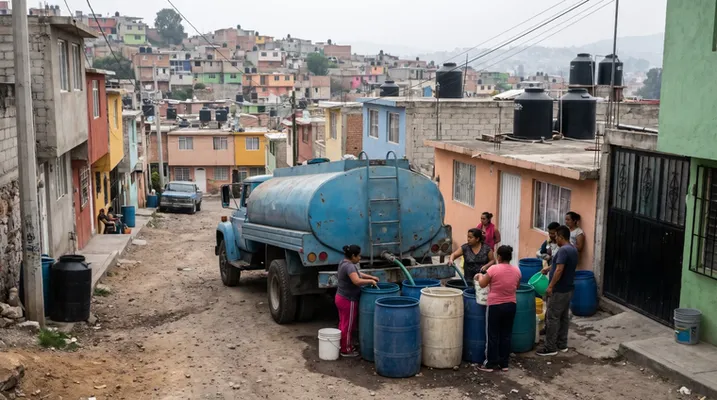
In 2024, after years of drought, the three main reservoirs of the Cutzamala System, Valle de Bravo, Villa Victoria and El Bosque, fell to some of their lowest levels in a quarter century. Authorities rationed water, neighborhoods went days without supply, tanker trucks became a lifeline and protests broke out as residents blocked streets demanding water. International headlines warned of Day Zero.
Then the rains returned. The 2025 rainy season brought a strong recovery, and the 2026 season was even better. According to Mexico’s National Water Commission, Conagua, the Cutzamala System reached about 95.76 percent of capacity this autumn, ranking as the second best reading in the last decade, with roughly 748 million cubic meters stored at the start of November. The regional water authority estimated that, at current levels, supply from the system is assured for about two years, until the end of 2027. Even so, authorities urged residents to keep conserving water.
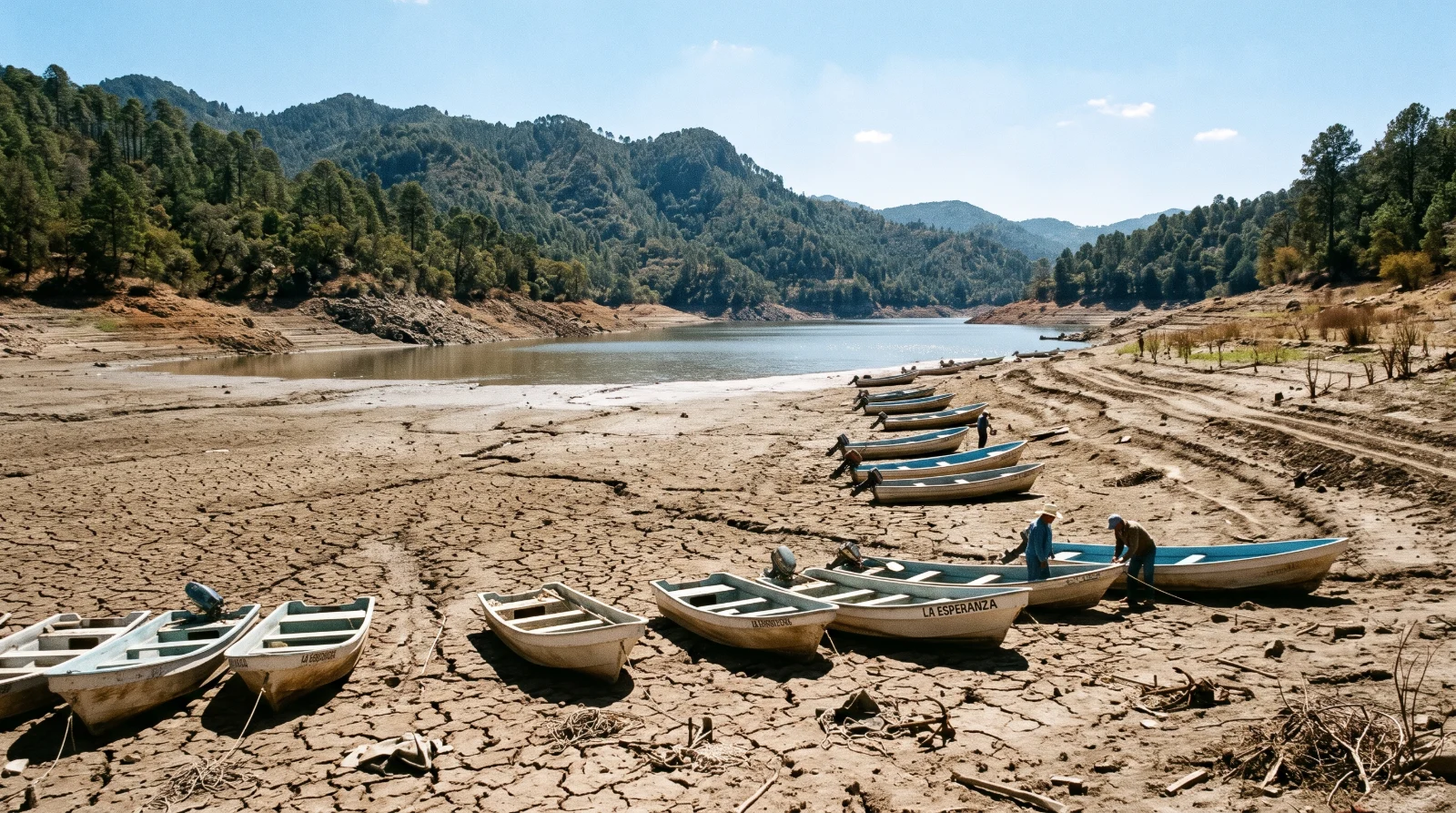
During the drought of 2024, Cutzamala reservoirs fell to their lowest levels in about 25 years. The 2026 rains brought a dramatic recovery.
Why Full Reservoirs Are Not the Whole Story
It is tempting to declare the crisis over. Water experts warn against it, and so do we. The Cutzamala System supplies only about a quarter to a third of the metropolitan area’s water. Most of the rest comes from aquifers beneath the valley, which researchers at the National Autonomous University of Mexico estimate provide about 65 to 70 percent of the water distributed through public networks. Those aquifers have been over pumped for decades.
The consequence is visible in the ground itself. As water is pulled from the clay beneath the city, the clay compacts and the city sinks. Studies have measured subsidence in the worst areas at tens of centimeters per year, and parts of the city have dropped many meters over the past century. Sinking ground cracks pipes, which creates more leaks, which waste more water, which leads to more pumping. Water people call it a vicious cycle, and it is one of the clearest examples on Earth of how water supply and plumbing infrastructure are bound together.
The 40 Percent Problem
Mexico City’s water agency, SACMEX, has put network wide leak losses at roughly 40 percent. That number has been repeated so often it can lose its power, so let us put it plainly: for every 10 liters the city treats and pumps, around 4 never reach a customer. Other studies of the wider metropolitan area estimate losses of 30 to 35 percent, which is still enormous.
Here is the detail that should interest plumbers most. Reporting on the city’s leak programs has indicated that the large majority of leaks, by one official estimate around 88 percent, occur in household connections, the service lines and fittings that link the street network to individual properties, rather than in the big trunk mains. That is exactly the kind of work plumbers do every day.
The city has invested heavily in leak repair brigades over the past several years, and successive administrations have pledged to cut losses and reduce dependence on Cutzamala. But leak repair in an aging, sinking network is relentless. Fix a leak in one place, and pressure rises elsewhere, sometimes opening new leaks. Without pressure management, sectorization and systematic pipe replacement, progress is hard to sustain.
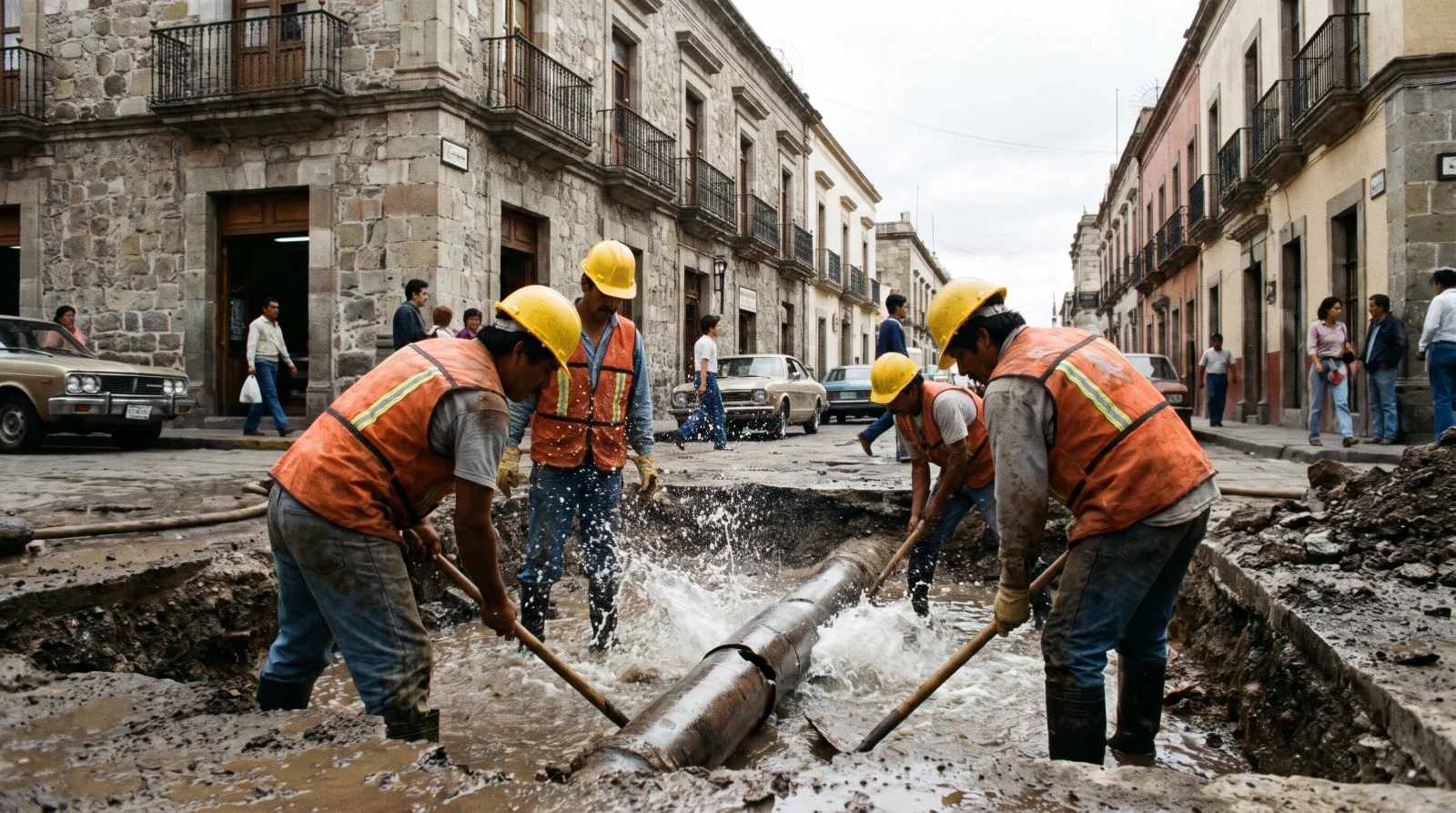
Leak repair crews work constantly in Mexico City, where shifting ground and aging pipes create new leaks every day.
Inequality Flows Through the Pipes
Water shortages do not affect everyone equally. In Mexico City, wealthier central neighborhoods have historically enjoyed more reliable service, while hillside and peripheral communities, especially in the east, often receive water intermittently or depend on tanker deliveries and rooftop storage tanks called tinacos. Families in some areas spend a significant share of their income on water. When supply is intermittent, pipes sit empty and then refill, which can draw contamination into the network and wear out fittings faster.
Rooftop tanks and cisterns are a way of life across much of Mexico and Latin America, and they bring their own plumbing challenges: keeping tanks clean and covered, preventing contamination, maintaining float valves and pumps and managing pressure. These are skills that local plumbers, known as plomeros, master every day.
Solutions That Are Working
There is good news. Mexico City has expanded rainwater harvesting programs, installing systems on thousands of homes and schools, particularly in water scarce neighborhoods. Nonprofit and community groups have helped households capture rain during the wet season, reducing their dependence on tanker trucks. City and federal governments have invested in wastewater treatment and reuse, aquifer recharge, new supply projects and drainage improvements. The current city administration has set a goal of reducing dependence on Cutzamala. Federal plans for central Mexico include reviving the Tula River and modernizing irrigation. Whether these efforts move fast enough is a matter of genuine debate, with critics arguing that investment remains far below what is needed and supporters pointing to real progress after years of neglect.
A City Built on a Lake
To understand why Mexico City’s plumbing is so difficult, you have to go back five centuries. The Aztec capital of Tenochtitlan was built on an island in Lake Texcoco, crisscrossed by canals and served by aqueducts carrying fresh spring water from Chapultepec. After the Spanish conquest, the colonial city gradually drained the lakes to fight recurring floods, a project that continued for centuries and culminated in massive drainage tunnels in the modern era. The result is a metropolis sitting on soft, water saturated lakebed clay that behaves almost like a sponge. Pump the water out, and the sponge compresses.
That geology shapes every plumbing decision. Rigid pipes crack as the ground settles unevenly. Building foundations tilt, pulling on water and drain connections. Sewers lose their slope and must be pumped instead of draining by gravity. During the rainy season, intense storms overwhelm drainage and flood streets and subway tunnels, even in years when the taps run dry. Engineers in Mexico City have developed impressive expertise in flexible joints, pressure management and large scale drainage precisely because the city gives them no choice.
Why Pressure Management Is the Unsung Hero
One technique deserves special attention because it applies to every water system, from a megacity to a single house. When a network runs at high pressure, small cracks become big leaks, and old pipes burst more often. Many utilities around the world have cut leakage substantially by dividing networks into zones, installing pressure reducing valves and lowering pressure at night when demand is low. It sounds simple, and it is often one of the most cost effective investments a utility can make. The same principle protects your home: a house running at excessive pressure wears out faucets, toilets, water heaters and supply lines faster and is more likely to spring a leak.
Lessons for Every City
You do not have to live in Mexico City to learn from it. Johannesburg is fighting a similar mix of aging pipes and leaks, as we reported in the Johannesburg water crisis. The American Southwest is wrestling with shortage on the Colorado River, which we covered in the Colorado River rules just changed. And world leaders will discuss these exact issues at the UN Water Conference, which we previewed in the world meets in Abu Dhabi.
The lessons repeat everywhere. First, rain is not a plan; infrastructure is. Second, the cheapest new water is the water you stop losing. Third, pressure management matters, because too much pressure bursts pipes and too little invites contamination. Fourth, groundwater is a savings account, not an endless income. And fifth, investment in pipes and people, including skilled plumbers and utility workers, pays back many times over. Our feature on the hidden grid beneath your street explores how these systems work.
What Homeowners Anywhere Can Do
Mexico City’s experience shows that leaks in household connections add up to an enormous share of losses. That puts real power in homeowners’ hands, wherever they live.
Find hidden leaks. With all water turned off, watch your meter. If it moves, you have a leak. Professional leak detection can find leaks in walls, slabs and yards.
Repair or replace your service line. The pipe between the meter and your house is your responsibility in many places. If it is old, corroded or leaking, consider main water line repair.
Control your pressure. Excessive pressure strains every joint and fixture. A properly adjusted pressure regulator protects your plumbing.
Keep storage tanks clean. If you rely on a cistern or rooftop tank, keep it covered, clean it regularly and maintain the float valve and pump.
Treat your water if needed. Where water quality is uncertain, especially with intermittent supply, consider certified water filtration for drinking water.
Harvest rain where allowed. Rainwater can supply irrigation, toilet flushing and, with proper treatment, more.
A Salute to the Plomeros
We want to take a moment to honor the plumbers and water workers of Mexico City and across Mexico. They repair leaks around the clock in streets that literally shift beneath them, maintain pumps and tanks in difficult conditions and keep water flowing to millions of people. Plumbing standards and practices differ from country to country, as we discussed in is plumbing the same around the world, but the dedication of the people who do the work is universal. Cities everywhere need more of them, and our plumbing jobs page shows how many opportunities exist.
Our Warning: Water Scams Thrive in Shortages
Water crises attract fraud: unlicensed tanker operators, illegal connections that steal water and lower pressure for neighbors, overpriced and uncertified filters, and fake repair crews. Wherever you live, buy water only from licensed suppliers, report illegal connections to your utility, choose certified treatment products and hire plumbers with real reviews and verifiable credentials.
How Best Plumbers Helps
Best Plumbers has been the Internet's original plumbing directory since July 12, 2002, serving readers around the world. We list every plumbing company and show every review, good and bad, and our Best Plumbers Recommended seal marks the companies we trust most. We never sell leads. Find a trusted plumber through our locations directory and read the reviews.
The Short Version
Mexico City moved from Day Zero fears in 2024 to a nearly full Cutzamala System in 2026, with storage near 95.8 percent and supply expected to be secure through 2027. But roughly 40 percent of the city’s water still leaks away, much of it in household connections, and over pumped aquifers keep the ground sinking. Rain brought relief, not a cure. Every city and homeowner can learn from it: find and fix leaks, manage pressure, maintain storage tanks and invest in infrastructure and skilled people.
Frequently Asked Questions About Mexico City’s Water
1. Is Mexico City still facing Day Zero?
Not immediately. Strong rains refilled the Cutzamala System in 2025 and 2026.
2. How full is the Cutzamala System?
It reached about 95.76 percent in autumn 2026, the second best level in a decade.
3. How long will current supply last?
Regional authorities estimated supply from the system is assured until about the end of 2027.
4. How much water does Mexico City lose to leaks?
Roughly 40 percent according to the city water agency; other estimates are 30 to 35 percent.
5. Where do most leaks occur?
Reports indicate most occur in household connections rather than large mains.
6. Where does Mexico City get its water?
Mostly from aquifers beneath the valley, plus the Cutzamala and Lerma systems and other sources.
7. Why is Mexico City sinking?
Over pumping of aquifers compacts the clay beneath the city, causing subsidence.
8. How does sinking affect plumbing?
Shifting ground cracks pipes, creating more leaks.
9. What reservoirs make up Cutzamala?
Valle de Bravo, Villa Victoria and El Bosque are the three main reservoirs.
10. What are tinacos?
Rooftop water storage tanks common in Mexican homes.
11. Is water access equal across the city?
No. Peripheral and hillside neighborhoods often get intermittent supply or tanker deliveries.
12. Is rainwater harvesting helping?
Yes. Programs have installed systems on thousands of homes and schools.
13. Can intermittent supply affect water quality?
Yes. Pipes that empty and refill can draw in contamination.
14. What lessons apply to other cities?
Fix leaks, manage pressure, protect groundwater and invest in infrastructure and skilled workers.
15. How can I check my home for leaks?
Turn off all water and watch the meter. Movement means a leak.
16. Who owns the service line to my house?
In many places, the homeowner owns the line from the meter to the house.
17. Why does water pressure matter?
High pressure stresses pipes and fixtures; low pressure can allow contamination.
18. How should I maintain a rooftop tank or cistern?
Keep it covered, clean it regularly and maintain valves and pumps.
19. Are there water scams during shortages?
Yes, including unlicensed tankers, illegal connections and fake repair crews.
20. Is the crisis only about rain?
No. Experts describe it as largely a crisis of infrastructure and management.
21. Are other cities facing similar problems?
Yes, including Johannesburg, Bogotá, Chennai and cities in the American Southwest.
22. Does fixing one leak always help?
Not always. In pressurized aging networks, fixing one leak can raise pressure and cause others.
23. Are there plumbing careers in water infrastructure?
Yes. Cities worldwide need plumbers, pipefitters and utility workers.
24. How do I find a trusted plumber?
Search Best Plumbers, read every review, look for the Best Plumbers Recommended seal and confirm credentials.
25. Why does Best Plumbers cover Mexico City?
Since 2002, Best Plumbers has served readers worldwide and championed the plumbers who keep water flowing.
Sources
Excélsior, rainy season ends with Cutzamala near 96 percent. Uno TV, Cutzamala storage in November. Mexico News Daily, how Mexico City can solve its water crisis and leak repair and distribution. UNAM Internacional, water crisis in the Valley of Mexico.

