
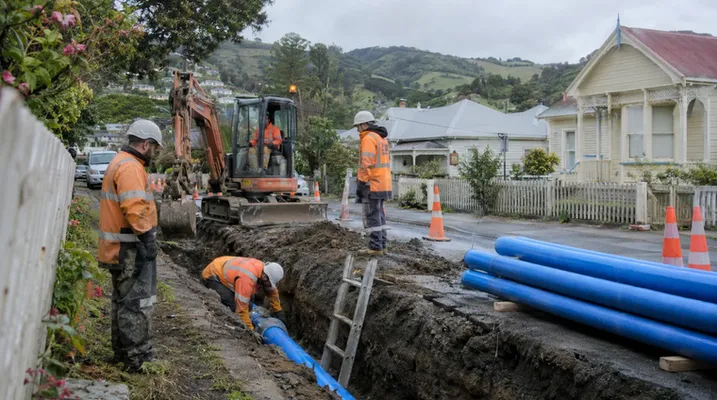
On 1 July 2026, millions of New Zealanders woke up to a quiet but historic change. In the Wellington region, Waikato and other parts of the country, the pipes, treatment plants and reservoirs that councils had run for generations began flowing through new council owned water organisations. The New Zealand Government announced that every mainland council now has an approved water services delivery plan under its Local Water Done Well programme, that five new council controlled water organisations were already operating and that another 13 were expected to launch within a year. When they do, roughly three quarters of New Zealanders will get their water from organisations created under the reform and owned by 46 councils. Best Plumbers has many readers in New Zealand, and this is one of the most important plumbing stories in the country in decades. Here is what is changing, why and what it means for Kiwi homeowners and plumbers.
By the Best Plumbers Editorial Team. Published November 23, 2026.
New Zealand is not alone. Countries around the world are wrestling with aging water networks and how to pay for them, as we explained in is plumbing the same around the world and in our coverage of water supply troubles in England. New Zealand’s approach is distinctive, and worth understanding wherever you live.
How We Got Here
New Zealand’s water reckoning began in earnest after the 2016 Havelock North outbreak, when contaminated drinking water made thousands of people sick and was linked to several deaths. The government inquiry that followed exposed weaknesses in how small and large councils managed drinking water, leading to the creation of a dedicated water services regulator, Taumata Arowai. Investigations also revealed a massive infrastructure deficit: many councils had underinvested in pipes and treatment for decades, and networks in some cities were losing a large share of treated water to leaks.
The previous government’s Three Waters reform proposed moving water assets into a small number of large regional entities. It proved controversial, especially over council ownership and control. In February 2024, the new coalition government repealed that legislation and launched Local Water Done Well, which keeps ownership with councils but requires them to put water services on a financially sustainable footing, with stronger central oversight and both economic and quality regulation.
How Local Water Done Well Works
The programme was implemented in three stages, each with its own legislation: repealing the previous regime, establishing a framework and preliminary arrangements and then setting up the long term system, including regulation and new financing tools. Every council had to prepare a water services delivery plan by September 2025 showing how it would deliver drinking water, wastewater and stormwater services sustainably. Councils could keep services in house, form a council controlled organisation on their own or join neighbours in a shared organisation.
The Department of Internal Affairs explains that under the new model, water providers will have to operate more like independent utility businesses, much like electricity or telecommunications utilities. That means ring fencing water revenue so it is spent on water, planning investment over decades and being regulated on price and quality.
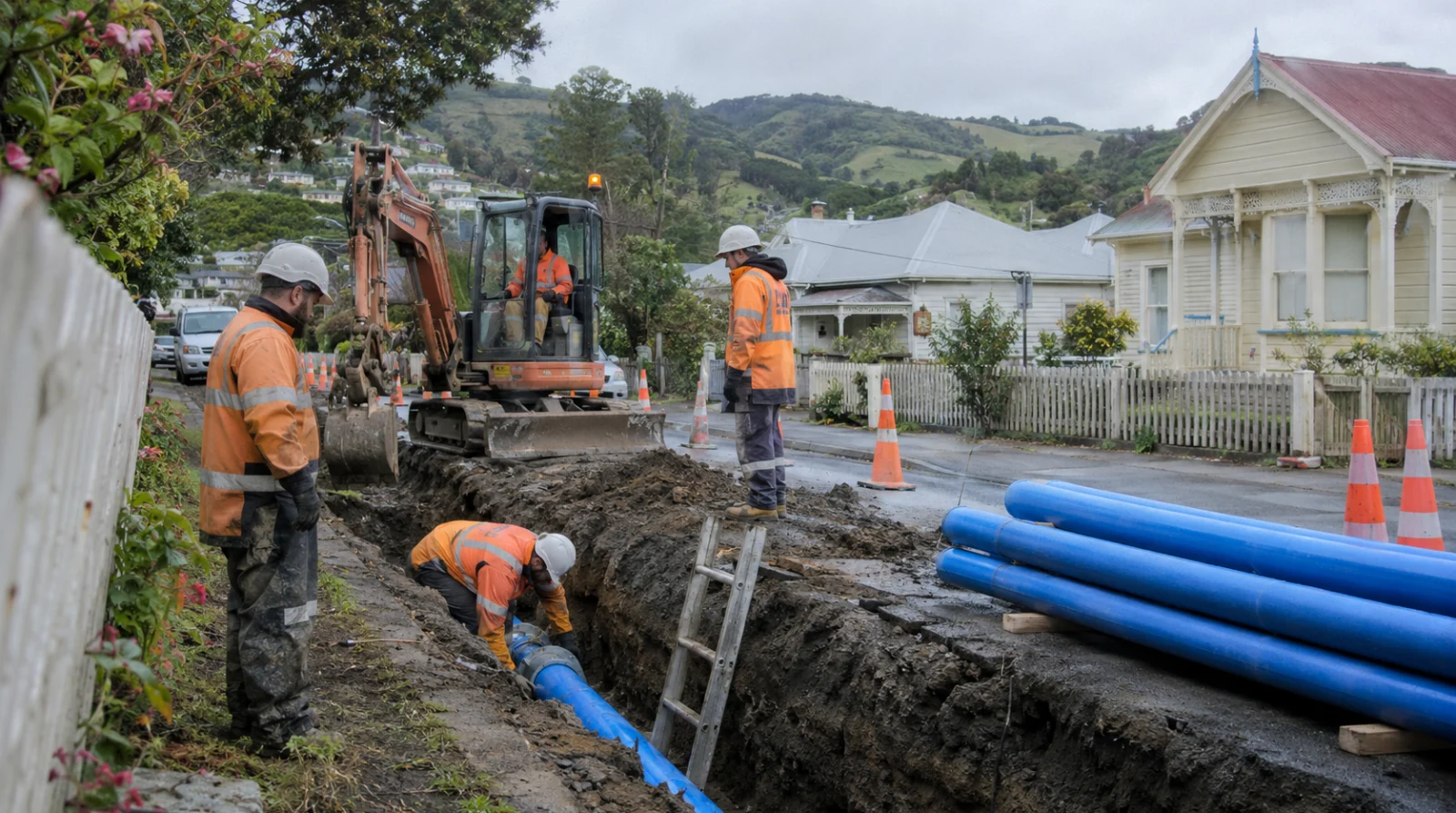
New water organisations face a long backlog of pipe renewals in towns and cities across New Zealand.
The New Organisations
Tiaki Wai. From 1 July 2026, Tiaki Wai Limited took over drinking water, wastewater and stormwater services for five councils in the Wellington metropolitan area, including Lower Hutt and Upper Hutt. Advisers on the deal described it as New Zealand’s largest new water organisation and one of the first established under the framework. Wellington’s water network has been under intense public scrutiny for leaks and aging pipes, making Tiaki Wai’s first years especially closely watched.
Waikato Waters. Waikato Waters Limited began delivering water and wastewater services in the Waikato region, with Waipā District Council transferring its assets on 1 July 2026. The Minister of Local Government described it as one of the first council controlled organisations established under the programme.
More to come. Other councils are forming organisations on longer timelines. In the Bay of Plenty, for example, Tauranga City Council and Western Bay of Plenty District Council agreed in April 2026 to form a joint water organisation, Tāheke Bay Waters, which is expected to be operational from 1 July 2027. A new North Canterbury water entity appointed its chief executive in May 2026.
What Changes for Homeowners
Who you call. In areas served by a new organisation, faults like water main breaks, low pressure and sewer overflows are now handled by the water organisation rather than the council. Most councils and organisations have published guidance on how contacts and bills are changing.
How you are billed. Some organisations will bill water separately from council rates over time, and volumetric charging based on water meters may expand in some areas. Watch for letters and check your council’s website.
Who owns what. The basic boundary does not change. Generally, the water organisation is responsible for the network up to the point of supply, often the toby or meter at your boundary, and the property owner is responsible for pipes from there into the house. Leaks on your side are your responsibility and should be fixed by a registered plumber.
Investment and charges. The reforms are designed to make large, long overdue investments affordable through borrowing spread over decades. Even so, water charges in many areas are expected to rise as networks are renewed. Councils and organisations say that cost is the price of reliable, safe water after years of underinvestment.
What Changes for Plumbers
For New Zealand’s registered plumbers and drainlayers, the reforms are likely to mean more work, not less. Network renewal programmes create demand for civil contractors and drainlayers. New connection standards and processes will settle in as organisations harmonise rules across council boundaries. Backflow prevention requirements, administered by water suppliers, may become more consistent and better enforced, an area where our backflow testing and prevention guide explains the stakes. And private side leak repairs will matter more where volumetric charging grows, making leak detection and water line replacement services more valuable.
Leaks: The Shared Problem
Water lost to leaks is a challenge for public networks and private properties alike. Public networks lose water through cracked mains, failed joints and aging service connections. Homes lose water through dripping taps, running toilets, failed hot water cylinder valves and underground leaks between the boundary and the house. New organisations are investing in pressure management, acoustic leak detection and smart metering, technologies we covered in leak detection goes predictive. Homeowners can do their part by checking their meter for movement when all water is off and fixing leaks promptly. Repairs to the supply pipe on your side of the boundary are covered in our main water line repair guide.
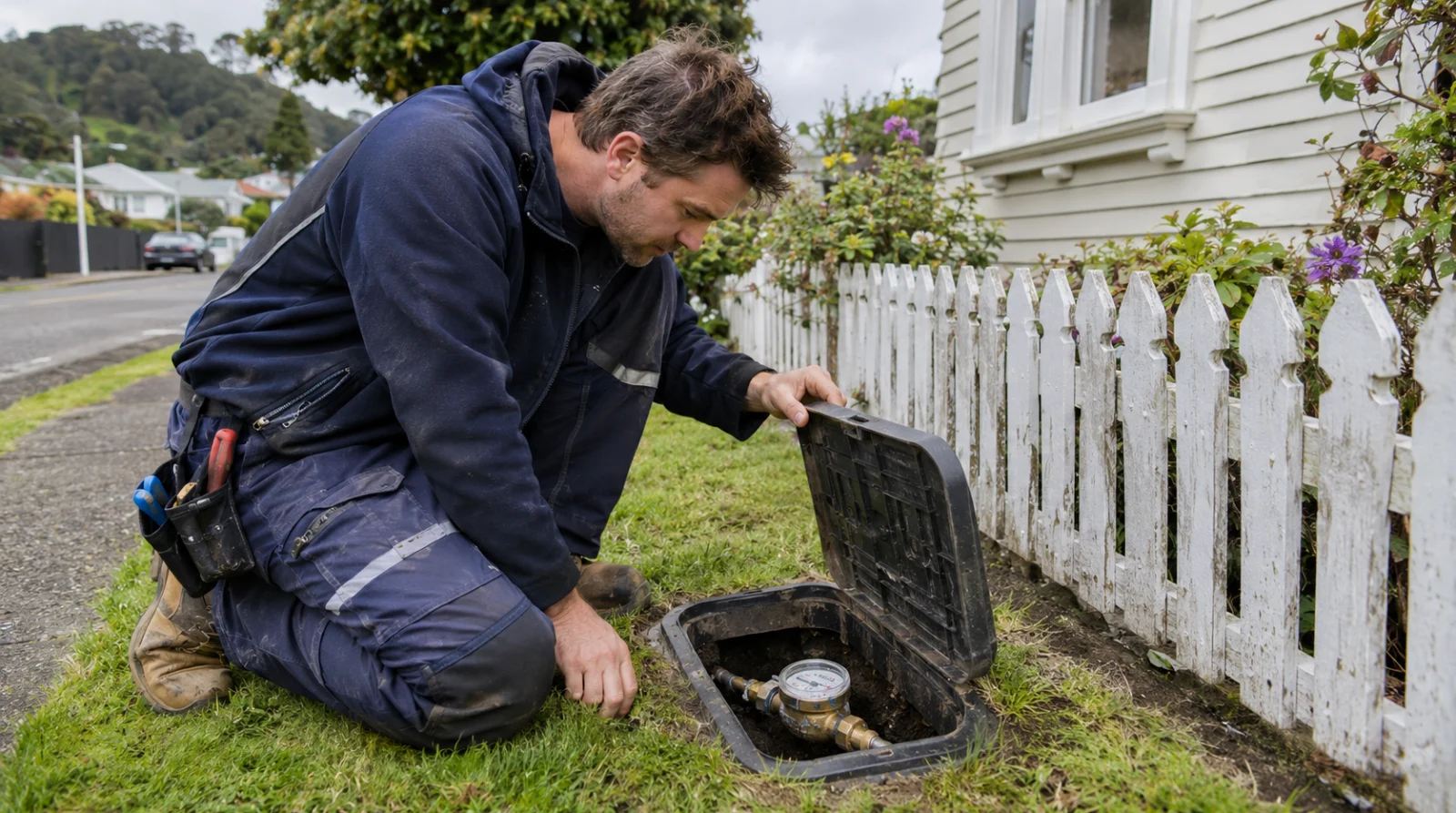
The boundary between the public network and private pipes usually sits at the toby or meter.
Stormwater and Wastewater, Too
Local Water Done Well covers all three waters, not just drinking water. Wastewater treatment plants in many towns need upgrades to meet environmental standards, and stormwater networks are under pressure from heavier rain events. Recent floods in Auckland, Gisborne, Hawke’s Bay and elsewhere showed how much damage overwhelmed stormwater systems can cause. Some organisations will take on stormwater immediately, while others will leave it with councils for now. Homeowners can help by keeping private drains clear, never connecting downpipes to the sewer and fixing cracked gully traps that let stormwater into wastewater pipes.
A Homeowner Checklist for the Transition
Find your water organisation. Check your council website to see whether a new organisation now runs your water and how to contact it for faults.
Find your toby. Locate the shutoff at your boundary and make sure it turns. In an emergency, it is the fastest way to stop a burst pipe.
Read your meter. If you have one, photograph it monthly. Sudden jumps reveal leaks before the bill does.
Inspect your hot water cylinder. Check the pressure relief and tempering valves for constant dripping, a common hidden water waster in New Zealand homes.
Know your drains. Keep gully traps raised above ground level, clear of leaves and covered with a grate, so stormwater cannot flood into the wastewater system.
Keep records. Save invoices for any plumbing and drainlaying work, which helps with insurance and future sales.
Earthquakes and Resilience
New Zealand’s seismic risk adds another layer to the water challenge. The Canterbury earthquakes of 2010 and 2011 shattered pipes across Christchurch and taught engineers hard lessons about brittle materials. Modern renewals favour flexible, ductile pipe materials and joints that can move with the ground. For homes, flexible connectors on appliances and properly secured hot water cylinders reduce damage when the ground shakes. Resilient networks and resilient homes go hand in hand.
The Debate
Supporters of Local Water Done Well say it respects local ownership and decision making while forcing financial discipline, ring fencing water revenue and adding strong regulation, a more workable path than the contested Three Waters model. They point to the rapid progress, with every mainland council now holding an approved plan. Critics argue that the new organisations are smaller than the previous model’s entities, which may limit economies of scale and borrowing power, that some smaller rural councils will still struggle with costs and that household charges could rise sharply. Some also want clearer protections for iwi interests and environmental outcomes. These concerns are serious, and the next several years will show how well the model delivers. Either way, everyone agrees on the goal: safe drinking water, clean rivers and harbours and pipes that do not fail.
Lessons for the Rest of the World
New Zealand’s experience offers lessons for any country with aging water infrastructure. Underinvestment compounds over time. Clear separation of water finances from general budgets helps protect long term maintenance. Strong, independent regulators for both quality and price build public trust. And whatever the structure, public or private, large or small, the work of renewing networks falls to skilled tradespeople: engineers, operators, drainlayers and plumbers. That is why the hidden grid beneath your street deserves far more attention than it gets.
A Salute to New Zealand’s Water Workers
Behind every reform headline are the operators who run treatment plants through storms, the crews who repair mains in the middle of the night, the drainlayers clearing blockages and the registered plumbers keeping homes and businesses running. Transitions like this one can be unsettling for staff moving from councils into new organisations. We salute their professionalism and wish them every success.
If you are moving to a new organisation’s service area, be patient during the changeover. Contact details, billing systems and online portals are being merged and rebuilt, and early hiccups are normal. Report problems clearly and keep your reference numbers, and you will help the new organisations learn quickly where their systems need fixing.
Our Take
Local Water Done Well is a pragmatic attempt to fix decades of underinvestment while keeping water services under local ownership. Early implementation has moved quickly. Its success will depend on sustained investment, fair pricing, strong regulation and, above all, the skilled workforce needed to do the work. We are optimistic. New Zealand has some of the most talented plumbers and drainlayers in the world, and they are ready.
How Best Plumbers Helps
Best Plumbers has been the Internet’s original plumbing directory since July 12, 2002, and the most trusted, serving readers in New Zealand, Australia, the United Kingdom, Ireland, Canada, South Africa, the United States and beyond. We list every plumbing company and show every review, good and bad, and our Best Plumbers Recommended seal marks those we trust most. We never sell leads. Find plumbers through our locations directory, read the reviews, explore careers on our plumbing jobs board and connect with industry groups on our plumbing associations page.
The Short Version
New Zealand replaced Three Waters with Local Water Done Well in 2024, keeping council ownership but requiring sustainable, ring fenced and regulated water services. Every mainland council has an approved plan, five new water organisations including Tiaki Wai and Waikato Waters began operating in July 2026 and 13 more are coming, covering about three quarters of New Zealanders. Homeowners may see new contacts, billing and charges, remain responsible for pipes on their side of the boundary and should fix leaks with a registered plumber.
Frequently Asked Questions About Local Water Done Well
1. What is Local Water Done Well?
New Zealand’s programme to put council water services on a sustainable, regulated footing.
2. What did it replace?
The previous government’s Three Waters reform, repealed in February 2024.
3. Do councils still own water assets?
Yes, councils own the new water organisations.
4. Have all councils approved plans?
Every mainland council has an approved water services delivery plan.
5. How many new organisations are operating?
Five as of 1 July 2026, with 13 more expected within a year.
6. How many New Zealanders will they serve?
About three quarters, through organisations owned by 46 councils.
7. What is Tiaki Wai?
The new water organisation for five Wellington region councils.
8. What is Waikato Waters?
A council owned water organisation serving several Waikato councils.
9. When does the Bay of Plenty organisation start?
Tāheke Bay Waters is expected to operate from 1 July 2027.
10. Why was reform needed?
Decades of underinvestment, leaks and drinking water safety concerns.
11. What happened at Havelock North?
A 2016 contamination outbreak made thousands sick and spurred reform.
12. Who regulates drinking water quality?
Taumata Arowai, the water services regulator.
13. Will my water bill change?
Billing and charges may change; watch for notices.
14. Who fixes a leak on my property?
Leaks on your side of the boundary are yours to fix.
15. Where is the boundary?
Usually at the toby or meter near your property line.
16. Who do I call for a main break?
Your water organisation or council, depending on your area.
17. Does the reform cover stormwater?
It covers all three waters, though some councils keep stormwater for now.
18. Will plumbers see more work?
Network renewals and leak repairs are likely to increase demand.
19. Is backflow prevention affected?
Requirements may become more consistent across regions.
20. What do critics say?
Smaller organisations may lack scale and charges could rise.
21. What do supporters say?
Local ownership with financial discipline and strong regulation.
22. How can homeowners reduce leaks?
Check the meter with water off and fix leaks promptly.
23. Can I connect downpipes to the sewer?
No, stormwater should stay out of wastewater pipes.
24. How do I find a trusted plumber in New Zealand?
Search Best Plumbers, read every review, look for the Best Plumbers Recommended seal and check registration.
25. Why does Best Plumbers cover New Zealand?
We serve readers worldwide and champion plumbers everywhere.
Sources
New Zealand National Party, major milestone for Local Water Done Well. Upper Hutt City Council, Local Water Done Well reform. Hutt City Council, changes to water services. Waipā District Council, Waikato Waters. Western Bay of Plenty District Council, Bay Waters. Department of Internal Affairs, guidance for councils.

