
By the Best Plumbers Editorial Team. Published November 15, 2026.
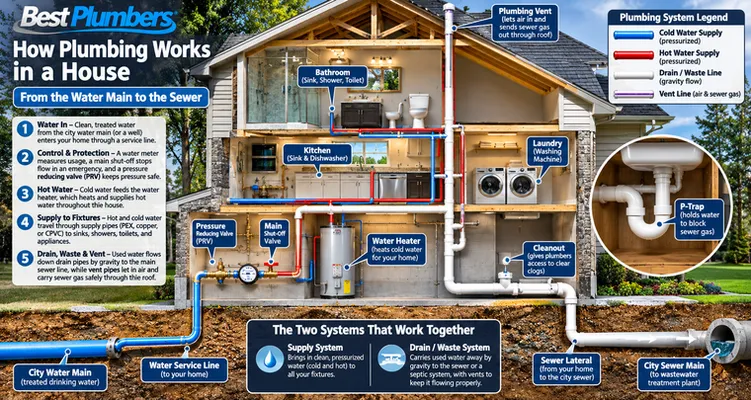
You turn on a faucet, flush a toilet, or step into the shower dozens of times a week without a second thought. But behind your walls and under your floors, two separate systems are working together to make that happen: one that brings clean water in, and one that carries used water out.
This clear, easy-to-follow video from ResCom Contractors walks through a home's entire plumbing system from start to finish. Watch it below, then read on for our plain-English breakdown and the practical lessons every homeowner should take from it.
Part 1: Where Your Water Comes From
Most homes connect to a city or municipal water supply. Water is cleaned at a treatment plant, pumped through large water mains under the street, and delivered to your home through a smaller pipe called the water service line.
Many homes, especially in rural areas, use a private well instead. An electric pump lifts water from underground and pushes it into the house. Either way, the service line enters the home underground, through a basement wall, a crawl space, or the slab.
Part 2: The Meter, the Main Shut-Off, and Water Pressure
On a city supply, the water usually passes through a meter that records how much you use. Right after it, you should find the main water shut-off valve.
The video calls this one of the most important things in your house, and we agree. If a pipe bursts or a water heater fails, closing this valve stops water to the whole home. Find yours before you need it. Our guide on how to turn off your main water valve shows you how.
Some homes also have a pressure reducing valve, or PRV, on the main line. City pressure can be higher than a home's pipes and fixtures should handle, and constant high pressure wears out valves, appliances, and connections early. The video notes that a PRV typically brings pressure down to around 40 to 80 PSI. Learn more about how high water pressure can damage your plumbing.
Part 3: Supply Pipes and the Water Heater
From the main line, supply pipes carry water through the house. In newer homes, these are often PEX, a flexible plastic tubing that is easy to run through framing. Older homes may have copper, CPVC, or galvanized steel. If you are weighing materials for a remodel or repipe, our article on PEX pipe and things to consider is a good place to start.
Cold water lines run to every fixture: toilets, sinks, showers, outdoor hose bibs, and the washing machine. One branch also feeds the water heater.
The most common type is a tank water heater. Cold water enters at the bottom, a gas burner or electric element heats it, and hot water rises to the top, where it leaves the tank when you open a hot tap. Cold water refills the tank as you use it. The video points out that most tanks hold somewhere between 30 and 80 gallons.
A tankless water heater skips the storage tank and heats water as it flows through. Not sure which fits your home? Read our comparison of tankless water heaters vs. traditional tank water heaters.
Part 4: How Each Fixture Connects
- Sinks have separate hot and cold supply lines, each with its own small shut-off valve under the sink. These let you turn off water to one fixture without shutting down the whole house.
- Toilets use cold water only. A fill valve refills the tank, and a rubber flapper holds the water until you flush. When the flapper lifts, water rushes into the bowl and starts a siphon that pulls waste into the drain. Our toilet anatomy diagram labels every part.
- Showers and tubs use a valve inside the wall to mix hot and cold. Many modern valves are pressure balancing, which helps prevent a sudden blast of hot water when someone flushes a toilet.
- Outdoor hose bibs tap into the cold line. In cold climates, frost-free hose bibs help keep the pipe from freezing and bursting.
- Washing machines connect to both hot and cold through a laundry valve box, while dishwashers usually connect to the hot line under the kitchen sink and drain through the sink drain.
Part 5: The Drain, Waste, and Vent System
Once water goes down a drain, it enters the second half of the system, known as DWV: drain, waste, and vent.
The biggest difference from the supply side is this: supply pipes are pressurized, but drain pipes run on gravity. That means drains must slope downhill. The video cites the common standard of about 1/4 inch of drop per foot of pipe. Too little slope and waste sits and clogs. Too much and water runs ahead of the solids, leaving them behind.
Why P-Traps Matter
The curved pipe under your sink is a P-trap. It holds a small amount of water at all times, and that water seal blocks sewer gas from coming back into your home. Every fixture drain needs a trap.
Here is a useful tip from the video: if a floor drain or a sink you rarely use starts to smell, the trap may simply have dried out. Pouring some water down the drain often restores the seal and stops the odor.
Why Drains Need Air
This is the part that surprises most people. When a large rush of water goes down a pipe, it can create suction behind it, strong enough to pull the water out of a trap. Vent pipes let air into the system to prevent that, and they carry sewer gas up and out through the roof. Those pipes sticking out of your roof are plumbing vents, not chimneys.
Slow drains, gurgling sinks, and sewer smells can all point to a blocked vent. For a deeper look at drain and vent sizing, see our guide on how to vent and plumb a toilet: drain size, vent size, and code rules.
Part 6: Where the Waste Goes
Branch drains from each area feed into a main stack and then into the main building drain, which leaves the house underground. From there, waste goes one of two ways:
- City sewer: it flows to the sewer main under the street and on to a wastewater treatment plant. We follow that whole trip in What Happens After You Flush? The Hidden Journey Through the Sewer System.
- Septic system: waste flows into a buried tank where solids settle and liquid moves out to a drain field. The video notes that tanks commonly need pumping every 3 to 5 years, though the right schedule depends on tank size and household use.
Along the way, cleanouts give plumbers direct access to the drain line to clear clogs or run a camera. The main cleanout is usually near where the drain exits the house. Know where yours is.
Part 7: How Plumbing Gets Installed
In new construction and major remodels, plumbing goes in two stages:
- Rough-in. Supply, drain, and vent pipes, shower valves, toilet flanges, and laundry boxes are installed while the walls are still open. This is the time to catch mistakes, because fixing them after drywall is much harder and more expensive.
- Inspection and testing. In many places, rough-in plumbing must pass inspection before the walls close. Supply lines are pressure tested, and drain and vent lines are tested separately, usually with water or air.
- Finish plumbing. After tile, cabinets, and drywall, the plumber returns to set toilets, install faucets and shower trim, connect the water heater, disposal, and dishwasher, then test every fixture.
What Every Homeowner Should Take Away
- Know where your main shut-off valve and main cleanout are.
- Check your water pressure, and ask a plumber about a PRV if it is too high.
- Run water in unused drains now and then to keep trap seals full.
- Pay attention to gurgling, slow drains, and sewer smells. They are early warnings.
- If you are remodeling, make sure the rough-in is right and inspected before the walls close.
Understanding what is behind your walls helps you make better decisions and spot trouble early. When something does go wrong, search for plumbers near me on Best Plumbers to find plumbing companies that serve your area, with every review published, good and bad.
Video credit: ResCom Contractors on YouTube. Plumbing codes and typical practices vary by location, so check local requirements with a licensed plumber.

