
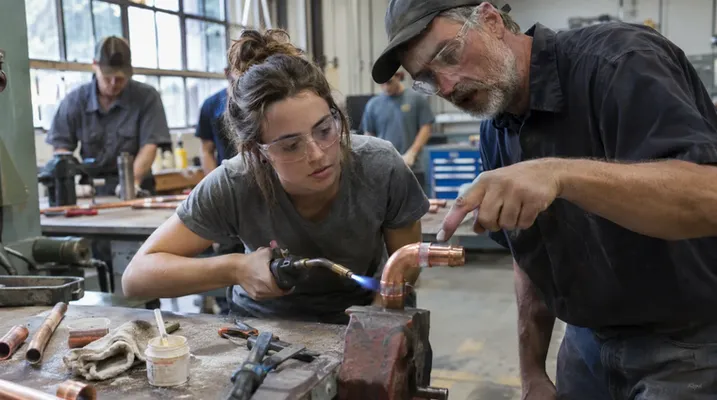
For two generations, the advice to young people was simple: go to college, get a degree, get a good job. In 2026, that script is being rewritten. Young college graduates face a tougher entry level market than they have in decades, while the skilled trades are begging for talent. A major report from Jobs for the Future and the Burning Glass Institute projects about 1.7 million skilled trades job openings every year through 2035. Industry voices are now urging plumbing employers to recruit a group they have long overlooked, college graduates, and more graduates are listening. As the Internet’s original plumbing directory and a proud cheerleader for the men and women of this trade, Best Plumbers is thrilled. Here is why plumbing is one of the smartest second acts a degree holder can choose, and how to make the leap.
By the Best Plumbers Editorial Team. Published November 23, 2026.
We have reported on the trade’s worker shortage many times, most recently in our look at the plumbing industry’s $442 billion impact and 550,000 worker gap. The demand side of that story is not news to anyone who has waited a week for a plumber. What is new is the supply side: a wave of educated, capable young adults who are reconsidering what a good career looks like.
The Numbers Behind the Shift
The State of America’s Skilled Trades report from Jobs for the Future and the Burning Glass Institute, covered by Fortune in October 2026, projects roughly 1.7 million openings annually in the skilled trades through 2035, driven by retirements, new construction and the rapid build out of data centers and other infrastructure. Fortune also reported that skilled trades careers pay about 32 percent more than other jobs that do not require a college degree, and that they offer a natural path to business ownership.
Meanwhile, the entry level market for new graduates has softened. Reporting from the National Roofing Contractors Association, drawing on federal labor data, noted that unemployment for young college graduates now runs about 1.4 percentage points higher than for all workers, a reversal from the era when young graduates enjoyed lower unemployment than the workforce as a whole. Research from Cengage Group found that only about 30 percent of recent post secondary graduates landed entry level jobs in their chosen fields in 2025. Many observers point to artificial intelligence, which is automating routine office tasks that once served as the first rung on the white collar ladder.
None of this means college has lost its value. Research from the Federal Reserve Bank of Cleveland and others continues to show that degree holders, on average, earn more over a lifetime. It means the paths to a good life have multiplied, and the trades are one of the strongest.
The Case for Hiring Graduates
In a November 2026 column in PHC News, an executive at a national home services company that operates in 27 markets across 14 states made the case that plumbing, HVAC and electrical employers are missing an opportunity when they overlook college graduates. The argument is persuasive. Graduates have practiced learning complex material quickly, managing deadlines, writing clearly and working in teams. Those skills map directly onto modern plumbing, where technicians read code books, interpret plans, diagnose systems, explain options to homeowners, document work on tablets and often move into estimating, management or ownership.
The column also noted the flip side: most graduates never picture themselves in the trades, and the trades often do not picture them either. Recruiting messages aimed only at high school students miss a large pool of people in their twenties who are underemployed, carrying student debt and eager for stable, meaningful work.
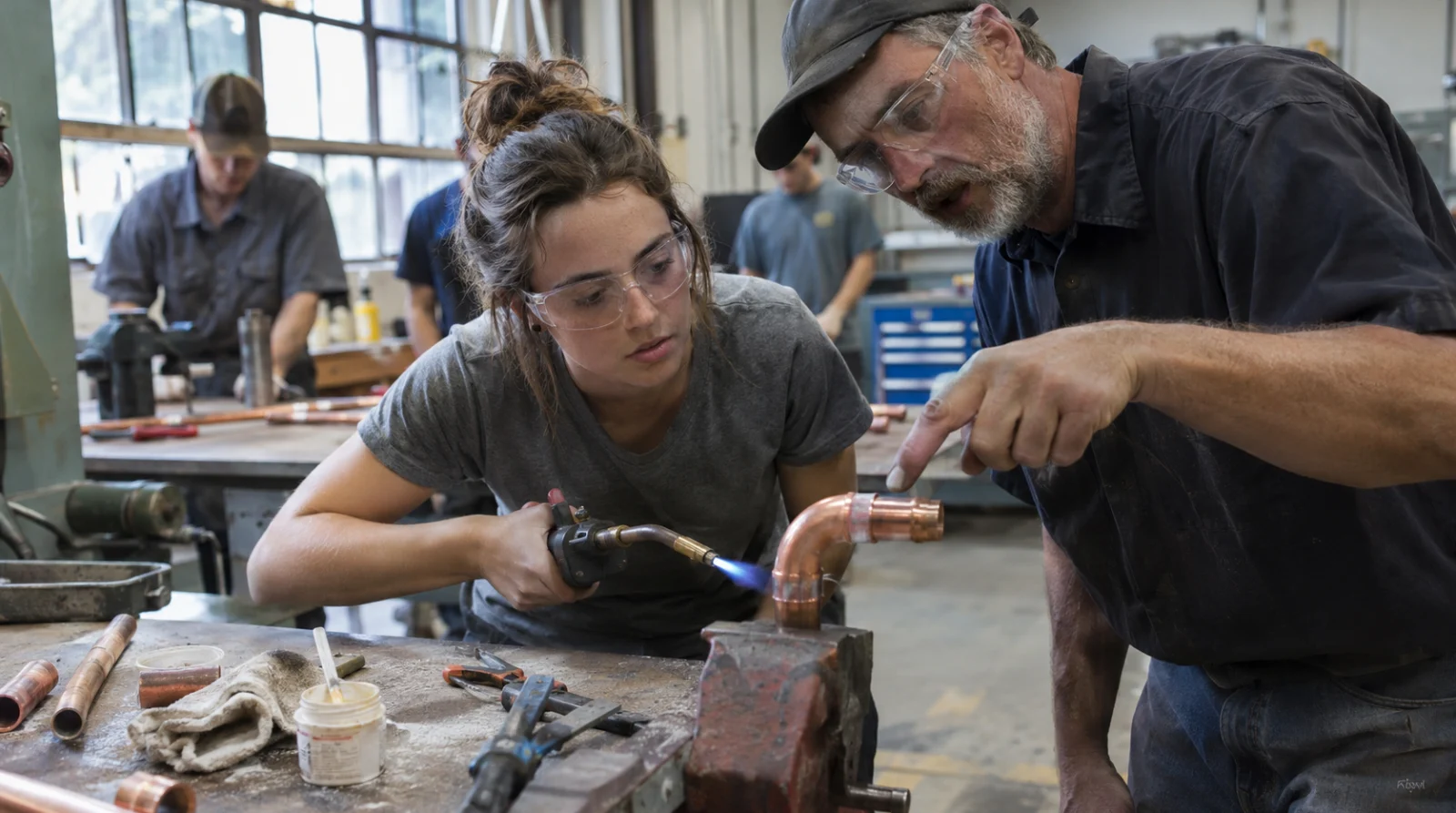
Skills learned in college, from problem solving to communication, transfer well to a modern plumbing career.
Why Plumbing Specifically
It cannot be offshored or automated away. Every building on Earth needs water in and waste out, and the work happens on site, in crawl spaces, mechanical rooms and job sites that robots and algorithms cannot reach. Diagnostic tools are getting smarter, but the hands, judgment and license remain human.
It pays while you learn. Registered apprenticeships pay wages from day one, with raises as skills grow. Many graduates who switch find they can begin paying down student loans almost immediately rather than adding more debt.
The ceiling is high. Journeyman and master plumbers, specialists in areas like medical gas, fire protection, backflow or commercial service, and especially business owners can earn excellent incomes. Many of the most successful plumbing company owners we list started with a toolbox and a truck.
It is meaningful. Plumbing protects public health. As we argued in why plumbers have saved more lives than doctors, clean water and safe sanitation are the foundation of modern life expectancy. Graduates who studied public health, environmental science or engineering often find plumbing puts their values into daily practice.
It is global. Plumbing skills are in demand in the United States, Canada, the United Kingdom, Ireland, Australia, New Zealand, South Africa and beyond, and many countries actively recruit licensed tradespeople.
What a Degree Brings to the Trade
Graduates with certain majors bring especially useful skills. Engineering and physics graduates understand fluid dynamics, pressure and heat transfer. Chemistry and environmental science graduates understand water quality, corrosion and treatment. Business graduates understand pricing, marketing and finance, the very skills that help a talented plumber build a company. Communications and psychology graduates excel at the customer conversations that build trust and loyalty. Even history and English majors bring research habits and clear writing that make code compliance and documentation easier.
Graduates also tend to move quickly into leadership roles such as service manager, trainer, estimator, project manager or plumbing designer, and some pursue certifications in plumbing design or inspection that blend field knowledge with technical analysis.
How to Make the Leap
1. Explore and shadow. Reach out to local plumbing companies through our locations directory and ask whether you can ride along for a day. Read company reviews to find well run, respected employers.
2. Learn the licensing path. Most US states and many other countries require a set number of supervised hours plus classroom instruction before you can test for a journeyman license. Requirements vary, so check your state or province. Our article on why licensing matters explains why these standards protect the public.
3. Choose your route. Union apprenticeships through local United Association affiliates, merit shop programs through groups like the Plumbing Heating Cooling Contractors Association and Associated Builders and Contractors, community college programs and company sponsored training academies all lead to licensure. Our plumbing associations page lists organizations that can help.
4. Ask about credit for your degree. Some programs and licensing boards accept relevant coursework toward classroom requirements, and a degree may speed advancement into supervisory roles.
5. Search openings. Browse our plumbing jobs board for apprentice and helper positions.
6. Get the basics. A valid driver’s license, a clean driving record, reliable transportation, good physical fitness and a willingness to work in heat, cold and tight spaces matter as much as a diploma.
What the First Year Feels Like
Graduates who make the switch often describe the first months as humbling and exhilarating. You will carry materials, dig trenches, cut and fit pipe, clean up job sites and ask a thousand questions. You will be physically tired in a way an office never made you. You will also go home every day knowing exactly what you accomplished: a family has hot water again, a restaurant reopened after a drain backup, a new home passed rough in inspection. Most graduates say the respect of experienced journeymen is earned quickly by showing up on time, listening carefully and working hard. Mentorship is the heart of the trade, and the best plumbers love to teach.
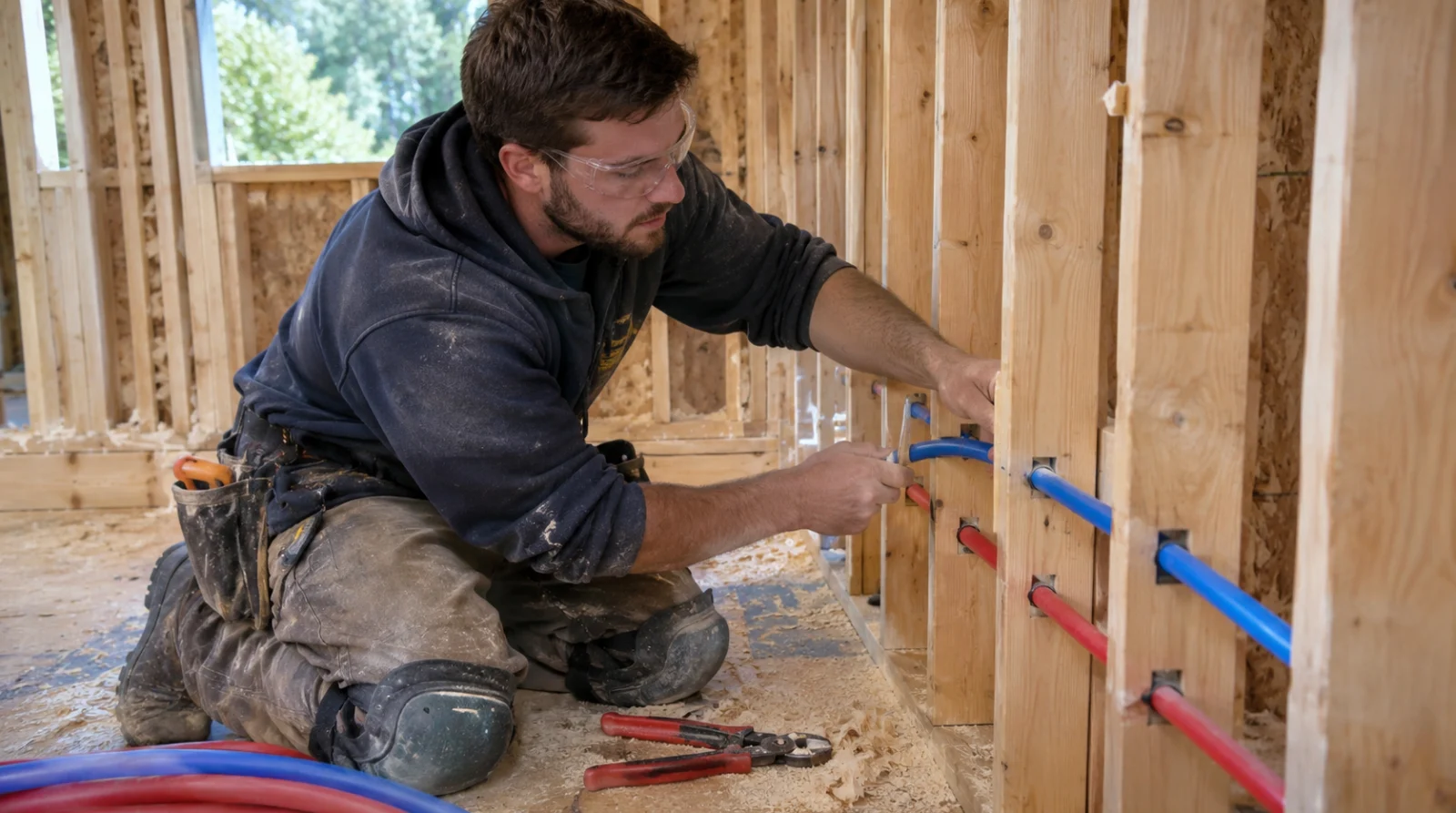
Apprentices earn wages from day one while learning on real job sites.
Common Worries, Honestly Answered
Will I be the oldest apprentice? Probably not. Apprentice classes increasingly include people in their mid twenties and thirties, career changers and veterans. Maturity is an asset.
Will people think I wasted my degree? Some may, at first. But a degree is never wasted. It shaped how you think, and many graduates find their studies make them better plumbers and, eventually, better business owners.
What about my student loans? Because apprentices are paid, many graduates can keep up with loan payments from the start, and income growth after licensing can be rapid. Ask about income driven repayment options if early wages are tight.
Is it safe? Plumbing has real hazards, including sharp tools, hot work, confined spaces, sewage and chemicals, but reputable companies train hard on safety and provide protective equipment. Ask about a company’s safety record before you sign on.
Advice for Employers
Plumbing companies that want to tap this talent pool should advertise on college career boards and alumni networks, not just high schools. Speak to graduates’ priorities: stable pay, clear advancement, ownership paths, training and purpose. Consider structured onboarding that moves fast learners ahead quickly. Highlight non field career paths like dispatch, estimating, design and management, which can attract graduates who later move into the field. And show your culture through video; our plumbing videos and plumbing influencers pages show how many companies are already doing that well.
Employers should also be realistic. A degree does not replace field experience, and graduates need the same patient mentoring as any apprentice. But many companies that have hired graduates report strong retention and fast promotion.
The Bigger Workforce Picture
College graduates are only one part of the solution. High school career and technical education, pre apprenticeship programs, outreach to women, veterans and career changers of every age, and partnerships with community colleges all matter. The trade is also showcasing its talent on the world stage: young plumbers compete at events like WorldSkills, and national apprentice contests celebrate rising stars. You can meet the industry in person at the events on our plumbing trade shows page. For more on the pipeline challenge, see our coverage of the apprentice shortage.
A Fair Debate
Some education advocates worry that the trades boom could discourage capable students from pursuing degrees that still offer higher average lifetime earnings and access to professions like medicine, law and engineering. Others argue that the decades long push toward college for all left many young people with debt and degrees that did not lead to stable work, and that the trades deserve equal respect. Both perspectives have merit. The healthiest message is that there are many good paths, and that a degree and a trade are not enemies. Many plumbers earn degrees later, and many degree holders find fulfilling careers in plumbing.
A Salute to the Mentors
Every new plumber, whatever their background, learns from a journeyman or master willing to share decades of knowledge. Those mentors are the unsung heroes of the workforce story. They teach not only how to sweat a joint or set a toilet, but how to treat customers with honesty and respect. If you are a veteran plumber training the next generation, thank you.
Our Take
The convergence of a tough entry level market for graduates and a huge, durable demand for plumbers is an opportunity for both. Graduates gain a stable, well paid, meaningful career that cannot be outsourced. The trade gains educated, adaptable people who will become the leaders and business owners of the next generation. We encourage every graduate who feels stuck to take a serious look at plumbing, and every plumbing employer to put out the welcome mat.
How Best Plumbers Helps
Best Plumbers has been the Internet’s original plumbing directory since July 12, 2002, and the most trusted. We list every plumbing company and show every review, good and bad, and our Best Plumbers Recommended seal marks those we trust most. Learn how we rank companies, which can also help job seekers spot the best places to work. We never sell leads.
The Short Version
About 1.7 million skilled trades jobs will open every year through 2035, trades pay about 32 percent more than other non degree jobs and young college graduates face higher unemployment than the workforce overall. Industry voices are urging plumbing employers to recruit graduates, whose learning, communication and business skills fit modern plumbing well. To switch, shadow a company, learn your licensing path, choose an apprenticeship and search plumbing job boards.
Frequently Asked Questions About College Graduates Becoming Plumbers
1. How many skilled trades jobs will open each year?
About 1.7 million a year through 2035, according to Jobs for the Future and the Burning Glass Institute.
2. Do trades pay more than other non degree jobs?
About 32 percent more, according to reporting in Fortune.
3. Are young college graduates struggling to find work?
Their unemployment rate now runs above the rate for all workers.
4. Is college still worth it?
For many careers, yes. The trades are another strong path, not a replacement.
5. Why would a graduate choose plumbing?
Stable demand, pay while learning, high earning potential and meaningful work.
6. Can plumbing be automated?
Diagnostics are improving, but hands on work stays human.
7. Do apprentices get paid?
Yes, from the first day, with raises as skills grow.
8. How long does it take to become licensed?
Typically several years of supervised work plus classroom hours, varying by location.
9. Can my degree count toward requirements?
Some programs accept relevant coursework; ask your board.
10. Which majors fit plumbing well?
Engineering, environmental science, business and communications all transfer well.
11. Is plumbing physically demanding?
Yes, it requires lifting, crawling and work in all weather.
12. Are women welcome in plumbing?
Absolutely, and their numbers are growing.
13. Can I start my own company?
Yes, many plumbers become business owners after licensing.
14. What non field roles exist?
Dispatch, estimating, design, training and management.
15. Union or non union?
Both lead to licensure; compare local programs.
16. Where can I find apprenticeships?
Through unions, trade associations, community colleges and employers.
17. Can I shadow a plumber first?
Many companies will let you ride along.
18. Is plumbing work global?
Yes, licensed plumbers are in demand in many countries.
19. Why is AI affecting graduate jobs?
It is automating some routine entry level office tasks.
20. What should employers do to attract graduates?
Recruit on campuses, show career paths and invest in mentoring.
21. Do graduates advance faster?
Many move into leadership roles quickly, but field experience still matters.
22. What do I need to start?
A driver’s license, reliability, fitness and willingness to learn.
23. Is there a plumber shortage?
Yes, industry studies project a large shortfall.
24. How do I find a good company to work for?
Search Best Plumbers, read every review and look for the Best Plumbers Recommended seal.
25. Why does Best Plumbers cover careers?
Since 2002, we have championed the people who keep water flowing.
Sources
PHC News, college graduates could be the trades’ next talent pipeline. Fortune, 1.7 million trade jobs open annually and skilled trades opportunities. NRCA, trades and graduate unemployment. Entrepreneur, AI and the college to career pipeline.

