
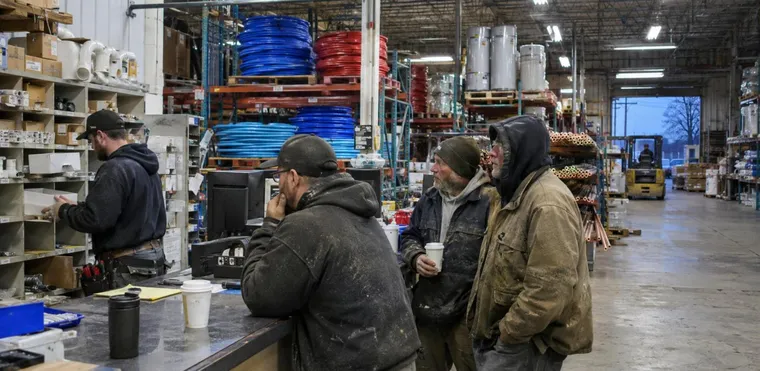
When the biggest plumbing distributor in North America reports its numbers, plumbers pay attention, and homeowners should too. Ferguson, the Newport News, Virginia company that supplies a huge share of the pipe, fittings, water heaters and fixtures installed across the United States and Canada, reported net sales of about $9.03 billion for the quarter ended September 30, 2026. That is up 9.5 percent from a year earlier. The company also raised its full-year outlook to roughly 7 percent sales growth. Those numbers tell a story about where plumbing work is happening, what is driving prices and what you can expect the next time you call a pro.
At Best Plumbers, we have watched supply houses rise and fall for more than twenty years. Distributors are the quiet middle of the plumbing world. They do not install anything, and most homeowners never walk through their doors. But every water heater, every coil of PEX and every box of copper fittings passes through them on the way to your house. When a company the size of Ferguson talks, it is giving the whole industry a weather report.
The Numbers, Translated for Real People
Here is what Ferguson reported in its quarterly release, in plain language:
- Sales of about $9.03 billion, up 9.5 percent. About 7 percent of that growth was organic, meaning it came from existing operations rather than new acquisitions.
- U.S. sales of about $8.6 billion, up 10.2 percent. The United States makes up the overwhelming majority of the business.
- Canadian sales of $405 million, down 4.5 percent, mostly because Ferguson sold off some non-core operations and the exchange rate worked against it.
- Residential business up 6 percent, even though new home construction and repair and remodel activity were described as soft.
- Non-residential business up 15 percent, driven by large capital projects and market share gains.
- Adjusted earnings of $3.43 per share, up 7.9 percent.
- Price inflation in the low to mid single digits.
Ferguson employs about 36,000 people at more than 1,800 locations and recorded sales of $31.3 billion in calendar 2025. When a company that big grows almost 10 percent in a quarter, it means a lot of plumbing is getting built, fixed and replaced.
Big Projects Are Carrying the Load
The standout figure is that 15 percent jump in non-residential sales. That is the world of hospitals, factories, data centers, water treatment plants and municipal pipe replacement. CEO Kevin Murphy pointed to water infrastructure, large capital projects, climate and comfort systems, and the country's aging and underbuilt housing stock as the trends he expects to keep driving growth.
Water infrastructure deserves special attention. Ferguson's waterworks group, which sells the big pipe, valves, hydrants and meters that cities use, makes up roughly a quarter of its U.S. business. That segment is benefiting from a once-in-a-generation push to replace lead service lines, fix leaking water mains and upgrade treatment systems. We have written extensively about the age of America's drinking water pipes and about how lead service line replacement is accelerating. Ferguson's numbers confirm that the money is flowing and the work is real.
The FloWorks deal
Part of the growth came from acquisitions. Ferguson closed its purchase of FloWorks on August 31, adding valve and flow control expertise with more than 60 locations and 25 service centers across the United States and Canada. The company said it has completed 11 acquisitions so far this year, representing about $1.5 billion in annualized sales. Others included Brax Company, a pump specialist in Southern California, and Rogers Supply Company, an HVAC distributor in Illinois and Indiana. Canyon Systems, a water and wastewater process supplier in six Western states, closed after the quarter ended.
Raising its guidance partly because of acquisitions means some of Ferguson's growth reflects consolidation rather than pure demand. Still, organic growth of 7 percent in a market described as mixed is impressive.
The Residential Picture: Soft, But Not Weak
For homeowners, the residential half of the business is the more relevant number. Ferguson said residential sales grew 6 percent despite weak new construction and softness in repair, maintenance and improvement. How can a soft market still grow? There are a few likely explanations.
First, prices are higher. When the cost of a water heater or a box of fittings goes up, sales dollars rise even if the number of units does not. Second, a lot of plumbing work simply cannot wait. A failed water heater, a burst pipe or a backed-up sewer is not a discretionary purchase. Homeowners may postpone a bathroom remodel, but they do not postpone hot water.
Third, the housing stock is old. The typical American home is now more than four decades old, and many of those homes still have original galvanized pipe, aging water heaters and tired drain lines. That is a steady source of replacement work no matter what the economy is doing. If your home is in that category, our guide to the top reasons to repipe your home will help you understand when it makes sense to stop patching and start replacing.
What This Means for the Price of Your Next Repair
Here is the part most people care about. Ferguson described price inflation as running in the low to mid single digits. That means many of the materials your plumber buys cost a few percent more than they did a year ago. Some categories have risen faster. Copper prices have been volatile, steel costs have climbed and freight is not cheap. Water heater manufacturers in particular have announced price increases heading into the winter.
When material prices rise, a plumbing invoice changes in two ways. The parts line goes up directly. And many companies adjust their flat-rate price books once or twice a year to reflect what they pay for materials, fuel, insurance and labor. We broke down where the money goes in our article on the $550, 30-minute repair and what you really pay for. It is worth a read if a bill ever surprised you.
For bigger projects, we covered the material cost picture in depth in copper hits records and plumbing prices climb. The short version: if you are planning a water heater replacement or a repipe, get quotes now, ask how long the price is good for and do not wait until an emergency forces your hand.
Our honest advice on timing
- If your water heater is more than ten years old, start shopping before it fails. A planned replacement almost always costs less than an emergency one. Our water heater buying guide walks through the options.
- If you get a quote you like, ask whether the price is locked for 30 or 60 days. Many reputable companies will hold a quote for a reasonable period.
- Do not stockpile parts yourself. Plumbers generally will not warranty homeowner-supplied materials, and the savings are rarely worth the risk.
- Use routine maintenance to stretch your systems. Flushing a water heater, testing a pressure relief valve and checking for slow leaks cost little and prevent expensive surprises. Our plumbing maintenance checklist covers the basics.
A simple way to think about it
Imagine a straightforward job: replacing a standard tank water heater. The invoice usually has three big pieces. There is the water heater itself, which the plumber buys from a distributor. There are the installation materials, things like flex connectors, a new expansion tank if code requires one, venting parts, valves and fittings. And there is labor, which covers the plumber's time, the truck, insurance, licensing, training, warranty coverage and overhead.
When distributors pass along a mid single digit price increase, the equipment and materials portion moves first. Labor tends to move more slowly but more steadily, because skilled plumbers are scarce and wages are climbing. Permit fees, which vary by city, can also change from year to year. So when you compare a quote today with what a neighbor paid three years ago, expect a meaningful difference. That does not automatically mean anyone is overcharging. It means the cost of every ingredient has gone up.
Where homeowners can genuinely save is in the decisions around the job. Choosing the right size and type of water heater for your household, maintaining it so it lasts its full life and replacing it on your schedule rather than in a crisis can be worth far more than shaving a few dollars off the installation. Our guide to water heater replacement service explains what a proper installation should include, so you can compare quotes on an apples-to-apples basis.
The same logic applies to repiping, sewer work and fixture upgrades. The cheapest quote is not always the best value, and the most expensive quote is not always the best work. Ask what is included, ask what is warrantied and ask how long the company has been in business. Those three questions sort out most of the confusion.
Why Distributors Matter More Than You Think
Some people wonder why plumbers do not just buy everything at a big-box store. The answer is that professional supply houses do things retail stores cannot. They stock commercial-grade parts, carry the specific brands and models that match existing systems, deliver to job sites, extend credit to contractors and employ counter staff who know the difference between a dielectric union and a ball valve without looking it up.
That supply chain was tested hard during the pandemic, when shortages of water heaters, PVC and fittings stretched out repair times. Distributors responded by building bigger warehouses and smarter logistics. We covered one example in our story about SupplyHouse choosing Locust Grove, Georgia, for a new fulfillment center. Ferguson's investments, including roughly $425 million in planned capital spending this year, are part of the same push to get parts to plumbers faster.
For homeowners, a healthy supply chain is invisible when it works. Your plumber shows up with the right part, finishes the job in one visit and you move on with your day. When it breaks, you wait. A strong quarter from Ferguson is a sign the system is working.
A Note for Our Canadian Readers
Best Plumbers serves homeowners across Canada as well as the United States, so the Canadian figures deserve a mention. Ferguson's Canadian sales dipped 4.5 percent, but organic growth was slightly positive at 0.6 percent once divestments and the exchange rate were set aside, and adjusted operating profit in Canada rose slightly to $23 million. The Canadian market has been squeezed by slower housing starts and higher borrowing costs, but plumbing repair demand remains steady. If you are in Toronto, Vancouver, Calgary or anywhere in between, the same advice applies: plan ahead, get written quotes and work with licensed professionals.
What This Means for Plumbing Contractors
If you run a plumbing company, Ferguson's report contains both encouragement and a warning.
The encouragement is obvious. Demand is solid, especially on the commercial and infrastructure side. Water and wastewater work, data centers, hospitals and manufacturing projects are hungry for skilled crews. Residential repair and replacement work remains steady even when new construction slows.
The warning is about margins. When material prices rise a few percent a year and labor costs rise even faster, companies that do not update their pricing find themselves working harder for less. The best contractors review their price books regularly, communicate openly with customers about why prices change and invest in efficiency so they can stay competitive.
Visibility matters too. When homeowners delay discretionary projects, the companies that get the calls are the ones customers already trust and can easily find. That is where Best Plumbers comes in. For more than two decades we have helped homeowners find quality plumbing companies, and we highlight the best of them through our ranking system. You can read about how we rank plumbers, and if your company is not listed yet, you can join Best Plumbers here.
The Serious Part: Watch Out for Price Gouging Stories
Whenever material prices rise, some bad actors use the headlines as cover. A homeowner hears that "everything is more expensive now" and accepts a quote that is two or three times what the job should cost. Rising costs are real, but they are measured in single-digit percentages, not multiples.
Protect yourself with a few simple habits:
- Get more than one quote for any job over a few hundred dollars that is not an emergency.
- Ask for an itemized estimate that separates labor, materials and permit fees.
- Check the company's license and reviews before you agree to anything.
- Be skeptical of pressure. "This price is only good today" is a sales tactic, not a law of economics.
- Compare against a cost guide. Our plumbing cost guide gives you a ballpark for common jobs so you can spot a quote that is far out of line.
Honest plumbers welcome informed customers. If a company gets defensive when you ask reasonable questions, that tells you something.
Our Take: Good News for the Trade, Smart Planning for Homeowners
We read Ferguson's quarter as good news. A distributor does not grow almost 10 percent unless plumbers are busy, and busy plumbers mean a healthy trade with more jobs, more apprenticeships and more investment in tools and training. The non-residential surge shows how central plumbing has become to the modern economy, from clean water to cloud computing.
For homeowners, the lesson is to be proactive. Materials are costing a bit more, skilled labor is in demand and the best companies book up fast. Plan your maintenance, replace aging equipment on your schedule instead of the equipment's schedule, and build a relationship with a trusted local plumbing company before you need one. When the time comes, use Best Plumbers to find plumbers near you who have earned their reputation.
Ferguson expects to report its next results on February 16, 2027. We will be watching, and we will tell you what it means for your home.
Frequently Asked Questions About Ferguson's Results and Plumbing Prices
1. What is Ferguson?
Ferguson Enterprises is the largest distributor of plumbing and heating products in North America, supplying contractors with pipe, fittings, water heaters, fixtures, waterworks and HVAC equipment.
2. How much did Ferguson sell in its latest quarter?
About $9.03 billion in net sales for the quarter ended September 30, 2026, up 9.5 percent from a year earlier.
3. How much of that growth was organic?
About 7 percent, with roughly 2.7 percent coming from acquisitions.
4. Did Ferguson raise its outlook?
Yes. It raised its 2026 sales growth guidance to about 7 percent, helped by year-to-date results and the FloWorks acquisition.
5. How did Ferguson's residential business perform?
Residential sales, about half of the company's total, grew 6 percent despite weak new construction and soft remodeling activity.
6. How did non-residential sales perform?
Non-residential sales grew 15 percent, driven by large capital projects and market share gains.
7. What is FloWorks?
FloWorks is a valve and flow control business with more than 60 locations and 25 service centers that Ferguson acquired on August 31, 2026.
8. How many acquisitions has Ferguson made in 2026?
Ferguson said it completed 11 acquisitions year to date, representing about $1.5 billion in annualized sales.
9. What did Ferguson say about prices?
The company described price inflation as running in the low to mid single digits.
10. Will plumbing repairs cost more in 2027?
Material costs have been rising a few percent per year, so many companies adjust prices modestly. Getting written quotes early helps you lock in pricing.
11. Why do plumbers buy from supply houses instead of retail stores?
Supply houses stock professional-grade parts, match existing systems, deliver to job sites, extend contractor credit and provide expert counter help.
12. How many people work for Ferguson?
About 36,000 associates at more than 1,800 locations.
13. What is waterworks?
Waterworks refers to the large pipe, valves, hydrants and meters used in municipal water and sewer systems.
14. Why is water infrastructure spending rising?
Cities are replacing lead service lines, fixing aging water mains and upgrading treatment plants, supported by federal and state funding.
15. How did Ferguson do in Canada?
Canadian sales fell 4.5 percent to $405 million, mainly due to divestments and exchange rates, while organic growth was slightly positive.
16. When will Ferguson report again?
Ferguson expects to report results for the period ending December 31, 2026, on February 16, 2027.
17. Should I replace my water heater now or wait?
If it is more than ten years old, planning a replacement before it fails usually costs less than an emergency replacement.
18. Can I buy parts myself to save money?
You can, but many plumbers will not warranty homeowner-supplied parts, and the savings are often small compared to the risk.
19. How can I tell if a plumbing quote is too high?
Get multiple quotes, ask for an itemized estimate and compare against the Best Plumbers plumbing cost guide.
20. Is the plumbing industry growing?
Yes. Strong demand from infrastructure, commercial projects and an aging housing stock is keeping the trade busy.
21. What does a strong distributor quarter mean for plumbing jobs?
It signals that contractors are busy, which supports hiring, apprenticeships and investment in training.
22. Why are older homes a source of steady plumbing work?
Many older homes still have original galvanized pipe, aging drains and water heaters that need replacement regardless of the economy.
23. What is a flat-rate price book?
It is a menu of fixed prices for common jobs that many plumbing companies use and update periodically to reflect costs.
24. How can plumbing companies protect their margins?
By reviewing pricing regularly, communicating clearly with customers and improving efficiency.
25. How do I find a trustworthy plumber?
Use Best Plumbers to find top-rated local plumbing companies and check licenses, insurance and reviews before hiring.

