
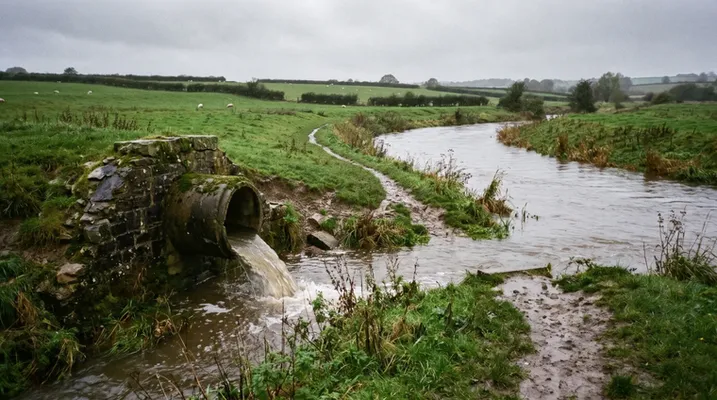
2026 has been a year of reckoning for sewage in Britain. Ofwat fined Thames Water a record 122.7 million pounds over sewage treatment failures and dividend payments. The Environment Agency secured a string of court fines, including 7.1 million pounds and 2.4 million pounds against Southern Water, nearly 8 million pounds against South West Water and a record magistrates’ fine against United Utilities for a coastal spill. Welsh Water and Northumbrian Water agreed enforcement packages worth tens of millions directed at reducing spills. The regulator has nearly quintupled its water enforcement staff. Here is what is driving the crackdown, what it means for customers and why the drains in your own home are part of the story.
By the Best Plumbers Editorial Team. Published November 22, 2026.
We have been writing about Britain’s sewage problem for a while now, including the troubles at Thames Water and the government’s plan to replace Ofwat with a new regulator. The story keeps moving, and 2026 brought the toughest enforcement yet. For our readers across the UK, and for anyone anywhere who cares about clean water, it is worth understanding what has happened and why.
The Year in Fines
The headline penalty came from the economic regulator. Ofwat fined Thames Water a record 122.7 million pounds after finding that it had broken rules on sewage treatment and on paying dividends, at a time when the company was already under extreme financial stress. Around the same time, Northumbrian Water agreed to a 15.7 million pound enforcement package after Ofwat found failures that led to excessive spills from storm overflows, and Welsh Water agreed a 44.7 million pound package, most of it directed toward reducing spills at specific overflows and sealing private sections of sewer to stop groundwater getting in. Ofwat said cumulative fines and enforcement packages from its wastewater investigation had passed 300 million pounds.
The Environment Agency, which prosecutes pollution offences, had a busy year in the courts. Southern Water was fined 7.1 million pounds in the summer for sewage pollution incidents in Kent between 2019 and 2021, followed by a further 2.4 million pound fine in September, and a separate civil penalty of 525,000 pounds after a burst sewer pipe forced sewage through a pavement and into the sea at Herne Bay. South West Water was fined almost 8 million pounds for sewage spills at Devon and Cornwall beauty spots, and separately close to 2 million pounds for supplying water unfit for human consumption after a parasite outbreak. United Utilities was fined a record 900,000 pounds in a magistrates’ court for a coastal spill in Lancashire. Since 2015, the agency says it has concluded more than 70 prosecutions against water and sewerage companies with total fines exceeding 150 million pounds.
Under UK rules, companies are not supposed to pass court fines on to customers through bills; they come out of profits and shareholder returns. Several companies apologized and pointed to large investment programmes now under way.
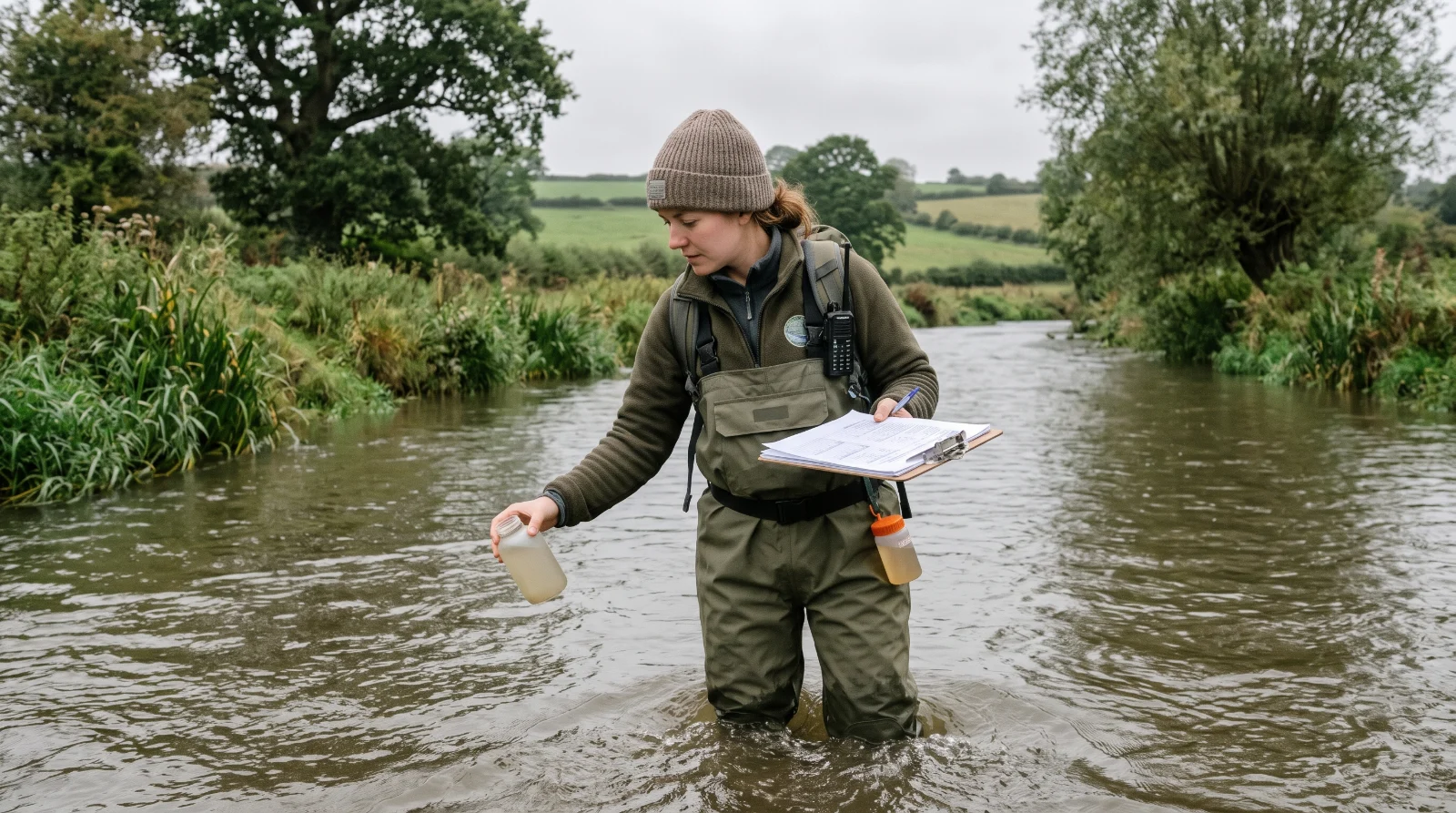
The Environment Agency has expanded its water enforcement team almost fivefold, with officers sampling rivers and inspecting sewage works.
More Inspectors, More Scrutiny
The Environment Agency has expanded its water enforcement workforce from 41 roles in 2023 to 195 by March 2026, with further increases planned, backed by a record 153 million pound budget for water enforcement and compliance. It reported completing thousands of water company inspections. New laws passed in recent years also give regulators stronger powers, including tougher penalties and the ability to block bonuses for executives of polluting companies. Whatever your view of the industry, there is no question that the regulatory climate has changed sharply.
Why Sewers Overflow
To understand the problem, you need to understand the pipes. Much of Britain’s sewer network, especially in older cities, is combined: rainwater from roofs and roads flows in the same pipes as wastewater from homes. During heavy rain, the volume can overwhelm the pipes and treatment works. Storm overflows act as relief valves, releasing diluted sewage into rivers and the sea to prevent it backing up into streets and homes. They were designed for exceptional storms, but monitoring has revealed they spill far more often than that, sometimes in dry weather, which is illegal.
Several factors make it worse. Population growth and new development add flow. Paved surfaces send more rainwater into sewers faster. Climate change is bringing heavier downpours. Groundwater seeps into old, cracked pipes, which is why the Welsh Water package specifically targets infiltration on private sewer sections. And blockages caused by fats, oils, grease and wet wipes reduce capacity and cause spills and flooding.
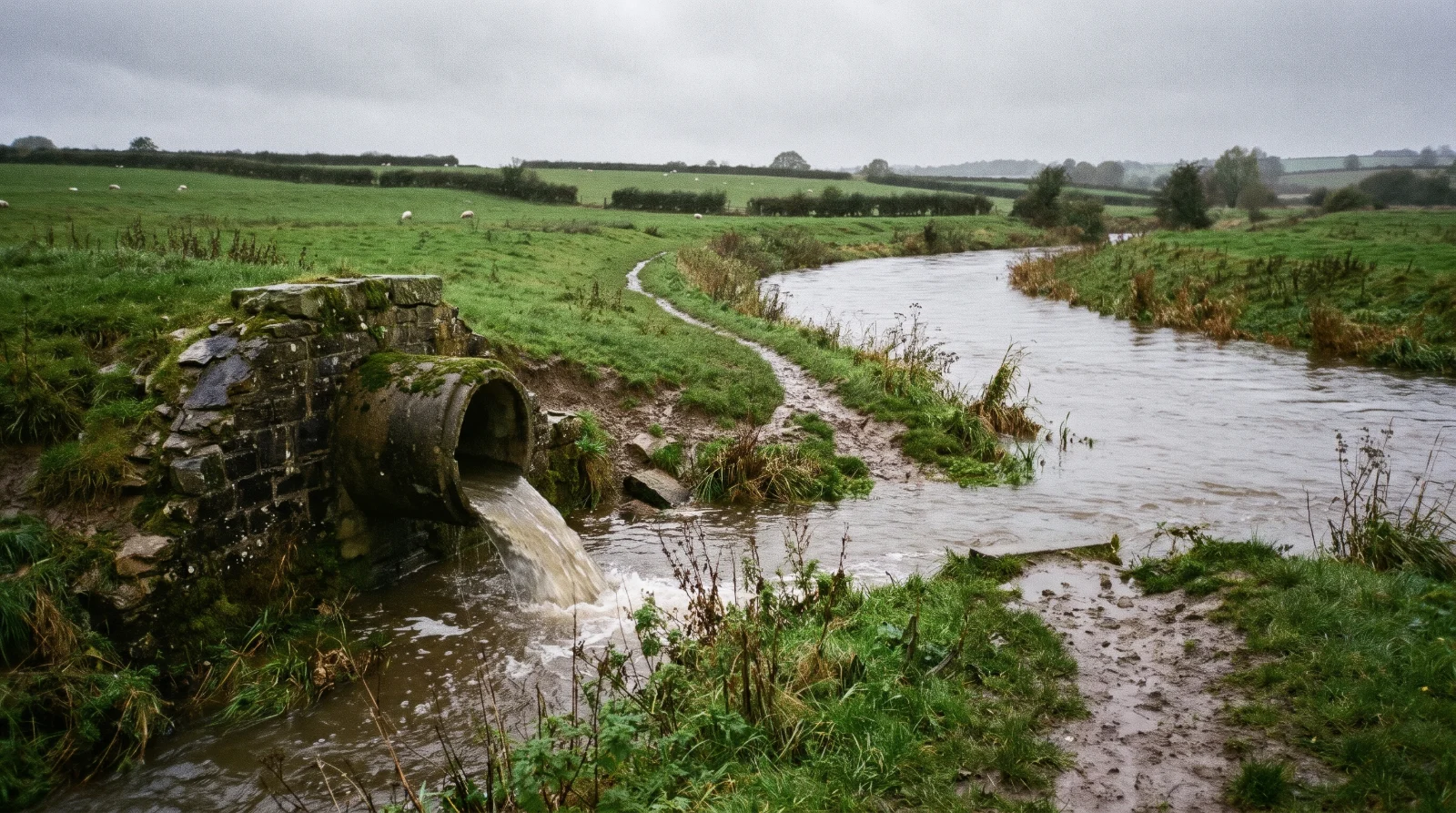
Storm overflows were designed for exceptional storms but have spilled far more often, prompting record enforcement.
The Debate Over Who Is to Blame
There is fierce debate about responsibility. Critics, including many campaigners and politicians across parties, argue that privatised companies paid out large dividends and took on heavy debt while underinvesting in sewers and treatment, and that regulators were too lenient for too long. Companies and some industry analysts respond that the network is old and vast, that regulators limited bill increases for years, that the scale of investment needed is enormous and that heavy fines can make it harder to attract the capital needed to fix the problems. Many observers believe both regulation and company decisions contributed. The government’s planned overhaul of water regulation reflects a broad consensus that the old system was not working.
How Monitoring Changed Everything
For decades, nobody really knew how often storm overflows spilled. That changed when event duration monitors were fitted to almost every overflow in England, logging when and for how long each one discharged. The data, now published and increasingly available in near real time, revealed hundreds of thousands of spills a year and turned a technical issue into a national scandal. Campaigners, swimmers, anglers and rowers used the data to press for action, and regulators used it to target investigations. The lesson applies to plumbing at every scale: you cannot fix what you cannot measure. Just as a smart water meter reveals a hidden leak in a home, overflow monitors exposed hidden failures in a national network.
What Drainage Engineers See on the Ground
Talk to drainage engineers who work for homeowners and businesses, and they will tell you the national story is mirrored in back gardens. They find cracked clay pipes letting in tree roots and groundwater. They find kitchen extensions where the sink was connected to the rainwater drain. They find inspection chambers packed with wipes and fat. They find old pitch fibre pipes collapsing and shared drains nobody thinks they own. Each problem is small, but multiplied across millions of properties they add up to a meaningful share of the load on public sewers. That is why the Welsh Water package specifically includes sealing private sections of sewer. It is also why a drainage survey when buying a house is money well spent, and why fixing your own drains is not just a household chore but a contribution to cleaner rivers.
What It Means for Customers
For customers, the near term reality is rising bills, as companies fund multi billion pound investment programmes for the 2025 to 2030 period, including major spending on storm overflow upgrades and treatment works. Fines themselves are meant to come out of profits rather than bills, and enforcement packages are directed at additional environmental improvements. Over time, the hope is cleaner rivers and beaches, with fewer bathing water closures. Some companies report early improvements, such as reduced leakage and fewer internal sewer flooding incidents.
Your Drains Are Part of the System
Here is the part that is easy to forget. Every home connects to the sewer, and what goes down your drains affects how well that sewer works. Water companies estimate that a large share of sewer blockages are caused by things that should never be flushed or poured away.
Wet wipes. Even wipes labelled flushable can combine with grease to form fatbergs. The UK is banning plastic wet wipes, which we covered in the UK is banning plastic wet wipes, but the safest rule remains: only the three Ps, pee, poo and paper, go down the toilet.
Fats, oils and grease. Pour cooled fat into a container and bin it. Wipe greasy pans before washing. See our guide to holiday grease.
Misconnections. In areas with separate foul and surface water sewers, a washing machine, dishwasher or toilet wrongly connected to the surface water drain sends sewage straight to a stream. Misconnections are surprisingly common after extensions and DIY work. We covered a Scottish example in Portobello sewage misconnections.
Roof water. Where allowed, disconnecting downpipes into soakaways, rain gardens or water butts reduces the load on combined sewers during storms.
Cracked private drains. Damaged drains on your property let groundwater in and sewage out. A drain camera survey can reveal cracks, root intrusion and displaced joints, and repairs range from patch lining to sewer line replacement.
Protecting Your Home From Sewer Flooding
When sewers are overwhelmed, the risk is not only to rivers. Sewage can back up into homes, especially basements and low lying properties. Non return valves, sometimes called backwater valves, can stop sewage flowing back into a property. We explained how they work in Toronto’s basement flooding subsidy. Keep gullies and drains clear, and if you experience a blockage, call for professional drain cleaning rather than using harsh chemicals. If surface water floods your property regularly, improved storm drainage may help.
A Global Problem
Britain is not alone. In California, the San Francisco Bay regional water board approved a 5.6 million dollar penalty for a sewage spill into Suisun Bay, the largest it has ever approved, following a record 11.4 million dollar penalty against San Diego in 2025 for a massive collection system overflow. In Australia, the New South Wales environmental regulator penalized Sydney Water 240,000 Australian dollars over a sewage spill it said resulted from infrastructure that had not been properly maintained. Combined sewer overflows remain a challenge in many older American and Canadian cities too. The common thread is aging infrastructure, heavier rain and the need for sustained investment.
Our Take
We are optimistic despite the grim headlines. Monitoring now shows the true scale of the problem, which is the first step to solving it. Investment is flowing, enforcement is tougher, and public awareness has never been higher. The plumbers, drainage engineers and wastewater operators who will rebuild these networks have years of essential work ahead. And every household can help by keeping wipes and grease out of the drains, fixing misconnections and maintaining private drains. Clean rivers are a shared project.
A Thank You to Wastewater Workers
Amid the anger over spills, it is worth remembering the people who actually run the system. Sewer crews clear blockages in confined spaces, treatment works operators keep plants running through storms at three in the morning, and drainage engineers crawl into tight spaces to find faults. They did not set dividend policies or regulatory price limits. Many of them are as frustrated as the public. They deserve our respect and the investment that will let them do their jobs well.
How Best Plumbers Helps
Best Plumbers has been the Internet's original plumbing directory since July 12, 2002, serving readers across the UK and around the world. We list every plumbing and drainage company and show every review, good and bad, and our Best Plumbers Recommended seal marks those we trust most. We never sell leads. Find a drainage specialist through our locations directory and read the reviews.
The Short Version
British regulators imposed record sewage penalties in 2026, including a 122.7 million pound Ofwat fine on Thames Water, multimillion pound court fines against Southern Water and South West Water and large enforcement packages for Welsh Water and Northumbrian Water. The Environment Agency has expanded enforcement dramatically. Storm overflows spill because of combined sewers, heavy rain, infiltration and blockages. Homeowners can help by keeping wipes and grease out of drains, fixing misconnections, maintaining private drains and installing non return valves where flooding is a risk.
Frequently Asked Questions About Sewage Fines and Storm Overflows
1. What was the biggest sewage penalty in 2026?
Ofwat fined Thames Water a record 122.7 million pounds over sewage treatment and dividend rule breaches.
2. How much was Southern Water fined?
7.1 million pounds in the summer and 2.4 million pounds in September, plus a 525,000 pound civil penalty.
3. Was South West Water fined?
Yes, almost 8 million pounds for sewage spills and close to 2 million pounds for unfit water.
4. What did Welsh Water agree?
A 44.7 million pound enforcement package focused on reducing overflow spills and infiltration.
5. Do fines raise my water bill?
Fines are meant to come from profits, not bills, though investment programmes are raising bills.
6. What is a storm overflow?
A relief point that releases diluted sewage from combined sewers during heavy rain.
7. Why do overflows spill so often?
Combined sewers, heavy rain, growth, groundwater infiltration and blockages.
8. Is dry weather spilling legal?
No. Spills outside permitted storm conditions are illegal.
9. How has the Environment Agency changed?
Its water enforcement workforce grew from 41 roles in 2023 to 195 by March 2026.
10. How many prosecutions since 2015?
More than 70, with total fines exceeding 150 million pounds.
11. What causes sewer blockages?
Mainly wet wipes, fats, oils and grease, and other items that should not be flushed.
12. Are flushable wipes safe?
Plumbers advise flushing only pee, poo and paper.
13. What is a misconnection?
An appliance or toilet wrongly connected to the surface water drain instead of the foul sewer.
14. How do I check for misconnections?
A plumber or drainage engineer can dye test and trace your connections.
15. What is groundwater infiltration?
Groundwater leaking into cracked sewers, using up capacity.
16. Can I reduce storm flows from my home?
Where permitted, divert roof water to soakaways, rain gardens or water butts.
17. What is a non return valve?
A valve that prevents sewage flowing back into a property.
18. Who maintains private drains?
Generally the property owner, though rules vary for shared lateral drains.
19. Is this only a UK problem?
No. The U.S., Canada and Australia also face overflow and spill penalties.
20. What was the biggest Bay Area spill penalty?
5.6 million dollars for a spill into Suisun Bay, the region’s largest.
21. Is Ofwat being replaced?
The government plans a new single water regulator.
22. Will rivers get cleaner?
Investment and enforcement aim to reduce spills significantly over the coming years.
23. Should I use chemical drain cleaners?
They can damage pipes. Professional drain cleaning is safer.
24. How do I find a trusted drainage company?
Search Best Plumbers, read every review, look for the Best Plumbers Recommended seal and confirm credentials.
25. Why does Best Plumbers cover sewage enforcement?
Since 2002, Best Plumbers has championed clean water and the professionals who protect it worldwide.
Sources
Express and Star, Thames Water fined record 123 million pounds and Northumbrian Water package. GOV.UK, Southern Water fined 7.1 million pounds and record 900,000 pound magistrates fine. GB News, Welsh Water enforcement package. California Water Boards, San Francisco Bay penalty.

