
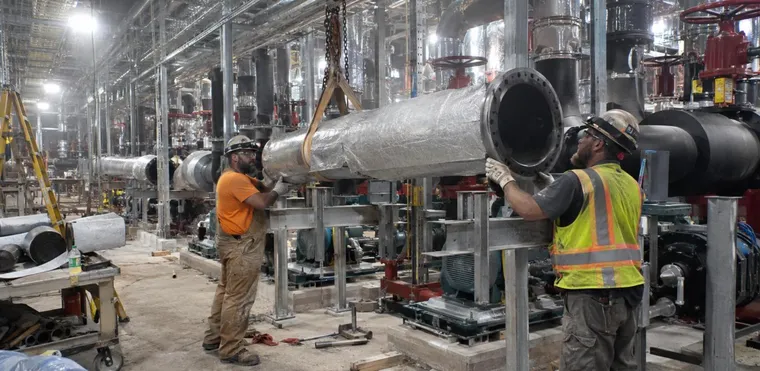
In 1907, a plumbing and heating shop opened its doors in St. Louis. It was family owned then, and it stayed family owned through two world wars, the Depression, the invention of PVC, the arrival of PEX and the birth of the internet. On November 20, 2026, that streak came to an end. MasTec, the Florida-based infrastructure giant, announced it will buy Murphy Company for about $1.25 billion in cash, according to Plumbing & Mechanical. If you want one headline that tells you how much the world now values the people who run pipe, this is it.
We have been covering the plumbing trade at Best Plumbers for more than two decades, and we have watched a lot of deals come and go. Most of them involve private equity firms rolling up residential service shops. This one is different. This is a publicly traded construction powerhouse paying a billion and a quarter dollars for a union mechanical contractor with deep roots in plumbing, HVAC and process piping. It is a vote of confidence in the trade, and it deserves a careful look.
What Happened: The Deal in Plain English
Here are the facts as reported by Plumbing & Mechanical. MasTec, headquartered in Coral Gables, Florida, agreed to acquire Murphy Company for approximately $1.25 billion. The price is paid in cash, funded with a bank term loan, and it comes with a potential extra payment tied to how Murphy performs during the three years after closing. MasTec said substantially all of the closing conditions had already been satisfied and that it expected to finish the transaction promptly.
Murphy is no small shop. The company employs about 1,600 people, and roughly 1,200 of them are union craft professionals. Beyond its St. Louis headquarters, it has offices in Thornton, Boulder, Fort Collins and Colorado Springs in Colorado, plus Granite City, Illinois, and Cheyenne, Wyoming. For calendar year 2026, Murphy is projected to bring in about $775 million in revenue and around $140 million in adjusted EBITDA.
Patrick Murphy, the president and CEO, stays on with the current management team. Murphy will become a new operating group inside MasTec, and its results will be reported in MasTec's Clean Energy and Infrastructure segment.
What Murphy actually does
When people outside the trade hear "mechanical contractor," their eyes tend to glaze over. So let us translate. Murphy builds and services the guts of big buildings. That means:
- Plumbing systems for large commercial and industrial facilities, from domestic water and drainage to specialty piping.
- HVAC and refrigeration, the systems that keep hospitals sterile, pharmaceutical plants stable and server halls cool.
- Process infrastructure, the piping that carries everything from chilled water to compressed gases in manufacturing plants.
- Service and maintenance, including plumbing, controls and mechanical upkeep long after the ribbon is cut.
- Engineering support, including preconstruction planning, building information modeling (BIM) and prefabrication.
Its markets include data centers, healthcare, pharmaceutical manufacturing, aviation and advanced manufacturing. In other words, the places where a pipe failure is not an inconvenience. It is a catastrophe.
Why a Billion Dollars for Pipe and Ductwork?
MasTec made a similar move in the summer, buying the electrical contractor known as The Superior Group for about $1.65 billion. Put the two deals together and a strategy jumps off the page. MasTec wants to own the skilled labor that builds and maintains mission-critical facilities, and it is willing to pay handsomely for it.
The single biggest driver is the data center boom. Every new artificial intelligence campus needs enormous amounts of power, and every watt of that power turns into heat that has to be carried away. That heat moves through water, glycol and refrigerant, which means pipe, valves, pumps, chillers and the people who install them. We wrote about this shift in our look at how the data center boom needs plumbers and pipefitters, and the Murphy deal is the clearest proof yet that we were not exaggerating.
But there is a second reason in the deal announcement that we think matters even more over the long haul: recurring revenue. MasTec said it sees room to grow Murphy's maintenance business as data centers and other large facilities move from construction into daily operation. Buildings get built once. They get serviced for fifty years. A contractor that already knows a building inside and out, because it installed the systems, is the natural choice to keep them running.
The prefabrication advantage
Murphy's investment in BIM and prefabrication is another prize. On a modern megaproject, much of the piping is designed in three dimensions, cut and assembled in a controlled shop, and trucked to the site as finished racks and skids. That approach cuts waste, improves safety and lets a crew install in days what used to take weeks. Contractors who mastered it early are now worth a premium, and the price tag on this deal reflects that.
The End of a 119-Year Family Story
We do not want to rush past the human side of this. A family that runs a business for 119 years has lived through every boom and bust the American construction industry has ever had. Somebody in that family signed paychecks during the Depression. Somebody kept crews working when steel was rationed in wartime. Somebody bet the company on new technology more than once. Those are the kinds of decisions that build a reputation, and the reputation is ultimately what MasTec is buying.
Murphy's leadership has also given back to the trade. Jim Murphy, a former company president, served as president of the Mechanical Contractors Association of America, and the company is active in SMACNA's St. Louis chapter and the Mechanical Contractors Association of Eastern Missouri. That kind of industry service is how standards get raised and apprentices get trained. When a company like this changes hands, we hope the new owner protects that culture, and the decision to keep Patrick Murphy and his team in place is a good sign.
For many family-owned plumbing companies, the question of succession is real. The founder's kids may not want the business. The key managers may not have the capital to buy it. A sale to a larger company can secure jobs and pensions that might otherwise be at risk. There is no shame in that path, and there is a lot of honor in building something that someone else wants to pay $1.25 billion for.
What It Means for the Men and Women in the Trade
Let us talk about the people who actually do the work, because that is who Best Plumbers cheers for. About 1,200 union craft professionals work at Murphy. Those are journeyman plumbers, pipefitters, sheet metal workers and service technicians who spent years in apprenticeship learning their craft.
Deals like this tend to be good news for skilled tradespeople in the short run. MasTec is buying Murphy precisely because it cannot easily find or train that kind of workforce on its own. The craft workers are the asset. A buyer that pays this kind of money has every incentive to keep them, grow them and recruit more people like them.
That ties directly into the labor shortage we keep writing about. According to industry research, the plumbing industry adds more than $442 billion to the U.S. economy and faces a shortfall that could reach 550,000 workers. We covered that in detail in our report on why plumbing is one of the best careers in America right now. When billion-dollar companies compete for plumbers and pipefitters, wages, benefits and training budgets go up. That is good for every young person thinking about a career in the trade.
If you are one of those young people, or a parent of one, the message is simple. The trade is not a fallback. It is a front-row seat to the biggest construction wave of our lifetimes. Our guide to the plumbing apprentice shortage explains how to get started, and our plumbing jobs board lists openings from companies across the country.
A word about union apprenticeship
Union apprenticeship programs in the pipe trades typically run five years and combine paid on-the-job training with classroom instruction. Apprentices earn while they learn and finish without the student debt that weighs down so many college graduates. Non-union contractors offer strong programs too. The common thread is that the training is long, rigorous and paid, and the result is a skill that cannot be outsourced or automated.
There is also a regional story here. St. Louis and the Colorado Front Range are both growing markets for data centers, hospitals and advanced manufacturing. Contractors with deep local relationships, union training centers and prefabrication shops close to those projects hold a real edge. That local strength is something no amount of money can build overnight, which is exactly why it commands such a high price. It is also a reminder that plumbing remains a local business at heart, even when the owner is a national company.
The Bigger Picture: Consolidation Across Plumbing
The Murphy sale is part of a larger wave of consolidation that has reshaped plumbing over the past several years. On the residential side, private equity groups have been buying neighborhood plumbing companies at a rapid clip. We examined that trend in Wall Street wants your plumber, and our advice to homeowners has not changed.
On the commercial side, the buyers are increasingly large construction and engineering firms like MasTec. Their logic is different from private equity. They want capacity: the crews, the shops, the engineering talent and the customer relationships that let them take on bigger and more complex jobs.
Is consolidation good or bad? Honestly, it is both, depending on how it is done. Here is our balanced view:
- The upside: Bigger companies can invest in training, safety programs, prefabrication shops and technology that smaller firms struggle to afford. They can also offer stronger benefits and more career paths.
- The risk: When ownership moves far from the job site, local knowledge and personal accountability can fade. Customers sometimes notice that the friendly owner who answered the phone is gone and pricing has crept upward.
- The test: The best acquirers keep local leadership, respect the existing culture and invest in the workforce. The worst ones squeeze margins and lose their best people within a few years.
We will be watching how this one plays out. Keeping Patrick Murphy in charge suggests MasTec understands what it is buying.
What Building Owners and Facility Managers Should Do
If you own or manage a commercial building that relies on a mechanical contractor that has been acquired, or might be, here is our practical checklist:
- Review your service agreements. Check whether your contract can be assigned to a new owner and whether pricing, response times and staffing commitments carry over.
- Ask who your technicians will be. The value of a service contract is the people who know your building. Ask whether the same crew will keep coming.
- Document your systems. Make sure you have current drawings, BIM files, valve tags and maintenance records. If your contractor ever changes, that documentation is gold.
- Keep a second option. It is smart to have a relationship with a qualified backup contractor. Browse our directory of plumbing contractors to find established firms in your area.
- Verify licenses and insurance every year. Ownership changes can affect licensing entities. Our article on the importance of hiring a licensed plumber applies to commercial work as much as residential.
What Homeowners Should Take From This
You might be wondering why a homeowner in Denver or St. Louis should care about a deal involving data centers and pharmaceutical plants. The answer is that the labor market is connected. When large commercial contractors compete hard for skilled plumbers, residential companies feel the squeeze. That can mean longer wait times for non-emergency work and higher hourly rates in busy markets.
The fix is not to panic. It is to plan. Schedule routine maintenance before it becomes an emergency, get quotes early for big projects like repiping or water heater replacement, and build a relationship with a trusted local company now, not at midnight when the basement is flooding. Our checklist of eight things to consider before hiring a plumbing contractor is a good place to start.
If you live in the regions where Murphy operates, you can find top-rated local professionals through our pages for the best plumbers in St. Louis and the best plumbers in Denver. Anywhere else, just use Best Plumbers to find plumbers near you.
A warning about who answers the phone
Here is the serious part. As the industry consolidates, some homeowners find that a company with a familiar local name is now owned by a distant parent and run by a call center with aggressive sales targets. Most of these companies still do excellent work. Some do not. Always ask for a written estimate, ask whether the price is flat-rate or hourly, and never let anyone pressure you into replacing a system on the spot unless there is a genuine safety hazard. If something feels off, get a second opinion. That is exactly why we built the Best Plumbers ranking system, which you can read about on our page explaining how we rank plumbers.
A Message to Plumbing Company Owners
If you own a plumbing company, this deal should make you sit up straight. Your business has real value, and the market is paying record prices for companies with skilled crews, strong service revenue and good reputations. Even if you never plan to sell, the same things that make a company attractive to a buyer also make it more profitable and more stable to own:
- A steady base of maintenance and service agreements.
- Documented systems and processes that do not depend on one person.
- A training pipeline that brings in apprentices every year.
- A strong online reputation built on verified reviews.
- Visibility where customers actually search for help.
That last point is where we can help. Best Plumbers has been connecting customers with plumbing companies since 2002, and our listings show up when people search for the best plumbers in their city. If your company is not listed yet, you can join Best Plumbers and put your reputation in front of customers who are looking for quality, not the cheapest bid.
Our Outlook: Optimistic, With Eyes Open
We are optimistic about what this deal says about the trade. For years, people talked about plumbing as if it were a dying craft. The truth is the opposite. Some of the most sophisticated buildings on earth cannot run for one minute without the work of plumbers and pipefitters. Investors are finally pricing that reality in.
We also keep our eyes open. Consolidation brings risks for customers and workers alike, and we will keep reporting on how these deals affect service quality, pricing and the people on the tools. That is our job as the Internet's original plumbing directory and as an advocate for the men and women who keep the water flowing.
A family shop that opened in 1907 is now worth more than a billion dollars. Somewhere, the people who started it are smiling. The trade they believed in turned out to be one of the most valuable skills in the modern economy.
Frequently Asked Questions About the MasTec and Murphy Deal
1. What did MasTec agree to buy?
MasTec agreed to acquire Murphy Company, a St. Louis-based mechanical contractor that builds and services plumbing, HVAC, refrigeration and process systems.
2. How much is MasTec paying for Murphy?
About $1.25 billion in cash, subject to customary adjustments, plus a potential additional payment based on Murphy's performance over the three years after closing.
3. When was the deal announced?
The deal was announced on November 20, 2026.
4. How is the deal being financed?
Plumbing & Mechanical reported that MasTec is funding the purchase with a bank term loan.
5. When was Murphy Company founded?
Murphy Company was founded in 1907 in St. Louis, Missouri, and remained family owned until this sale.
6. How many people work at Murphy?
About 1,600 people, including roughly 1,200 union craft professionals.
7. Where does Murphy have offices?
In St. Louis plus Thornton, Boulder, Fort Collins and Colorado Springs in Colorado, Granite City in Illinois and Cheyenne in Wyoming.
8. What is Murphy's expected 2026 revenue?
Murphy is projected to generate about $775 million in revenue and about $140 million in adjusted EBITDA for calendar year 2026.
9. Will Murphy's leadership change?
No. President and CEO Patrick Murphy and the existing management team are expected to remain in place.
10. Which MasTec segment will Murphy join?
Murphy will become a new operating group and report within MasTec's Clean Energy and Infrastructure segment.
11. What markets does Murphy serve?
Data centers, healthcare, pharmaceutical manufacturing, aviation and advanced manufacturing.
12. Why are data centers so important to plumbing contractors?
Data centers generate huge amounts of heat that must be removed with water, glycol and refrigerant systems, which require extensive piping, pumps and skilled installers.
13. What is a mechanical contractor?
A mechanical contractor designs, installs and maintains building systems such as plumbing, heating, ventilation, air conditioning, refrigeration and process piping.
14. What is BIM?
Building information modeling is a 3D digital design process that lets contractors plan and coordinate piping and equipment before construction begins.
15. What is prefabrication in plumbing?
It is the practice of building pipe assemblies and racks in a controlled shop and delivering them to the job site ready to install, which saves time and reduces waste.
16. Did MasTec buy other contractors in 2026?
Yes. MasTec also bought the electrical contractor known as The Superior Group for about $1.65 billion in a deal announced in July 2026.
17. Is consolidation good for plumbing workers?
Often in the short term, because buyers value skilled crews and compete to keep them. Long-term results depend on how well the new owner invests in the workforce and culture.
18. Will this deal raise prices for homeowners?
Not directly, but strong competition for skilled plumbers can push up wages and rates in busy markets, so planning maintenance early is wise.
19. What should building owners check after a contractor is acquired?
Review contract assignment terms, confirm technician continuity, keep system documentation current and verify licenses and insurance.
20. How can I find a trusted plumber in St. Louis or Denver?
Use the Best Plumbers city pages for St. Louis and Denver, which highlight top-rated local plumbing companies.
21. How long is a plumbing apprenticeship?
Many union pipe trades apprenticeships run about five years, combining paid work with classroom training.
22. Is plumbing a good career in 2026?
Yes. Demand for skilled plumbers is strong, the work cannot be outsourced and large employers are investing heavily in the workforce.
23. What makes a plumbing company valuable to a buyer?
Skilled crews, recurring service revenue, documented processes, a training pipeline and a strong reputation.
24. How can plumbing companies get more visibility?
A listing on Best Plumbers, the Internet's original plumbing directory, helps customers find quality companies when they search for the best plumbers in their area.
25. Where can I read more plumbing industry news?
Best Plumbers publishes ongoing plumbing industry news and analysis on its plumbing blog and BP News section.
Sources
- Plumbing & Mechanical: MasTec to acquire mechanical contractor Murphy in $1.25 billion deal
- MasTec Investor Relations: MasTec completes previously announced acquisition of The Superior Group

